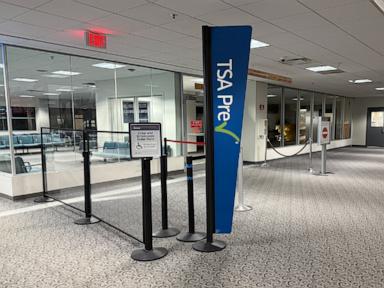
Airports operate under strict throughput constraints where landside and airside segregation has historically dictated terminal economics. The rollout of Gateside by TSA PreCheck introduces a controlled exception to this spatial bifurcation. By permitting non-ticketed individuals possessing a Known Traveler Number to cross the security perimeter, the Transportation Security Administration shifts its operational model from absolute passenger exclusion to identity-verified access management. This operational change alters the economic variables governing non-aviation revenue, checkpoint queuing dynamics, and terminal capacity utilization across participating aviation hubs.
The mechanics of the program rely on pre-screening verification loops integrated into existing identity systems. Rather than utilizing ad-hoc gate passes issued by individual carriers at ticket counters, the framework centralizes authorization through digital identity validation windows. Applicants submit biographical data one to three days prior to arrival. Background vetting routines query security databases, checking identifiers against watchlists before issuing electronic clearance. This architecture decouples terminal access authorization from the issuance of a commercial flight manifest, shifting credentialing authority directly back to federal security administrators.
The Operational Cost Function of Airside Access
Allowing non-passengers into the sterile zone introduces distinct variables into the airport capacity equation. Every individual who enters the security queue consumes physical footprint, checkpoint processing time, and screening resources.
$$\text{Total Checkpoint Load} = P_{\text{passengers}} + V_{\text{visitors}} - E_{\text{mitigation}}$$
To prevent operational degradation, airports implement strict caps on daily authorizations. The cost function is managed by restricting access windows and tying eligibility strictly to PreCheck credentials. PreCheck participants already demonstrate a lower statistical risk profile and process through lanes at higher throughput rates than unvetted populations. By restricting the program to this cohort, the federal agency minimizes the marginal screening time per additional non-traveler.
Physical infrastructure constraints dictate that terminal capacity is finite. Concourse corridors, gate seating areas, and retail footprints face maximum occupancy thresholds. When non-travelers occupy gate seating or restaurant tables during peak departure banks, passenger comfort metrics decline. Terminal operators must balance the short-term yield of increased concession spending against the long-term cost of spatial congestion and delayed passenger boarding flows.
Economic Incentives and Commercial Yield Dynamics
Aviation revenue models depend heavily on non-aeronautical streams, primarily concessions, parking, and retail leasing. Historically, airport operators lost access to consumer spending power the moment a traveler cleared security, cutting off friends, family, and local service markets from airside commercial zones.
Injecting vetted non-travelers into the sterile environment expands the total addressable market for airport merchants. Concessionaires capture revenue from three distinct behavioral segments enabled by the access model:
- The Send-Off Cohort: Individuals accompanying departing passengers who spend discretionary capital on dining or retail prior to flight departure.
- The Greeting Cohort: Visitors arriving early to meet incoming passengers, utilizing terminal services during flight arrival delays.
- The Interstitial Consumer: Local patrons or individuals using airport hubs for remote work, meetings, or dining during extended layover visits with traveling companions.
Per capita yield inside the secure perimeter exceeds landside retail yields due to captive consumer behavior and extended dwell times. When terminal operators gain the ability to funnel vetted external foot traffic past security checkpoints, retail sales per enplaned passenger increase, altering lease valuations and minimum annual guarantees negotiated with concession operators.
Security Parity and Risk Mitigation Strategies
Modifying perimeter access policies requires maintaining strict identity verification and behavioral monitoring standards. Security architecture relies on the principle of continuous vetting and physical compliance. Non-travelers crossing the checkpoint remain subject to Title 49 Code of Federal Regulations, mirroring the obligations of ticketed passengers.
The primary risk vector involves credential misuse or overstaying authorized windows. Because electronic authorizations carry precise validity parameters, airport security systems track entry timestamps. If an authorized individual fails to exit or attempts to transfer credentials, automated tracking flags the anomaly. Furthermore, restricting the program to existing trusted traveler accounts leverages pre-existing background checks, removing the administrative overhead of conducting separate background investigations for casual visitors.
Deployment Vulnerabilities and System Bottlenecks
Despite structural efficiencies, scaling terminal access programs exposes distinct operational failure points.
Checkpoint queue variance represents the primary vulnerability. Even with expedited screening lanes, surges of non-travelers arriving during peak business travel banks can overwhelm lane capacity, extending wait times for ticketed passengers with strict departure schedules.
System interoperability limitations create friction. Programs managed centrally via federal frameworks must coordinate smoothly with decentralized airport management systems and individual airline gate operations. If digital dashboard verifications experience latency or downtime at the security podium, checkpoint throughput grinds to a halt, creating cascading delays throughout the departure terminal.
Geographic and architectural variance across airports further complicates uniform deployment. Hubs featuring centralized security checkpoints with expansive central concourses absorb foot traffic more efficiently than decentralized terminal designs with constrained checkpoint configurations. Consequently, program availability remains limited to select pilot airports where physical infrastructure supports marginal increases in sterile zone density.
Implementation Blueprint for Airport Authorities
Deploying open-access frameworks requires a phased integration strategy focused on capacity modeling and digital verification infrastructure.
Establish real-time occupancy tracking sensors across sterile concourses to measure spatial density and dynamic seating availability before expanding daily pass allocations.
Integrate digital application dashboards directly with checkpoint credential scanners to eliminate manual visual verification of approval emails by security officers, reducing human error and transaction times at the podium.
Tier pass availability dynamically based on historical flight schedules, restricting visitor allocations during peak bank hours to protect baseline passenger service levels and maintain predictable checkpoint flow rates.