In a quiet room in New Delhi, away from the glare of television cameras and the frantic pace of the 24-hour news cycle, a series of digital pulses connect five corners of the globe. These aren't just data packets. They are the weight of three billion lives.
When Prime Minister Narendra Modi chaired the BRICS summit, he wasn't just managing a meeting of heads of state. He was attempting to rewire the very plumbing of global power. For decades, the world has operated on a system designed in a different century—one where a handful of voices decided the economic fate of everyone else. But the ground has shifted. The old floorboards are creaking.
The Invisible Stakes of a Broken System
Consider a small-scale textile exporter in Kanpur or a tech startup founder in São Paulo. To them, "multilateralism" sounds like a word trapped in a dusty textbook. It feels distant. Irrelevant.
It isn't.
When global systems stutter, these are the people who feel the friction first. If the rules of international trade are written only by those who have already "arrived," the ladder is often pulled up behind them. India's chairmanship arrived at a moment when the world felt increasingly fractured, separated by rising digital walls and fragile supply chains that could snap with a single geopolitical tremor.
Modi’s approach wasn't to merely complain about the old table. He decided to build a bigger one.
The strategy was simple but massive: Reform from within. He pushed for a "strengthened and reformed multilateral system." In plain English, this means ensuring that the institutions governing our world—the UN, the IMF, the WTO—actually look like the world they represent. We are living in a reality where the map has changed, but the GPS is still using data from 1945.
The Digital Bridge and the Human Cost
The most human element of this geopolitical maneuvering lies in technology. We often talk about "innovation" as if it’s a luxury. In the context of the BRICS nations, it is a survival mechanism.
Think about a farmer in a remote village who now receives government assistance directly into a bank account via a mobile phone. This isn't magic; it’s a digital public infrastructure. During India’s chairmanship, there was a relentless focus on using this "Indian Model" to help other emerging economies skip the long, painful steps of traditional development.
By sharing these digital tools across the BRICS alliance, the goal is to create a safety net that doesn't depend on Western intermediaries. It is about economic resilience. If one currency fluctuates wildly or a specific trade route is blocked, these nations need a way to keep their internal engines humming.
The invisible stakes are the millions of families whose grocery prices and job security depend on these five nations—Brazil, Russia, India, China, and South Africa—actually getting along. When they synchronize their efforts on counter-terrorism or health security, a daughter in Johannesburg or a son in Shanghai grows up in a slightly more stable world.
The Friction of Progress
It would be naive to suggest this is easy. The BRICS group is a collection of contradictions. They have different political systems, varying economic trajectories, and historical baggage that could fill a library.
Yet, there is a shared realization that the status quo is no longer enough. The "Resilient Recovery" mentioned in the official communiqués is really a story about the middle class. The focus on enhancing economic cooperation is a direct response to the vulnerability exposed by recent global shocks. We saw what happens when the world relies on a single source for medical supplies or semiconductors. It isn't just a business problem; it's a life-and-death problem.
India’s role as the chair was to act as the "bridge-builder." In a room full of giants with competing interests, India positioned itself as the voice of the Global South. This isn't just about pride. It’s about ensuring that the next billion people to enter the global middle class have a doorway that is actually open to them.
Beyond the Handshakes
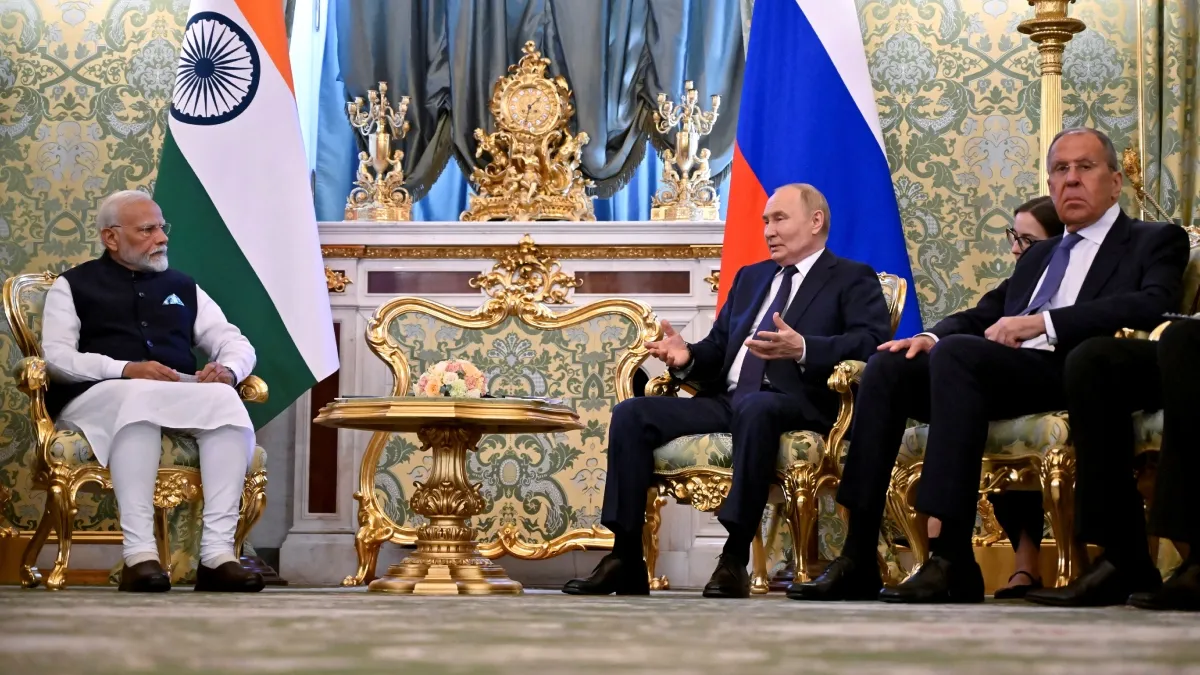
We often mistake diplomacy for a series of photo opportunities. We see the suits, the flags, and the structured smiles. We miss the frantic negotiations at 3:00 AM over a single sentence in a joint declaration.
That sentence might determine whether a small business in Cape Town can easily export to Mumbai. It might dictate how five different nations coordinate to stop a cyber-threat before it shuts down a power grid.
The "New Development Bank" is a perfect example of this tangible shift. It’s not just a bank; it’s a statement. It says that emerging economies are tired of being treated like junior partners in their own development. Under India’s guidance, the push was to make this bank a pillar of a more equitable financial architecture.
We are watching a slow-motion rebalancing of the world's scales. It is messy. It is loud. Sometimes it feels like it’s moving backward. But the underlying current is undeniable: the center of gravity is moving.
The real victory of India's chairmanship wasn't a specific treaty or a grand ceremony. It was the subtle, firm insistence that the future of the world cannot be decided without the people who actually live in it.
As the digital pulses faded and the summit concluded, the world didn't change overnight. The textile exporter in Kanpur still had orders to fill. The startup founder in São Paulo still had code to write. But for the first time in a long time, the systems supporting them felt a little less like a cage and a little more like a foundation.
The table has been rebuilt. Now, the world has to decide who gets to sit there, and more importantly, what they are willing to share.