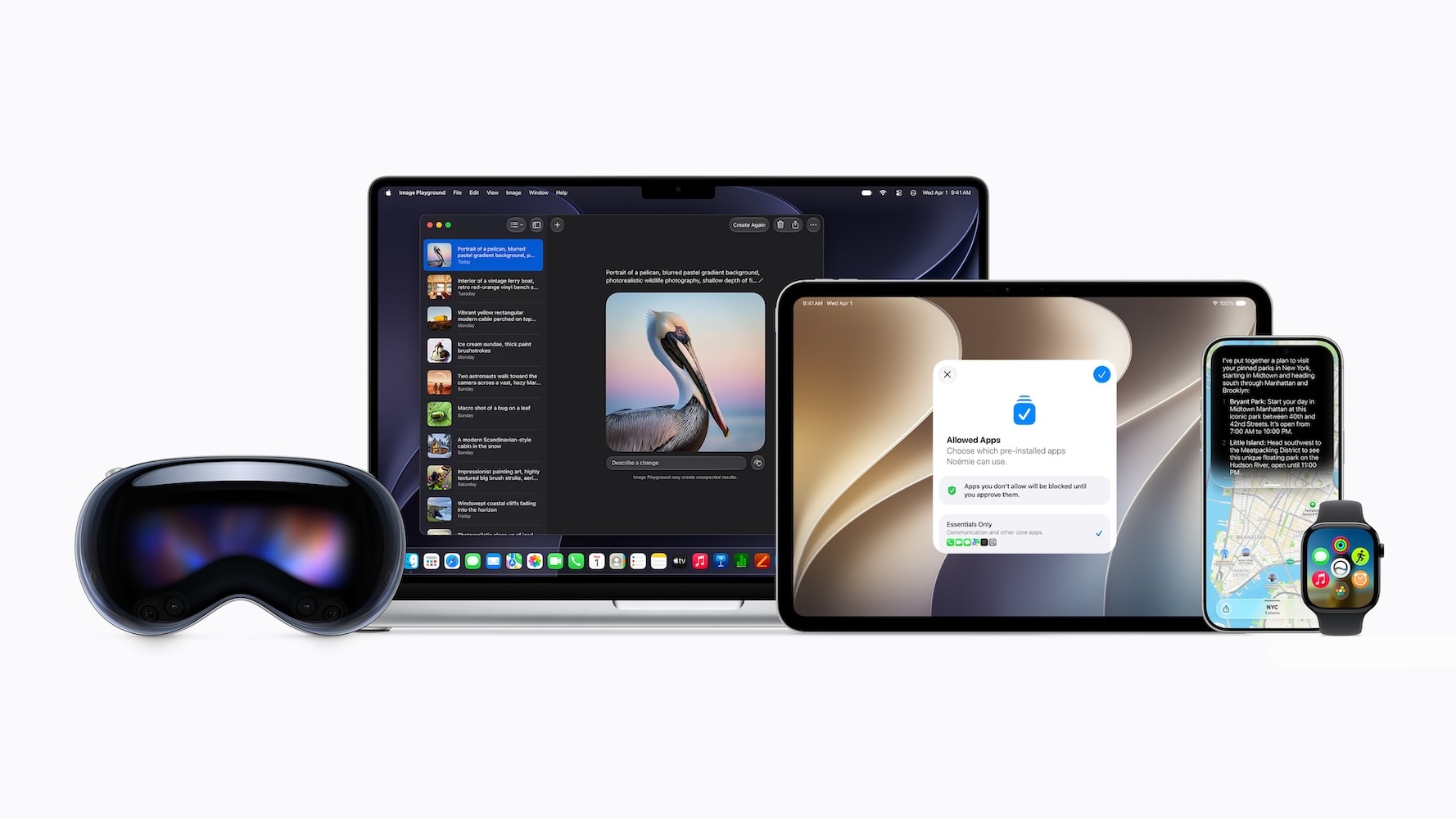
The tech press is swooning over Apple’s WWDC 2026 keynote like a collective of starstruck teenagers. They see a poetic transition: Tim Cook taking his final bow, passing the baton to John Ternus, and executing a dramatic, multi-billion-dollar licensing deal to infuse Siri with Google’s Gemini architecture. They call it a masterstroke of pragmatism. They say it solves Apple’s two-year AI deficit in a single stroke.
They are completely blind to the reality of what just occurred on the stage at Apple Park. You might also find this related coverage useful: The Price of Creating God.
What we actually witnessed was the soft surrender of the world’s most valuable consumer ecosystem. By outsourcing the cognitive core of iOS 27 to Mountain View, Apple did not fix Siri. They admitted that Apple Silicon, for all its core-count bluster, cannot keep pace with the modern web. They confessed that the trillion-parameter frontier is a game they are fundamentally unequipped to play.
This is not a triumphant upgrade. It is a strategic capitulation that breaks the foundational promise of Apple’s business model. As reported in latest articles by Engadget, the effects are notable.
The Trillion-Parameter Capitulation
For five years, Apple pitched a beautiful, mathematically tidy narrative: local compute is king. They told us that the Neural Engine inside your pocket was all the AI you would ever need. They built a marketing fortress around the idea that sending data to an external data center was a moral and technological failure.
Then reality struck. True generative intelligence does not fit on an A-series chip.
By paying an estimated $1 billion a year to license Google’s Gemini models under the hood of "Siri AI," Apple has shattered its own paradigm. The new standalone Siri app, complete with its fancy multi-step commands and iCloud-synced history, is an elegant skin draped over someone else’s infrastructure.
Let us be technically precise about why this is a disaster. Apple claims Craig Federighi’s signature privacy standards remain intact through a "bold new architecture." But when you ask Siri to analyze a complex document or orchestrate a multi-layered task across third-party applications, the local models hand off the heavy lifting. The true cognitive processing occurs on external servers running Google technology.
I have watched hardware platforms try to rent intelligence before. In the early days of mobile, smartphone manufacturers thought they could own the consumer experience while outsourcing the underlying operating system. They were systematically reduced to low-margin commodity assemblers. By relying on a direct competitor to provide the core intellectual engine of its flagship device, Apple is stepping onto that exact same commoditization treadmill.
The Privacy Illusion of Local Search Indexing
To distract from this fundamental shift, Apple spent a massive portion of the WWDC keynote highlighting a ground-up rebuild of its local search index. We were told that iOS 27 now processes text, images, and data the exact moment they hit the hardware, mapping connections locally between emails, photos, and messages.
This is a classic magician's sleight of hand. They are fixing the digital filing cabinet because they cannot build the brain.
Instant system-wide search indexing within the native Mail app or Spotlight is a minor utility upgrade, not a generational leap. The premise that users will be satisfied with a hyper-efficient keyword finder while the rest of the world interacts with autonomous agents is laughable.
Furthermore, this local architecture creates a massive, frustrating dichotomy within the user experience. Consider the actual mechanics of the new features:
- The On-Device Mode: Fast, rigid, and restricted to simple actions like fetching an old flight confirmation number from your inbox.
- The Gemini-Powered Mode: Capable of creative synthesis, but restricted by daily usage limits unless you pay for an iCloud+ subscription.
This is the opposite of the classic Apple experience. It is fragmented, confusing, and transparently transactional. You are no longer buying a premium machine that works flawlessly out of the box; you are buying a terminal that requires a monthly subscription to maintain its premium intelligence.
The True Cost of the Siri Settlement
The lazy consensus ignores the dark cloud hanging over the entire event: the $250 million legal settlement Apple quietly agreed to just weeks before WWDC. The lawsuit, brought by iPhone buyers who correctly noted that Apple advertised advanced AI features on the iPhone 16 that failed to materialize at launch, reveals the structural rot behind the marketing.
Apple settled to "stay focused on doing what we do best." But what they do best right now is damage control.
The licensing of Gemini is a direct, panicked reaction to that legal and consumer backlash. Apple realized its internal pipeline was dry. They realized that their multi-year head start in custom silicon design did not translate into foundational AI research.
Imagine a scenario where a luxury car company designs an exquisite chassis, promises an revolutionary electric drivetrain, fails to build it for three years, and then quietly installs a competitor's engine under the hood while charging you a premium markup. That is the exact relationship between Apple hardware and Google Gemini in 2026.
Dismantling the Myth of the App Ecosystem
The tech industry loves to ask: "How will developers leverage these new frameworks?"
They are asking the wrong question. The real question is: Why would a top-tier developer optimize for Apple’s restrictive ecosystem when the underlying intelligence is just a wrapper for API endpoints they can access directly?
At WWDC, Apple announced that iOS 27 will allow users to designate third-party services like Claude or ChatGPT as the default provider for systemic writing tools. Think about the strategic implications of that choice. Apple is explicitly telling developers and consumers that its own software layer is modular and replaceable.
When you allow the consumer to swap out the brain of the device, the device itself becomes a secondary consideration. The hardware chief, John Ternus, is inheriting a company whose primary product—the iPhone—is at risk of being reduced to an expensive, glass-and-aluminum housing for OpenAI and Google services.
The Operational Risk Nobody Talks About
Relying on a competitor for core functionality introduces a catastrophic single point of failure. Google and Apple are currently locked in fierce regulatory battles across the globe. What happens when antitrust regulators in the European Union decide that a multi-billion-dollar AI licensing agreement between the two dominant players in mobile computing constitutes an illegal duopoly?
We already saw the first cracks in the wall during the keynote: Siri AI will not be available initially for iOS and iPadOS inside the EU due to regulatory friction. By tying its star product to a volatile, heavily scrutinized cloud AI architecture, Apple has paralyzed its ability to deliver a unified global product.
The financial cost is equally devastating to Apple's traditional margin structure. Running localized compute on custom silicon is highly profitable because the marginal cost of a user running an on-device query is effectively zero. Running server-side queries on a licensed model means every single advanced voice command costs Apple money. The daily usage limits introduced for non-iCloud+ users are not a technical necessity; they are a desperate attempt to protect hardware margins from the ruinous costs of cloud inference.
Stop Celebrating the Surrender
The tech press will continue to praise the Liquid Glass design tweaks of macOS Golden Gate, the new parental control filters, and the expressive sliders on Siri’s voice. They will analyze Tim Cook’s legacy through a lens of corporate transition and smooth succession planning.
Do not swallow the narrative.
WWDC 2026 was the moment Apple officially abdicated its position as the primary architect of consumer computing. By embedding Gemini into the bedrock of its operating systems, Apple crossed a rubicon. They traded their hard-earned technological independence for a quick fix to an engineering crisis.
The shiny new Siri app isn't a sign that Apple has finally arrived at the AI party. It is an admission that they had to hitch a ride with the host just to get through the door.