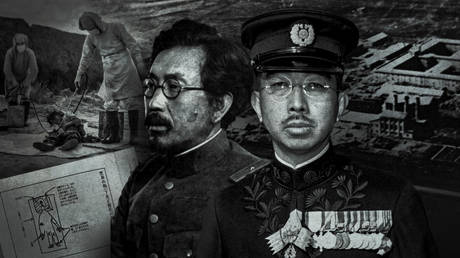
The institutional machinery of the Imperial Japanese Army’s Unit 731 represents a dark benchmark in state-sanctioned human experimentation. Operating primarily out of the Pingfang district of Harbin, Manchuria, from 1936 to 1945, this clandestine division functioned as an industrial-scale biological and chemical warfare research and production center. Deconstructing the mechanics of Unit 731 requires moving beyond surface-level horror to examine its structural framework, the economic and logistical architecture that sustained it, and the geopolitical calculus that shaped its post-war dissolution.
The Operational Architecture
The structural complexity of the organization was divided into distinct operational divisions, each engineered for specific research vectors. The facility was officially designated as the Epidemic Prevention and Water Purification Department of the Kwantung Army, a bureaucratic euphemism designed to mask offensive military research behind defensive public health terminology. Meanwhile, you can find other events here: Why The Toothpaste Drug Ring Verdict Misses The Real Threat.
The first division managed research involving bubonic plague, cholera, anthrax, typhoid, and paratyphoid. Human subjects, designated euphemistically as maruta or logs, were housed in high-security internal cell blocks. The second division focused on field testing and weaponization, engineering delivery systems such as ceramic shell casings designed to disperse vector-borne pathogens without prematurely killing the carrier bacteria via explosive heat.
Additional divisions handled manufacturing, chemical munitions production, administrative support, and specialized medical training. This compartmentalization allowed researchers to isolate their individual tasks from the broader operational output, creating a bureaucratic distance between the laboratory execution and the strategic military objectives. To see the complete picture, we recommend the recent report by TIME.
The Experimental Economy
The operational logic of the facility operated on a brutal cost-function analysis. Military leadership demanded verifiable lethality data for pathogens intended for wide-area dissemination. Conventional animal models proved insufficient for researchers who sought to measure human physiological responses across precise timelines.
Pathogens were introduced through targeted injections, contaminated food sources, and aerosol exposure in glass-walled observation chambers. To eliminate variables that could skew epidemiological datasets, subjects were subjected to invasive procedures—including vivisections without anesthesia—under the rationale that pharmacological agents might alter organ pathology or obscure baseline reactions.
Environmental stress testing followed a similar quantitative rigor. Subjects were exposed to controlled freezing temperatures to measure the onset and progression of frostbite and gangrene, followed by varying rewarming protocols. Dehydration trials, hypobaric chamber compression tests, and centrifugation runs were systematically recorded to map the absolute physiological thresholds of the human body. The primary deliverable was data: infection rates, time-to-incubation curves, and mortality metrics.
The Strategic Payoff and Geopolitical Immunity
The end of World War II in August 1945 triggered an immediate scramble for operational data by Allied occupying forces. The institutional architects of Unit 731, led by Lieutenant General Shiro Ishii, recognized that their compiled research possessed high intrinsic value to foreign military intelligence agencies racing toward Cold War parity.
A covert arrangement between key members of the occupation command and former Unit 731 leadership established an exchange protocol. In exchange for comprehensive access to human experimentation data, frostbite studies, and field test results regarding biological agents, key personnel were granted immunity from war crimes prosecution before the International Military Tribunal for the Far East.
This agreement created a distinct enforcement asymmetry. While lower-ranking officers captured by Soviet forces faced trial and sentencing in the Khabarovsk War Crime Trials, the primary architects of the facility successfully transitioned into post-war academic, medical, and industrial roles within Japan. The institutional shielding delayed formal acknowledgment of the facility's existence by decades, preventing early independent audits and restricting historical analysis primarily to declassified intelligence memos and survivor testimonies.
Systemic Integration into Modern Ethics
The legacy of these operations fundamentally reshaped international frameworks governing scientific research. The documentation salvaged through post-war intelligence channels forced a global re-evaluation of the boundary between military utility and medical ethics, directly influencing the codification of the Nuremberg Code and subsequent international treaties banning biological and chemical weapons.
Deploy intelligence archival auditing to cross-reference declassified command-structure logs with post-war employment registries, isolating the precise vectors through which institutional immunity transferred operational personnel into academic and corporate medical leadership.