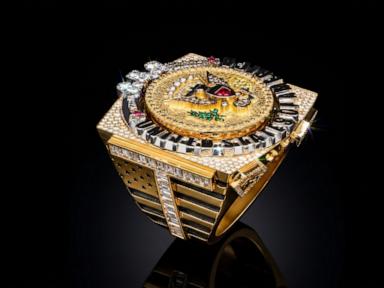
The intersection of sovereign tariff policy and corporate non-market strategy follows a predictable economic logic. When the Antwerp World Diamond Centre (AWDC) presented a custom-crafted, gemstone-encrusted gold ring to the U.S. Ambassador to Belgium for delivery to President Donald Trump, public commentary focused heavily on the optics of the gesture. To analyze this event strictly through the lens of political theater misses the underlying economic architecture. The transaction serves as a textbook manifestation of a calculated return on investment (ROI) within a broader framework of international trade lobbying and industry survival.
This analytical deconstruction maps the sequence of regulatory shifts, industry supply shocks, and transactional diplomacy that culminated in this exchange. By evaluating the mechanics of the market, the structural changes forced by geopolitical sanctions, and the cost-benefit realities of targeted corporate gifting, we can establish a rigorous blueprint of modern cross-border influence.
The Economics of the Zero-Percent Exemption
The strategic value of the "Freedom 250" ring cannot be evaluated without quantifying the economic baseline of the Antwerp diamond sector. In September, the AWDC finalized an agreement securing a 0% import tariff on its annual export of polished diamonds to the United States. This sector represents a critical economic channel, moving more than $2 billion worth of polished diamonds into the American consumer market annually.
To understand the scale of this regulatory victory, one must analyze the cost function of the diamond supply chain. Import tariffs operate as a direct tax on the margin of wholesalers. In a traditional tariff regime, even a modest 5% to 10% duty on $2 billion in goods introduces a friction of $100 million to $200 million. This structural cost is distributed across three vectors:
- Margin Compression: Wholesalers absorb the tax to maintain price competitiveness, reducing free cash flow.
- Consumer Demand Destruction: Higher retail prices reduce the velocity of luxury goods transactions.
- Competitor Substitution: Alternative trading hubs (such as Dubai, Mumbai, or Tel Aviv) gain a relative price advantage if they navigate different bilateral trade terms.
By securing a flat 0% tariff, the AWDC effectively preserved between $100 million and $200 million in annual value for its ecosystem. The cost to manufacture the physical ring, estimated by independent luxury jewelers Alexander Levinson and David Saad at between $25,000 and $35,000, represents a negligible operational line item.
$$\text{Influence Efficiency Ratio} = \frac{\text{Retained Industry Value}}{\text{Capital Outlay of Gift}}$$
Placing the mid-range cost of the gift at $30,000 against a conservative tariff savings baseline of $100 million yields an efficiency factor exceeding 3,300 to 1. The gift is not a casual token; it is a highly optimized micro-expenditure designed to reinforce a massive macro-economic defense mechanism.
Dual Structural Pressures: Sanctions and Synthetic Competition
The intensity of the AWDC's non-market strategy is directly correlated with the severe structural shocks the Belgian diamond hub faced between 2023 and 2025. Two simultaneous market disruptions compromised Antwerp's historical dominance: the enforcement of G7/EU sanctions on Russian rough diamonds and the rapid market penetration of synthetic, lab-grown alternatives.
The Sanctions Shock Wave
Historically, Russian mining conglomerate Alrosa supplied nearly a third of the world's rough diamonds, a substantial portion of which moved through the Antwerp bourses for cutting, polishing, and distribution. The implementation of strict traceability protocols and import bans on Russian-origin stones structurally severed this pipeline.
The empirical evidence of this shock is clear. From 2023 to 2025, Antwerp's total diamond trade volume contracted sharply, dropping from €10 billion to €6 billion. This 40% reduction in top-line transaction value triggered severe consolidation, leading to the bankruptcy of several mid-tier Belgian diamond firms and reducing liquidity across the local market.
The Synthetic Market Threat
Concurrently, lab-grown diamonds (LGDs) introduced a highly disruptive supply elasticity. Industrial production of synthetic stones scales linearly with technological efficiency, driving down production costs and retail prices. In the United States—Antwerp's primary demand destination—consumers rapidly adopted LGDs for the bridal and fashion segments.
Because synthetic diamonds are visually identical to natural stones under standard conditions, the AWDC faced a fundamental branding crisis. The industry's survival depends on preserving the psychological and economic distinction between finite, multi-billion-year-old natural assets and infinite, factory-produced alternatives.
The symbolic design of the ring addresses this exact threat. The AWDC explicitly noted that the piece was crafted using 321 natural diamonds. The public presentation was used as a platform to communicate that while synthetic and natural stones look identical to the naked eye, their underlying status, scarcity, and long-term asset value diverge completely. The gift served as a localized marketing campaign targeting the world's largest consumer economy.
The Legal and Ethical Friction of Corporate Gifting
The transfer of a high-value physical asset from a foreign industry collective to a sitting U.S. President creates distinct legal and structural friction, rooted in the Foreign Gifts and Decorations Act and the Foreign Emoluments Clause of the U.S. Constitution.
[Foreign Entity: AWDC] ──(Gift Valued > $480)──> [U.S. Ambassador / Executive]
                                                          │
                                            ┌─────────────┴─────────────┐
                                            ▼                           ▼
                                [Option A: Personal Retention] [Option B: Institutional Transfer]
                                 • Must pay fair market value   • Becomes U.S. Government property
                                 • Declared in disclosures      • Sent to National Archives/Library
The statutory threshold for personal retention of foreign gifts by U.S. officials is strictly capped at a minimal nominal value (historically $480). Any item exceeding this valuation cannot be legally retained as personal property unless the recipient personally reimburses the U.S. Treasury for the full appraised market value of the asset.
The valuation metrics provided by experts break down into a precise 50/50 allocation:
- Material Capital: 18-karat gold, 321 natural diamonds, 56 sapphires, 13 emeralds, and six rubies comprise approximately 50% of the $25,000–$35,000 valuation.
- Specialized Labor: The design work by high-end jeweler David Gotlib (whose retail items routinely exceed €15,000) accounts for the remaining 50%, driven by the complex geometry required to render symbolic elements like the dual "T" motifs, the numbers 45 and 47 housed in a superhero shield, and the American eagle.
The regulatory framework dictates that the ring will likely follow one of two paths. It will either be transferred to the National Archives and Records Administration (NARA) as state property, or the President must execute a personal financial transaction to purchase the item back from the federal government.
The strategic utility of the gift remains intact regardless of its physical destination. The primary objective of the non-market action is not to enrich the individual recipient materially, but to anchor an emotional and symbolic connection in the mind of the chief executive. The historical record indicates that custom-designed, highly personalized artifacts are highly effective mechanisms for maintaining cognitive salience in high-stakes regulatory environments.
Operational Blueprint for Cross-Border Non-Market Strategy
The execution of the AWDC's strategy offers a definitive blueprint for how international trade groups manage exposure to changing tariff regimes. This methodology relies on three distinct layers of corporate and political positioning.
Layer 1: Asymmetric Informational Input
The AWDC did not lobby the U.S. executive branch directly, a move that would invite intense regulatory scrutiny and register on domestic lobbying disclosures. Instead, the group provided deep technical "input" to the European Commission during its broader bilateral trade negotiations with the U.S. administration. By positioning themselves as indispensable domain experts rather than political actors, they ensured that the preservation of the diamond pipeline was structurally integrated into the core negotiation text of the overarching trade agreement.
Layer 2: Exploiting Cultural and Aesthetic Parallelism
The design of the ring was deliberately modeled after American Super Bowl championship rings. This aesthetic choice reflects a sophisticated psychological alignment. By shifting the presentation away from traditional European jewelry design and toward a distinctly American symbol of ultimate competitive victory, the AWDC mirrored the recipient's public branding and personal tastes. This reduces the cognitive distance between the foreign corporate entity and the domestic political actor.
Layer 3: Strategic Sponsorship of State Celebrations
The presentation occurred during a massive "America 250" celebration at Brussels' Parc du Cinquantenaire, an event funded via $5.5 million raised by U.S. Ambassador Bill White from major defense and technology corporations. By co-funding and participating in an official state celebration of American sovereignty, the AWDC embedded its corporate messaging into a high-visibility diplomatic framework, diluting the transactional appearance of the gift with a display of geopolitical solidarity.
Long-Term Risk Profile of the Tariff Exemption
The current 0% import tariff achieved by Antwerp represents a temporary equilibrium rather than a permanent structural advantage. Trade policies governed by executive discretion are inherently volatile and subject to immediate renegotiation under changing macroeconomic indicators.
The vulnerability of the current arrangement rests on the shifting U.S. trade balance. If the U.S. trade deficit widens or if domestic lab-grown diamond producers form a unified domestic lobbying coalition, the executive branch can easily trigger Section 301 tariffs or invoke emergency economic powers to reinstate protective barriers. The Antwerp diamond sector operates under a continuous requirement to demonstrate that its supply chains are free of Russian inputs while ensuring that its natural diamond imports do not economically disadvantage domestic luxury manufacturing.
The sustainability of this trade corridor depends heavily on maintaining deep alignment with U.S. diplomatic representatives. The immediate challenge for the AWDC is navigating the public scrutiny generated by the disclosure of the gift itself. When corporate non-market actions transition from backroom technical briefings to high-profile media spectacles, the probability of regulatory pushback increases.
Firms managing international trade exposure must expect that every unit of access secured through symbolic diplomacy will face intense domestic political opposition. The optimal play for the Belgian diamond cartel is to rapidly transition from symbolic gestures to concrete economic integration, cementing their position within the U.S. market by forming direct joint ventures with domestic American luxury retailers. This shifts the relationship from an easily revocable political favor to an interdependent supply chain that domestic policymakers cannot dismantle without causing local economic damage.