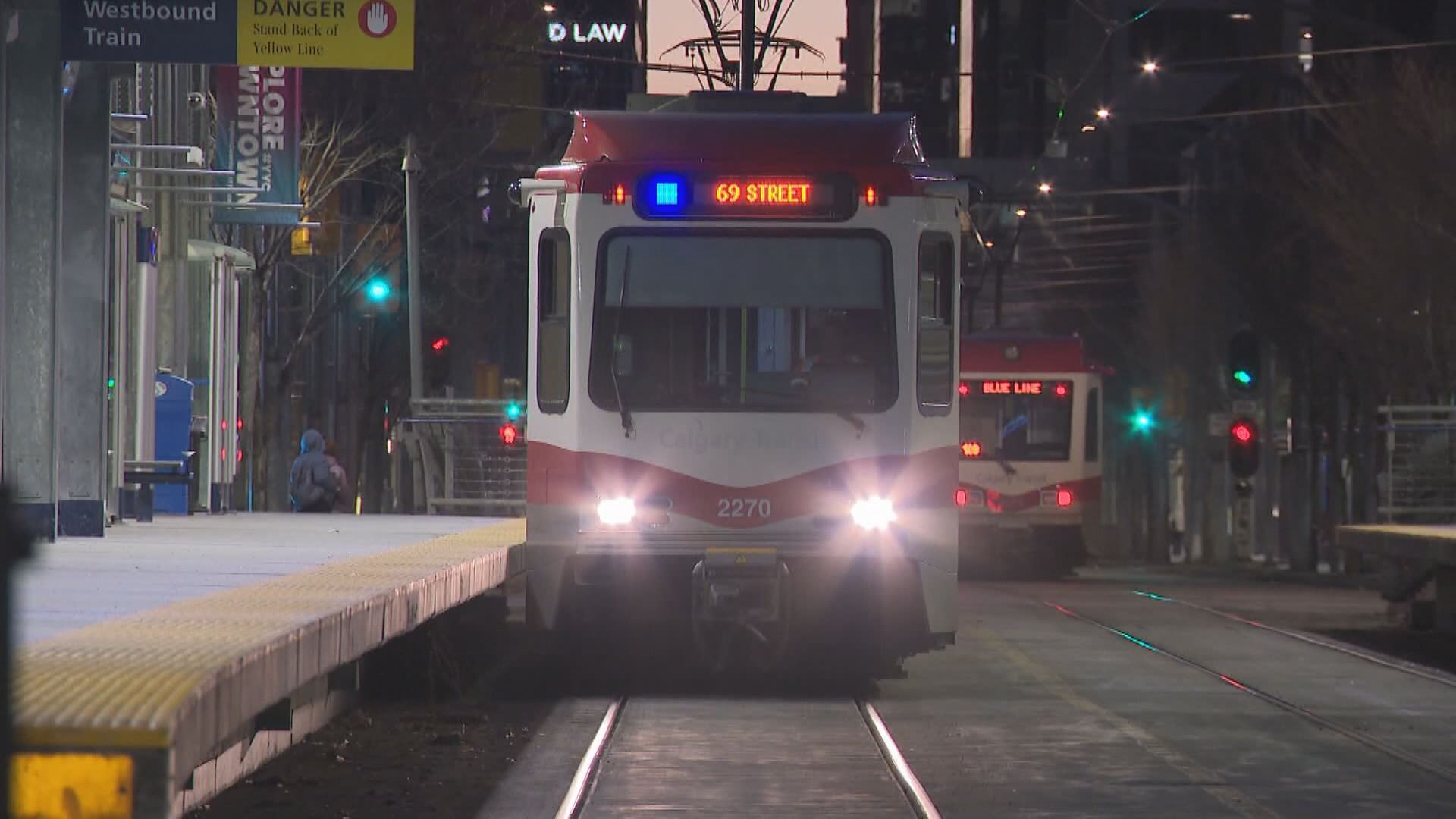
Municipal transit networks operate as complex economic and logistical systems where pricing mechanisms directly dictate urban mobility patterns, passenger volumes, and security dynamics. The ongoing legislative debate surrounding the proposed elimination of Calgary’s downtown free fare zone—a 2.5-kilometer corridor along 7th Avenue South established in 1981—is frequently analyzed through an emotional lens. Critics frame the policy shift as an attack on vulnerable populations, while proponents position it as an administrative panacea for urban decay.
Both arguments obscure the structural mechanics of municipal policy. To understand whether removing a free fare zone can improve transit safety, one must bypass political rhetoric and evaluate the intervention through three distinct analytical lenses: the legal mechanism of administrative removal, the elasticity of transit demand, and the structural dynamics of geographic displacement.
The Legal Mechanism of Administrative Removal
The core argument advanced by city administration for eliminating the free fare zone relies on a specific law enforcement mechanism: shifting the legal status of 7th Avenue platforms from public plazas to specialized "Proof of Payment" zones.
In a standard free fare zone, transit peace officers lack the baseline legal authority to demand documentation or establish a lawful reason for a citizen's presence on a platform. Because entry requires no financial transaction, the platform functions legally as an extension of the sidewalk. Officers can only intervene after an explicit violation of the municipal transit bylaw occurs, such as open substance consumption, physical property damage, or verbal harassment. This reactive operational model creates an enforcement bottleneck.
Converting the corridor into a fare-paid zone introduces a structural barrier to entry. The platform becomes a restricted area where possession of a valid ticket or pass is a prerequisite for presence. This change alters the enforcement calculus in two specific ways:
- Lowering the Threshold for Legal Intervention: Peace officers no longer need to observe a behavioral infraction or criminal act to initiate contact. The absence of a valid fare instrument constitutes an actionable infraction in itself.
- Pre-emptive Risk Mitigation: By conducting systematically distributed fare audits at the platform entrance rather than inside moving train cars, enforcement personnel can legally deny access to non-compliant individuals before they board a train or interact with other passengers.
The financial rationale presented alongside this safety argument estimates an annual revenue increase of up to $5 million. However, this figure assumes a highly predictable behavior model that fails to account for basic microeconomic realities.
The Elasticity of Transit Demand and Financial Projections
The administration's projected $5 million revenue windfall relies on the assumption that a significant portion of the current 5.4 million annual trips within the zone will convert into paid $4.00 single fares. This projection ignores the price elasticity of transit demand, which measures how ridership volumes respond to changes in cost.
Transit ridership within a downtown core is not a homogenous block; it operates along a spectrum of economic utility. Introducing a $4.00 price floor where the cost was previously zero alters the cost-benefit equation for different demographic segments.
[Zero-Fare Environment] ---> Introduces $4.00 Price Floor ---> Ridership Segregates by Price Elasticity
                                                                |
                                                                +---> Discretionary Riders (High Elasticity) -> Shift to +15 System / Walk
                                                                |
                                                                +---> Vulnerable Subsidized Riders ----------> Remain via Low-Income Passes
Discretionary Commuters
This segment comprises office workers, retail shoppers, and business travelers who utilize the 7th Avenue corridor for short-distance trips during lunch hours or between meetings. This demographic exhibits high price elasticity. When faced with a $4.00 fare for a three-block journey, their demand drops sharply.
Because Calgary features an extensive indoor pedestrian pathway network (the +15 system), these users possess a highly efficient, climate-controlled alternative. Rather than paying the transit fare, a substantial percentage will divert to the walkways or choose to walk at street level. Calgary Transit’s own internal review projects a loss of approximately 1.8 million annual downtown boardings if the zone is eliminated, confirming that discretionary ridership will contract rather than convert into a stable revenue stream.
Vulnerable and Low-Income Populations
This segment includes individuals accessing social services, low-wage workers, and those experiencing housing insecurity. This demographic exhibits low price elasticity because they often lack alternative transportation methods, but their behavior is governed by existing subsidy frameworks.
A significant portion of this population already qualifies for and possesses Calgary’s low-income sliding-scale transit pass. For these individuals, the elimination of the free fare zone does not change their out-of-pocket costs or their legal right to ride. They already hold the required proof of payment.
Consequently, the population driving the perception of social disorder on platforms will largely remain legally unaffected by the fare requirement. The individuals targeted by fare enforcement will primarily be those who fall through the gaps of social administrative systems or those operating entirely outside legal frameworks—a group highly unlikely to contribute to the projected $5 million fare collection.
The Structural Dynamics of Geographic Displacement
A critical flaw in utilizing fare enforcement as a tool for public safety is the failure to distinguish between crime suppression and geographic displacement. Social disorder and illicit activities within urban centers are driven by systemic macroeconomic factors, including substance dependency, housing deficits, and inadequate mental health infrastructure. Altering the fare structure of a transit platform does not alter these root causes.
When an administrative barrier is erected at a specific transit platform, the activity occurring there does not disappear; it shifts to the path of least resistance.
| Current System Focus | Enforcement Change | Primary Displacement Vector | Secondary Displacement Vector |
|---|---|---|---|
| 7th Avenue LRT Platforms | Conversion to Paid Zone | Adjacent Public Sidewalks & Plazas | Surrounding Suburban Transit Stations |
If peace officers successfully restrict access to the downtown platforms, the displaced population will naturally migrate to the immediate exterior of the fare-paid boundaries. This shifts the concentration of social disorder from the platforms to downtown sidewalks, entryways of commercial businesses, and public parks.
Alternatively, individuals seeking shelter or spaces to congregate will move down the transit line to the closest non-enforced or less visible stations outside the core. Rather than solving a safety issue, the policy simply spreads the operational burden across a wider geographic area, diluting downtown enforcement efforts.
Systems-Level Interventions for Transit Security
Because modifying fare policies produces marginal safety gains while introducing significant economic friction for downtown commerce—evidenced by the 85% of downtown businesses reporting that removing the zone would harm their operations—alternative approaches must be considered. Maximizing safety and financial efficiency requires treating the transit system as an integrated environment rather than a collection of isolated platforms.
Step 1: Implement Physical Access Controls Through Turnstile Retrofitting
Relying on roving peace officers to conduct manual fare audits is an inefficient use of labor. A more effective approach involves upgrading downtown stations with physical access controls, such as automated turnstiles or fare gates, similar to those used in major metropolitan systems.
While the open-air design of Calgary’s 7th Avenue platforms presents engineering challenges, targeted structural modifications can clearly separate fare-paid zones from public sidewalks. This automates fare verification, reduces the need for constant officer presence, and establishes a consistent physical boundary that deters casual fare evasion and loitering.
Step 2: Establish Dedicated Co-Response Transit Hubs
Social disorder is primarily a public health challenge manifest in public spaces. Deploying traditional law enforcement to manage individuals experiencing mental health crises or severe addiction is an inefficient allocation of municipal resources.
A more optimized strategy pairs transit peace officers with specialized mental health professionals and diversion specialists in dedicated teams stationed directly at high-volume downtown hubs. This approach allows the system to address behavioral issues immediately, routing vulnerable individuals to social services, detoxification centers, or shelters without relying solely on the judicial system.
Step 3: Transition to an Ability-to-Pay Subsidy Model
Instead of maintaining a broad geographic subsidy that benefits all users regardless of income, transit finances can be optimized by shifting entirely to an individualized, ability-to-pay model. This involves maintaining fare requirements across the entire network while expanding the distribution and lowering the cost barriers of the existing low-income transit pass program.
By automating the verification process through existing provincial social service databases, the city can ensure that economically vulnerable residents retain mobility without creating a specialized zone that complicates system-wide enforcement.
Step 4: Deploy High-Density Natural Surveillance
The perception of safety within public transit is heavily influenced by passenger density and public activity. A vacant platform feels significantly less secure than a crowded one.
Maintaining the free fare zone preserves high ridership volumes from discretionary users, creating a self-regulating mechanism known as "eyes on the street." The presence of a consistent volume of regular commuters, shoppers, and tourists acts as a natural deterrent to anti-social behavior. Removing these riders by introducing a $4.00 fare reduces overall platform activity, inadvertently creating isolated environments where social disorder can become more prominent.
The Strategic Framework for Calgary Transit
The decision deferred by Calgary City Council until early 2027 should not be framed as a choice between public safety and social equity. The data indicates that eliminating the free fare zone is an inefficient mechanism for achieving either goal. It introduces an administrative barrier that discretionary riders will bypass via the +15 system, fails to generate its projected revenue due to high demand elasticity, and displaces social disorder to adjacent neighborhoods rather than reducing it.
The optimal strategic play for the city is to maintain the free fare zone to support downtown economic activity and preserve natural surveillance, while decoupling transit security from fare enforcement. True system stabilization requires investing in physical access infrastructure and integrated health-security response teams. Treating a systemic social crisis as a fare compliance issue is an operational misallocation that risks reducing ridership without meaningfully improving public safety.