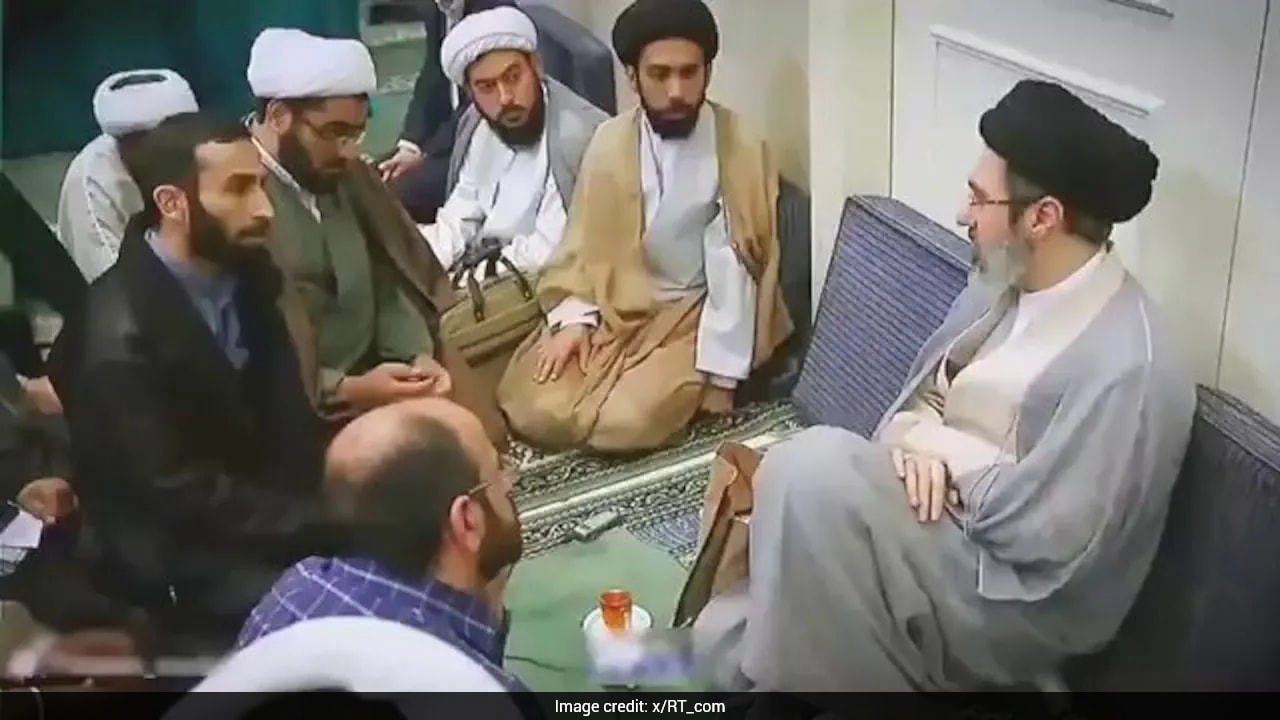
The operational stability of the Islamic Republic of Iran faces a structural test defined less by direct military engagement and more by the physical opacity of its central authority. Following the succession of Mojtaba Khamenei to the office of the Supreme Leader in the wake of the February 28 joint strikes, the governance architecture has transitioned into an unprecedented state of distributed, obscured communication. Recent reports regarding the Supreme Leader's critical health status, paired with conflicting state-media releases of undated visual confirmation, expose the fragility inherent in a system reliant on a single point of clerical and executive integration.
Understanding how the administration of President Masoud Pezeshkian intersects with this opaque leadership requires analyzing the institutional mechanics governing Tehran's crisis response. The system operates on three distinct functional pillars: executive implementation, clerical autocracy, and security apparatus enforcement. When external actors and domestic factions attempt to map regime stability, they frequently misinterpret communication bottlenecks as functional collapse. In reality, the concealment of the Supreme Leader is an intentional security protocol designed to mitigate targeting vulnerabilities, yet it simultaneously creates a severe administrative friction cost across state operations.
The Information Asymmetry Matrix
The primary variable driving speculation over Mojtaba Khamenei's health is the complete absence of unscripted, live public appearances since his ascension. State apparatuses rely on written edicts and heavily curated, delayed visual assets to project continuity. This dynamic generates an information vacuum exploited by foreign intelligence assessments and regional media outlets, which frequently alternate between claims of imminent incapacitation and operational readiness.
From a strategic perspective, this information asymmetry serves dual functions:
- Targeting Deterrence: By maintaining strict radio silence and restricting physical locational data, the central authority denies adversaries the telemetry required for precision decapitation strikes.
- Internal Friction: The mediation of governance through intermediaries introduces severe execution delays between executive policy formulation by the presidency and final religious-sanctioned authorization.
President Pezeshkian’s acknowledgment that direct communication with the Supreme Leader remains exceptionally difficult underscores the structural inefficiency of this model. Routine governance—ranging from foreign currency management and energy resource allocation to military strategy coordination—must navigate a bureaucratic choke point where verification of command authenticity becomes secondary to immediate crisis management.
Economic Strains and Strategic Alignment
The reported alignment meeting between the executive branch and the clerical center addresses acute systemic pressures rather than long-term economic planning. Iran's fiscal architecture is currently bound by the multi-front pressures of an active conflict cycle with the United States and Israel, severe depreciation vectors impacting the rial, and foreign currency shortages.
The mechanism of control depends heavily on rationing state resources while attempting to maintain baseline public livelihood provisions to stave off domestic unrest. When state media publicizes high-level coordination meetings, the strategic intent is signaling institutional cohesion to internal stakeholders and external adversaries alike. However, the divergence between official portrayals of robust health and independent intelligence reports regarding lower-limb trauma or mobility limitations highlights the vulnerability of a regime whose perceived deterrence rests on the physical inviolability of its supreme executive.
The Mechanics of Regime Resilience
Regime continuity under conditions of leadership seclusion relies on institutional momentum rather than charismatic authority. The Islamic Revolutionary Guard Corps and associated security organs function with decentralized operational autonomy, ensuring that tactical military responses do not stall entirely due to executive delays.
However, this autonomy introduces a secondary risk: the gradual divergence between executive civil governance under Pezeshkian and the hardline military-security complex that executes actual state strategy. If the Supreme Leader’s capacity to adjudicate internal factional disputes is compromised, policy gridlock transitions into structural fragmentation.
To ensure functional continuity without exposing the central authority to kinetic vulnerability, the clerical leadership relies on pre-delegated authorities and compartmentalized bureaucratic channels. This framework prevents immediate collapse during periods of extreme medical uncertainty, but it sacrifices administrative agility, leaving the state reactive rather than proactive in its economic and geopolitical positioning.
Execute contingency planning around the assumption of prolonged executive opacity. State agencies and external observers must monitor structural indicators—specifically the consistency of legislative approvals, the speed of resource allocation for domestic energy needs, and shifts in the operational autonomy of security commanders—rather than relying on transient visual media releases to gauge the functional capacity of Iran's central leadership.


