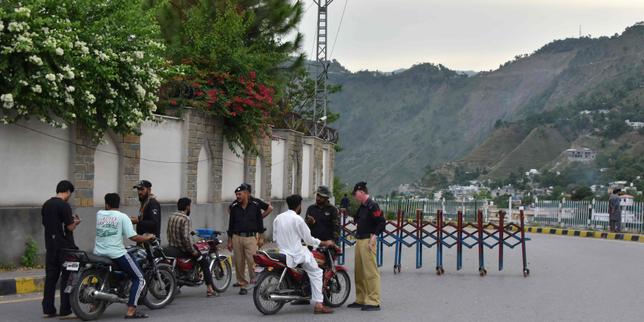
The convergence of subsidy rollbacks, structural inflation, and hyper-militarized state policing has transformed Pakistan-administered Kashmir into a primary node of subnational instability. The United Nations High Commissioner for Human Rights issued an explicit demand for impartial investigations following a sharp escalation in lethal violence between state security apparatuses and local populations. With the Legislative Assembly election scheduled for July 27, 2026, the fatalities—exceeding two dozen civilians and multiple law enforcement personnel since June—reveal a deeper systemic crisis. Media reporting frequently reduces this friction to routine pre-election volatility. Deconstructive analysis, however, reveals that the conflict is driven by a distinct three-part mechanism: the compounding pressure of subsidy elimination, the counterproductive nature of state counter-terrorism policies, and the breakdown of information channels through digital blackouts.
The Economic Triggers of Subnational Discontent
The contemporary unrest originates not from ideological secessionism, but from a fundamental collapse in local purchasing power. The Joint Awami Action Committee (JAAC), an umbrella coalition spanning agrarian traders, transport operators, students, and legal professionals, mobilized initially around explicit fiscal grievances.
The structural crisis operates along two primary axes:
- The Subsidy Compression Bottleneck: Under acute macroeconomic pressure and external lending conditionalities, Islamabad initiated a phased withdrawal of long-standing fiscal cushions in the region. The sudden elimination of subsidies on wheat—a staple dietary requirement—and the rapid escalation of electricity tariffs created an unmanageable cost-of-living shock for a population historically reliant on these regional concessions.
- The Resource Asymmetry Paradox: The region serves as a major net exporter of hydroelectric power to the national grid via projects like the Mangla Dam. However, localized tariff structures do not reflect this production advantage. This imbalance creates a profound sense of relative economic deprivation, transforming localized economic grievances into an organized, institutionalized protest movement.
The escalation pattern demonstrates that when basic resource security is compromised, civic movements rapidly shift their goals from demanding specific policy reforms to challenging the fundamental legitimacy of regional governance structures.
The Securitization Trap and the Failure of Counter-Terrorism Frameworks
The state's response to this economic mobilization illustrates the structural failure of using anti-terrorism frameworks to handle civil dissent. On June 5, 2026, the state officially proscribed the JAAC under national anti-terrorism legislation. Rather than stabilizing the situation, this designation created an escalation loop driven by specific operational dynamics.
[Proscription of Civil Coalition]
       │
       ▼
[Criminalization of Leadership & Gatherings]
       │
       ▼
[Removal of Moderate Arbitrators]
       │
       ▼
[Tactical Radicalization & Symmetric Violence]
By categorizing a diverse civil group as an existential threat to national security, the state eliminated any path toward structured negotiation or political compromise. The arrest of key organizers left the movement without centralized control, causing it to fracture into decentralized, highly reactive factions.
When the state deployed 4,000 paramilitary and police personnel to block a planned march toward Muzaffarabad, it set the stage for direct physical confrontation. Without moderate leaders to de-escalate the crowds, protests in districts like Poonch, Sudhnoti, and Rawalakot quickly turned violent. Demonstrators used improvised tactics, such as blocking convoys and throwing stones, which security forces met with lethal kinetic options. This escalation cycle shows that using heavy-handed security measures against economic protests invariably leads to symmetric violence, escalating a domestic policy dispute into a volatile crisis.
Information Asymmetry and Digital Blackouts
To contain the spread of coordinated protests, regional authorities implemented blanket communication blackouts, cutting off mobile internet and digital networks across the territory. While intended to disrupt the logistics of the protest movement, this tactic backfires by creating severe information vacuums.
Digital blackouts remove verified reporting channels, allowing unverified accounts of state violence and civilian casualties to spread unchecked through offline networks and word of mouth. This lack of reliable information increases public anxiety and deepens mistrust of state institutions. Furthermore, disabling local communication channels prevents moderate factions within civil society from coordinating de-escalation strategies, while leaving the tactical coordination of decentralized groups largely unaffected.
The United Nations' specific emphasis on restoring full internet access highlights how critical open communication is for maintaining basic stability. The current strategy shows that manipulating the information environment to maintain order often achieves the opposite effect, increasing instability and making peaceful resolution much harder to reach.
The Structural Limits of International Oversight
The call by the UN Human Rights Office for prompt, independent investigations highlights the limitations of international human rights frameworks in contested, semi-autonomous regions. The international community relies heavily on the state's own legal institutions to investigate violations, which creates an inherent conflict of interest.
┌────────────────────────────────────────────────────────┐
│             UN Human Rights Mandate                    │
│  - Demands impartial investigation                     │
│  - Lacks direct domestic enforcement mechanisms       │
└───────────────────────────┬────────────────────────────┘
                            │
                            ▼
┌────────────────────────────────────────────────────────┐
│             Sovereign State Apparatus                  │
│  - Controls judicial and investigative access         │
│  - Frames unrest as national security threat           │
└────────────────────────────────────────────────────────┘
Because international organizations lack direct enforcement power within sovereign borders, requests for accountability depend entirely on the cooperation of the state being criticized. When a government frames regional unrest as an existential national security issue rather than a failure of civil governance, it rarely permits independent, transparent investigations. Consequently, international appeals serve primarily as moral markers, doing little to alter the immediate calculations of state security forces on the ground.
Strategic Recommendations for Regional Stabilization
Resolving the crisis in Pakistan-administered Kashmir requires moving away from short-term security crackdowns and addressing the underlying economic and political vulnerabilities.
- De-escalate the Security Posture: The state must immediately lift the formal ban on the JAAC under anti-terrorism laws. Reclassifying the coalition from a national security threat to a legitimate political entity is an essential first step. This shift will allow moderate leaders to reclaim control of the movement, providing stable representatives for formal negotiations.
- Establish a Sustainable Fiscal Framework: The federal government must replace its blanket subsidy rollbacks with a targeted, needs-based support system for essential goods like wheat and electricity. Additionally, the regional tariff structure should be adjusted to reflect the territory's net positive energy contributions to the national grid. Addressing this economic imbalance is critical to reducing long-term public resentment.
- Restore Communication Infrastructures: Authorities must end all digital and telecommunication blackouts immediately. Re-establishing reliable internet access is necessary to dispel rumors, restore commercial activity, and reopen the transparent communication channels required to plan the upcoming legislative elections safely.