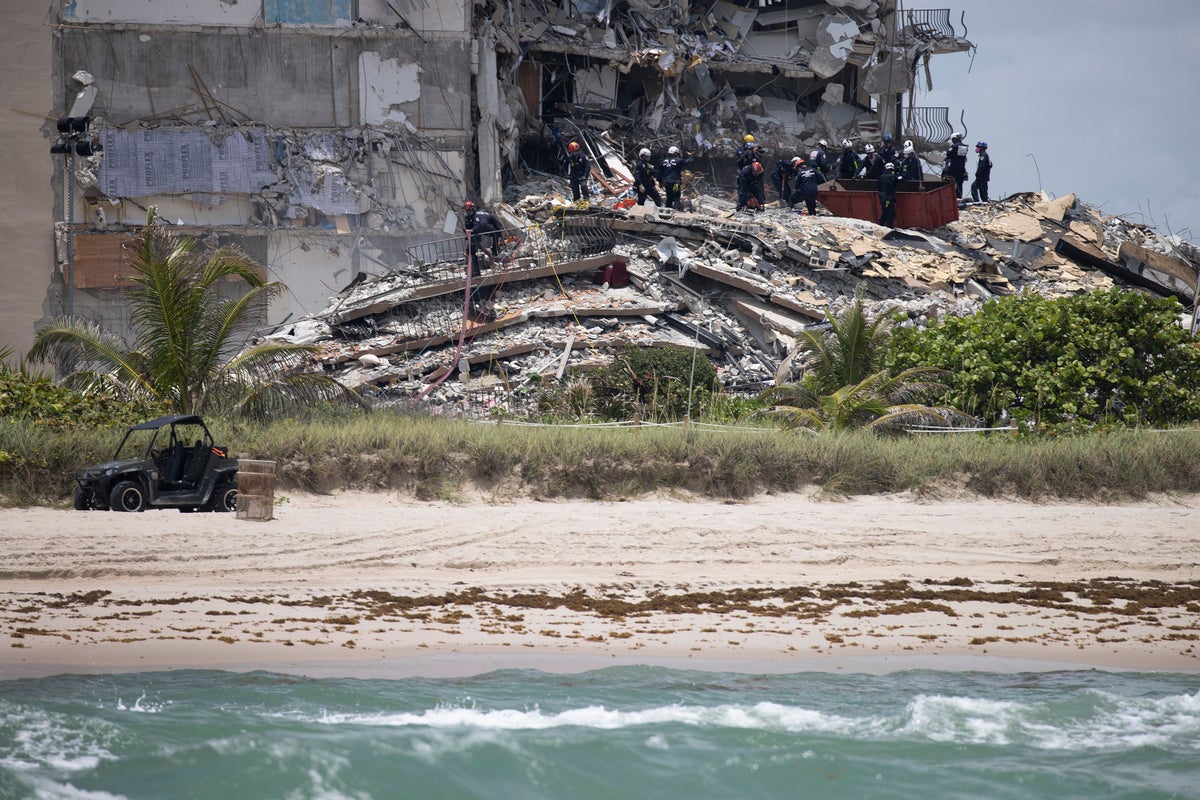
Catastrophic structural failure is rarely the result of a single isolated anomaly. Instead, it occurs when initial design deficiencies intersect with long-term material degradation, ultimately exceeding a building's capacity to redistribute internal stresses. The technical findings released by the National Institute of Standards and Technology (NIST) regarding the June 24, 2021, partial collapse of the Champlain Towers South condominium in Surfside, Florida, confirm this reality. The collapse did not occur instantaneously at 1:22 a.m.; the physical failure sequence began approximately three weeks prior.
To understand the mechanics of this disaster, engineers must evaluate the building through a strict framework of load capacity, structural redundancy, and stress distribution. When a structure is built correctly, it possesses a structural safety factor—a margin against failure that ensures elements can bear significantly more weight than their maximum anticipated load. The investigation demonstrates that at Champlain Towers South, this margin was critically narrow from inception. The ultimate failure was a multi-stage progressive collapse triggered by a localized punching shear failure, exacerbated by a total lack of structural redundancy in the pool deck slab connection.
The Structural Deficit Framework
The vulnerability of the structure can be categorized into three distinct compounding phases: original design deviations, construction-stage anomalies, and post-occupancy load additions.
[Design & Construction Deviations]
       │
       ▼ (Narrowed Safety Margins)
[Material Degradation (Corrosion)]
       │
       ▼ (Loss of Cross-Sectional Steel Area)
[Localized Punching Shear Failure] (Early June 2021)
       │
       ▼ (Stress Redistribution to Weak Elements)
[Progressive Catastrophic Collapse] (June 24, 2021)
1. Design and Code Deviations
A retrospective analysis of the 1979 structural drawings reveals severe deviations from the applicable building codes of that era. The primary structural flaw was located at the slab-column connections under the pool deck. The design specified a reinforced concrete slab that lacked the requisite thickness and shear reinforcement necessary to withstand long-term shear stresses. The original engineering calculations overestimated the capacity of the thin slab to transfer its dead and live loads directly into the supporting vertical columns.
2. Construction Asymmetry
The variance between the engineered blueprints and the as-built reality created a secondary structural bottleneck. Field forensic teams discovered that the placement of reinforcing steel (rebar) within the slab-column junctions did not match the design documents. Rebar was omitted or improperly spaced in critical zones, reducing the effective cross-sectional area of steel capable of resisting tension. This structural mismatch significantly lowered the punching shear resistance of the concrete connections, effectively shrinking the factory safety margin to a fraction of code compliance.
3. Post-Occupancy Unmanaged Loadings
The structural dead load of the pool deck was systematically increased throughout the 40-year lifespan of the building without structural retrofitting. Thick paving stones and heavy landscape planters were added to the deck surface. These additions increased the permanent un-factored dead load acting upon a slab that was already operating near its limit.
The Mechanics of Punching Shear Failure
The catalyst for the disaster was a structural phenomenon known as punching shear failure. This occurs when a concentrated concentrated vertical load pushes down on a horizontal reinforced concrete slab, causing the slab to crack, bend, and physically shear around a supporting vertical column. The failure behaves like a column punching a clean hole through a piece of cardboard.
       Vertical Load (Planters, Pavers, Water)
                ▼             ▼
  ──────────────────┐     ┌──────────────────  <-- Concrete Slab Sags
                    │     │
                    │  █  │
                    │  █  │                    <-- Supporting Column
                    │  █  │                        Punches Through
In early June 2021, three weeks prior to the visible collapse, two distinct slab-column connections beneath the pool deck underwent localized punching shear failure. This initial rupture was hidden within the parking garage ceiling structure.
When these two connections failed, the local load-bearing capacity at those coordinates dropped to zero. In a highly redundant structure, the load originally carried by those two columns would be safely transferred to adjacent columns via structural beams or two-way slab action. However, because the pool deck lacked appropriate structural framing and was already weakened by systematic issues, this failure initiated a slow-motion stress redistribution.
The weight of the pool deck slab began to sag, transferring its unmitigated load to the next closest slab-column connections. Over the next 21 days, a silent domino effect occurred underneath the building. Cracks grew exponentially across the pool deck slab as the surrounding concrete elements were forced to carry weight they were never dimensioned to support.
Material Degradation as an Accelerant
The structural capacity of reinforced concrete relies on the composite action of concrete resisting compression and steel rebar resisting tension. This composite system degrades rapidly when exposed to moisture infiltration.
A field survey conducted in 2018 highlighted major structural damage to the pool deck’s concrete slabs due to a critical construction error: the waterproofing layer lacked a proper slope. Instead of shedding rainwater and pool runoff toward functional drains, water pooled directly on the waterproofing membrane. Over decades, the standing water bypassed the degraded membrane and saturated the porous concrete slab.
This constant moisture exposure initiated a destructive chemical process:
- Chloride Infiltration: Saltwater from the nearby ocean accelerated the penetration of chloride ions into the concrete, destroying the alkaline passive layer that protects steel from rusting.
- Oxidative Expansion: As the internal steel rebar corroded, the iron oxidized and expanded up to six times its original volume.
- Spalling: This internal volumetric expansion generated extreme tensile pressures inside the concrete, causing the exterior concrete shell to crack and break away from the steel reinforcement.
By April 2021, the concrete deterioration was accelerating exponentially. The loss of concrete-to-steel bonding and the reduction of the rebar's cross-sectional area reduced the remaining shear capacity of the slab-column connections, making the punching shear failure in early June inevitable.
The Final Sequence of Progressive Collapse
The shift from a localized pool deck failure to a catastrophic partial tower collapse occurred rapidly on June 24, 2021. Forensic mechanics outline the exact sequence of events that took place within minutes:
- Slab Separation: The heavily overloaded, sagging pool deck slab finally broke away completely at its northern edge from the face of the middle section of the residential tower.
- Instability of Vertical Supports: The physical detachment of the pool deck slab did more than just drop the deck; it instantly altered the unbraced length of the columns supporting the residential tower. Without the lateral bracing provided by the pool deck slab, the columns became highly vulnerable to buckling under the weight of the 12-story building.
- Progression to the Superstructure: The sudden loss of lateral restraint and the structural damage inflicted on the lower column connections during the deck's detachment overstressed the primary vertical columns of the tower. This initiated a progressive, disproportionate collapse of the residential units above, which pancaked vertically within 12 seconds.
NIST investigators systematically evaluated and ruled out alternative hypotheses. There was no evidence of foundation failure, sinkholes, soil settlement, hurricane-force storm surges, or external vibrations from nearby construction. The failure was entirely internal, structural, and predictable based on the laws of structural mechanics.
Strategic Operational Imperial for Asset Managers
The forensic data from this disaster establishes a clear mandate for commercial real estate asset managers, structural engineers, and municipal oversight bodies. Relying strictly on historical building codes or superficial visual inspections is an unacceptable risk management strategy.
Structural Risk Auditing Protocol
Asset managers must transition from reactive maintenance models to a predictive structural integrity framework. Any facility featuring a low-redundancy structural design—specifically flat-slab configurations without drop panels or column capitals—must undergo immediate non-destructive testing (NDT) if signs of water ingress are present. Ground-penetrating radar (GPR) and electrochemical chloride testing must be utilized to map internal rebar corrosion before visible concrete spalling occurs.
Redefining the Useful Life of Waterproofing Systems
Waterproofing systems sitting beneath high-load plazas or pool decks must be treated as critical structural assets, not minor architectural finishes. When an engineering assessment indicates that a waterproofing membrane has reached the end of its operational lifespan, remediation cannot be deferred. The financial cost of structural concrete restoration escalates exponentially for every year the waterproofing system remains compromised.
Furthermore, building associations must maintain absolute fidelity to original design parameters. Modifying dead loads by adding structural elements, pavers, or landscaping features without a verified finite element analysis (FEA) model showing sufficient reserve capacity introduces severe structural vulnerability. Structural safety margins are fixed constraints; treating them as flexible buffers introduces an unacceptable risk of catastrophic structural failure.
For further detailed visualizations on how structural loads redistribute during a punching shear failure and the specific engineering mechanics involved, you can review this technical report on the Surfside collapse. This breakdown provides a clear overview of the physical evidence and modeling used by federal teams to map out the material degradation over time.