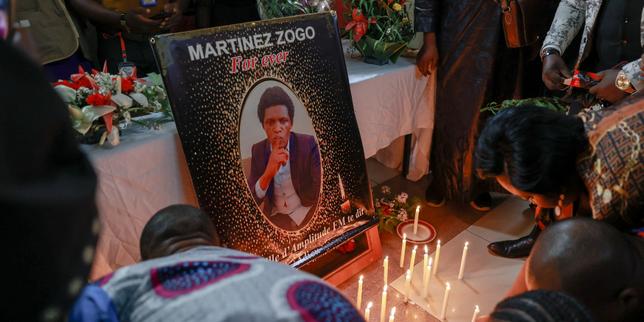
The trial examining the January 2023 abduction, torture, and murder of Cameroonian radio journalist Arsène Salomon Mbani Zogo, known professionally as Martinez Zogo, reached a critical juncture inside the Yaoundé military court. The introduction of direct digital evidence—specifically, a recovered extraction video documenting physical abuse—fundamentally alters the evidentiary calculus of the prosecution. By moving the case from circumstantial testimonies to objective digital forensics, the proceeding exposes the operational mechanisms, state-apparatus involvement, and systematic vulnerabilities within national intelligence operations.
Evaluating this trial requires an analytical approach that strips away sensationalism. Instead, the focus must land squarely on the structural linkages of the state-private nexus, the technical pipeline of the digital forensic audit, and the institutional precedent this prosecution establishes for the Central African judicial framework.
The Structural Framework of the State Private Nexus
The core architecture of the Martinez Zogo case relies on an intersecting network containing three distinct operational pillars: state intelligence, private capital, and executive execution units. Understanding how these entities synchronized requires mapping their specific functional roles.
+--------------------------------------------------------+
|                    PRIVATE CAPITAL                     |
|         Jean-Pierre Amougou Belinga (L'Anecdote)       |
+---------------------------------+----------------------+
                                  |
                   Financing & Target Designation
                                  |
                                  v
+--------------------------------------------------------+
|                   STATE INTELLIGENCE                   |
|  DGRE: Maxime Eko Eko / Justin Danwe (Ops Directorate) |
+---------------------------------+----------------------+
                                  |
                    Command & Control Directive
                                  |
                                  v
+--------------------------------------------------------+
|                 EXECUTIVE EXECUTION UNIT               |
|      Field Operational Commando (e.g., Godje Oumarou)  |
+--------------------------------------------------------+
- The Funding and Target Designation Node: Private capital, represented in the indictments by media tycoon Jean-Pierre Amougou Belinga (head of the L'Anecdote group), functioned as the catalyst. Zogo’s daily broadcast program, Embouteillages, explicitly targeted financial misappropriation, embezzlement pipelines, and state procurement advantages allegedly routed to well-connected business operations. The defense-prosecution boundary hinges on whether this node directly requisitioned state assets for punitive enforcement.
- The Command and Control Directive: The Direction Générale de la Recherche Extérieure (DGRE), Cameroon's counterintelligence agency, supplied the organizational framework. Under the leadership of Leopold Maxime Eko Eko and operations director Justin Danwe, state intelligence assets were diverted from national security objectives to domestic surveillance. Judicial records reveal that Zogo had been subjected to a formal surveillance operation, logged internally under the "Presse" file, handled by the DGRE's electronic surveillance division.
- The Field Operational Commando: The physical execution loop comprised tactical ground agents, including field officers like Godje Oumarou. This tier executed localized tracking, the physical abduction outside a gendarmerie outpost in Yaoundé, and subsequent interrogation protocols.
The systemic error committed by this network was the administrative integration of private motives into formal counterintelligence channels. This operational overlap produced a significant digital trail, neutralizing the plausible deniability typical of state-sanctioned operations.
Forensic Digital Extraction and the Chain of Custody
The structural link tying these three pillars together emerged through a digital forensic audit presented by Professor Georges Bell Bitjoka, an expert in information systems security. The presentation of video evidence showing Zogo bound and abused represents a permanent shift in the trial's dynamics. The forensic value of this evidence is defined by two technical realities.
Automated Metadata and Device Localization
The video file was not intercepted via active wiretapping; it was retrieved directly from a commercial cloud repository linked to the Google account of defendant Godje Oumarou. This exposure reveals a failure in operational security by the perpetrators. When field agents use personal or unencrypted smart devices to document operations for internal confirmation, they generate permanent, unalterable metadata.
The forensic team reconstructed the timeline of January 17, 2023, by matching global positioning system (GPS) coordinates stamped into the video files against cell tower triangulation data. This process established a precise geolocation map tracking the movement of the commando unit from the initial abduction point to the secondary location in Ebogo, where the lethal torture occurred.
Command Corroboration via Linguistic Telemetry
Digital forensics uncovered explicit text and voice communications transmitted concurrently with the abduction. Operational logs indicate that Justin Danwe instructed Godje Oumarou to "take images of the mouse"—a derogatory internal operational code designating Zogo.
The defense strategy, which sought to frame the assault as an unauthorized rogue action isolated to low-level field agents, collapsed under this technical correlation. The metadata establishes synchronization: the command was issued, the recording was generated, and the file was indexed under an account tied directly back to the active commando team.
The Cost Function of State Surveillance Disruption
The broader institutional impact of this trial rests on its disclosure of how state surveillance resources are managed and distributed. In classic intelligence economics, the allocation of counterintelligence assets follows a strict security utility model:
$$U = f(\text{Threat Mitigation}) - c(\text{Operational Deployment})$$
In this equation, $U$ represents the net utility of intelligence operations, balancing national security outcomes against the financial and human costs, denoted by $c$, of deploying field personnel, technology, and analytical resources.
When state actors divert specialized counterintelligence tools toward domestic targets like investigative journalists, the institutional equation shifts unfavorably. The deployment cost remains high, while genuine national security threats—such as border instability or regional insurgencies—are starved of analytical focus.
The 20-page judicial investigation report authored by Lieutenant-Colonel Pierrot Narcisse Nzié details that the DGRE’s electronic surveillance apparatus had monitored Zogo continuously. This long-term monitoring reflects a systemic misallocation of state resources. Instead of managing geopolitical risks, high-level counterintelligence infrastructure was repurposed to protect private commercial networks from public disclosure.
The strategic risk for the Cameroonian state apparatus is the loss of internal cohesion. When formal intelligence structures are outsourced to private actors, the state loses its monopoly on violence. The public exposure of these internal dynamics within a military court damages the credibility of the security architecture, reducing foreign intelligence-sharing trust and undermining domestic institutional authority.
Judicial Limitations and the Systemic Outlook
The presence of definitive forensic evidence does not automatically guarantee an uncorrupted judicial resolution. Observers from civil society and organizations like Reporters Without Borders (RSF) have identified structural bottlenecks within the current military court framework.
First, the composition of the judicial leadership has been unstable. The appointment of Lieutenant-Colonel Nzié as the third consecutive investigating judge within a twelve-month period points to internal bureaucratic friction and political pressure. Frequent changes in judicial leadership disrupt the continuity of complex technical investigations, creating opportunities for critical evidence tampering or procedural delays.
Second, the structural scope of the indictments remains restricted. The current prosecution centers primarily on charges of complicity in torture and murder. By framing the trial around individual criminal liability, the court avoids addressing the broader systemic vulnerability: the ease with which private finances can co-opt official state intelligence networks. The current legal strategy isolates the specific actors involved without implementing legislative or institutional firewalls to prevent future unauthorized operations.
The military court must now navigate the geopolitical and domestic fallout of this public disclosure. With the trial definitively connected to verifiable digital evidence, the state cannot rely on simple denials. The operational path forward demands a complete restructuring of the DGRE’s internal authorization protocols, establishing mandatory judicial oversight for domestic tracking parameters, and implementing strict, auditable boundaries between private enterprise and national security personnel.