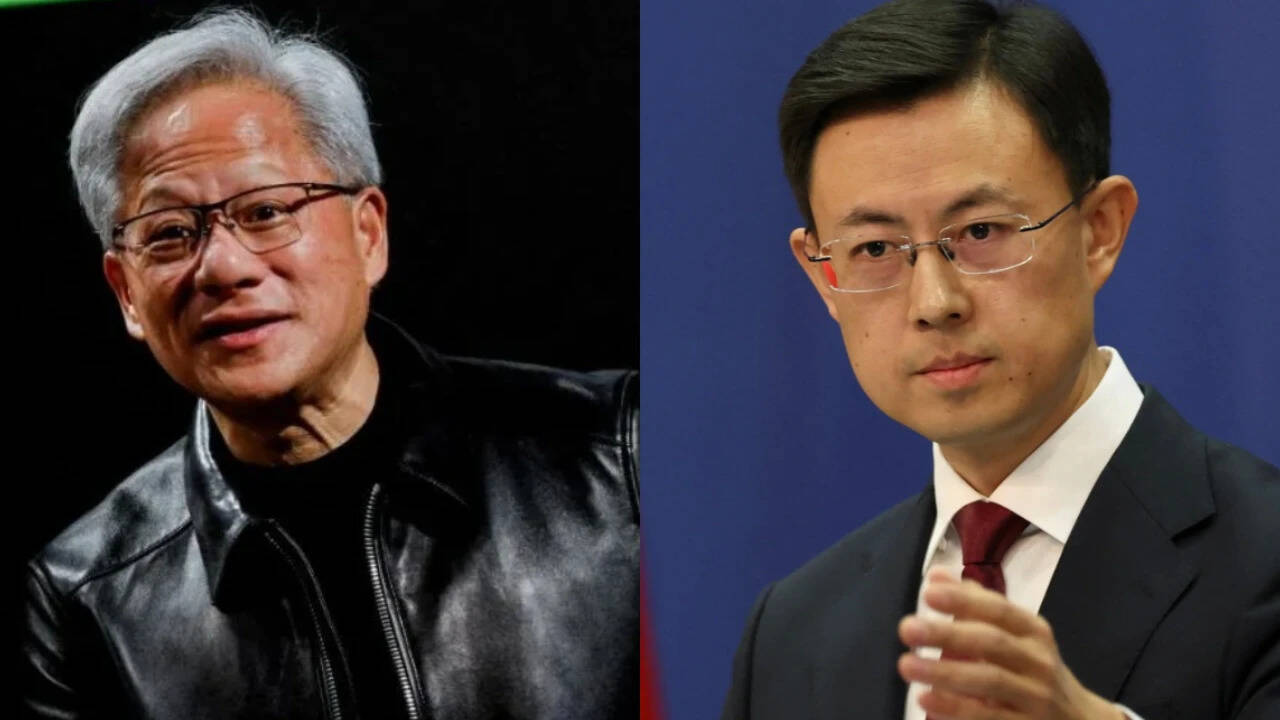
No, Nvidia did not launch an investigation into its CEO having an affair with a suspected Chinese spy. The viral headline circulating across social media feeds and low-tier aggregation sites is completely fabricated. There are no regulatory filings, no credible news reports, and zero factual basis behind the claim involving co-founder and chief executive Jensen Huang.
Yet the speed at which this false narrative gained traction reveals something far more significant than a simple internet hoax. It exposes a massive vulnerability in modern financial markets, where geopolitical paranoia surrounding the semiconductor industry makes institutional investors and retail traders alike primed to believe almost anything. For an alternative look, consider: this related article.
The Mechanics of a Modern Semiconductor Hoax
Rumors do not go viral in a vacuum. They require fertile ground. Over the past several years, the global semiconductor supply chain has become the primary theater of economic friction between Washington and Beijing. Export controls on advanced artificial intelligence chips, strict licensing requirements, and heightened national security scrutiny have turned companies like Nvidia from quiet hardware suppliers into geopolitical chess pieces.
When a headline claims that the leader of the world's most valuable chipmaker is compromised by foreign intelligence, it hits every emotional trigger available. It combines corporate scandal, national security anxiety, and the fragile dominance of the artificial intelligence boom into a single, easily digestible package. Further insight on this matter has been published by TechCrunch.
Look closely at the competitor reference provided in the prompt itself. The URL is undefined. There is no primary source. In legitimate investigative journalism, an allegation of this magnitude would require months of verification, confirmation from board members, legal disclosures under Securities and Exchange Commission rules, and on-the-record responses from the company. None of that exists here.
Why False Narratives Stick to Market Leaders
When a company reaches a multi-trillion-dollar valuation, it becomes a lightning rod for disinformation. Bad actors, short-sellers, and automated content farms routinely manufacture sensational stories targeting mega-cap tech executives. The goal is rarely to sustain a lie forever. The goal is to create a brief window of volatility.
Algorithms on social platforms reward engagement, not accuracy. A mundane truth about supply chain logistics or wafer allocation generates very little heat. A fabricated thriller about espionage and executive misconduct generates immediate clicks, shares, and panicked trading volume before fact-checkers can even draft a response.
Corporate Governance and the Reality of SEC Disclosures
To understand why this rumor collapses under basic scrutiny, you have to understand how publicly traded American corporations operate. Nvidia is not a private startup where a board of directors can quietly sweep an existential crisis under the rug. It is a heavily scrutinized public entity bound by strict federal reporting laws.
If a board of directors launches a formal investigation into its chief executive over a matter that threatens national security or corporate integrity, that event crosses the threshold of materiality. Under SEC regulations, specifically Form 8-K requirements, public companies must disclose material events that shareholders need to know to make informed investment decisions.
An investigation into potential espionage involving the CEO of a primary defense and AI infrastructure supplier would trigger immediate mandatory disclosures. Furthermore, because Nvidia holds contracts and complies with export frameworks monitored by the Department of Commerce and the Department of Defense, any credible counterintelligence concern would involve federal authorities long before it leaked to a gossip blog.
The Architecture of Executive Vetting
Executives at the helm of critical technology firms operate under intense, continuous scrutiny. Their travel, communications, and external associations are routinely monitored by internal corporate security teams and external compliance auditors.
Let us consider a hypothetical example to illustrate how this works in practice. Suppose an executive at a major defense contractor or chip designer attends an international summit and is approached by an individual with opaque ties to a foreign state entity. Corporate counterintelligence protocols dictate that such interactions are logged, vetted, and reported to internal security officers. The notion that a high-profile CEO could maintain a secret, compromising relationship under the nose of both corporate security and federal intelligence agencies without triggering an immediate regulatory earthquake ignores the reality of modern corporate counterintelligence.
Geopolitics as a Weapon of Disinformation
The specific framing of this hoax—linking a Taiwanese-American tech pioneer to Chinese espionage—is deliberate. It preys on real, documented tensions within the tech sector. Intellectual property theft and state-sponsored corporate espionage are genuine, ongoing threats in Silicon Valley. Intelligence agencies, including the FBI, have repeatedly warned American tech firms about foreign recruitment efforts targeting engineers and executives.
Disinformation campaigns work best when they wrap a lie inside a layer of recognized truth. Because readers know that Washington is restricting chip exports to China, and because they know corporate espionage is a real phenomenon, they lower their critical defenses when presented with a fabricated story that connects those dots to a famous face.
The Cost of Credulity in Tech Journalism
The proliferation of unverified claims degrades the information ecosystem for everyone. When aggregation sites scrape and republish baseless rumors without verifying primary sources, they act as force multipliers for manipulation.
Investors who make portfolio decisions based on unverified social media chatter inevitably lose out to institutional players who rely on verified filings and direct channel checks. More broadly, crying wolf over fake espionage scandals desensitizes the public and the market to actual governance failures and genuine security breaches when they do occur.
How to Verify High-Stakes Corporate Allegations
Navigating the modern media environment requires a disciplined approach to source verification. When a sensational claim surfaces about a major public company, three immediate checks will separate real investigative reporting from manufactured noise.
First, check the EDGAR database maintained by the Securities and Exchange Commission. Any formal board investigation into a chief executive that poses a material risk to the company will leave a paper trail in Form 8-K filings or proxy statements. If the filings are silent, the story is almost certainly false.
Second, look for corroboration from established financial wires with dedicated legal and investigative desks. Outlets like Reuters, Bloomberg, and The Wall Street Journal maintain strict multi-source verification standards precisely because false reporting on public companies invites devastating defamation lawsuits and regulatory inquiries. If a massive scandal appears exclusively on anonymous forums or low-credibility content farms, treat it as fiction.
Third, examine the mechanics of the claim itself. Ask who benefits from the rumor spreading at that exact moment. Often, these narratives surface just ahead of options expiration dates or major earnings announcements, engineered specifically to rattle retail sentiment.
The next time a breathless headline promises an explosive scandal at the top of the technology sector, look past the shock value and check the primary filings before believing a single word.