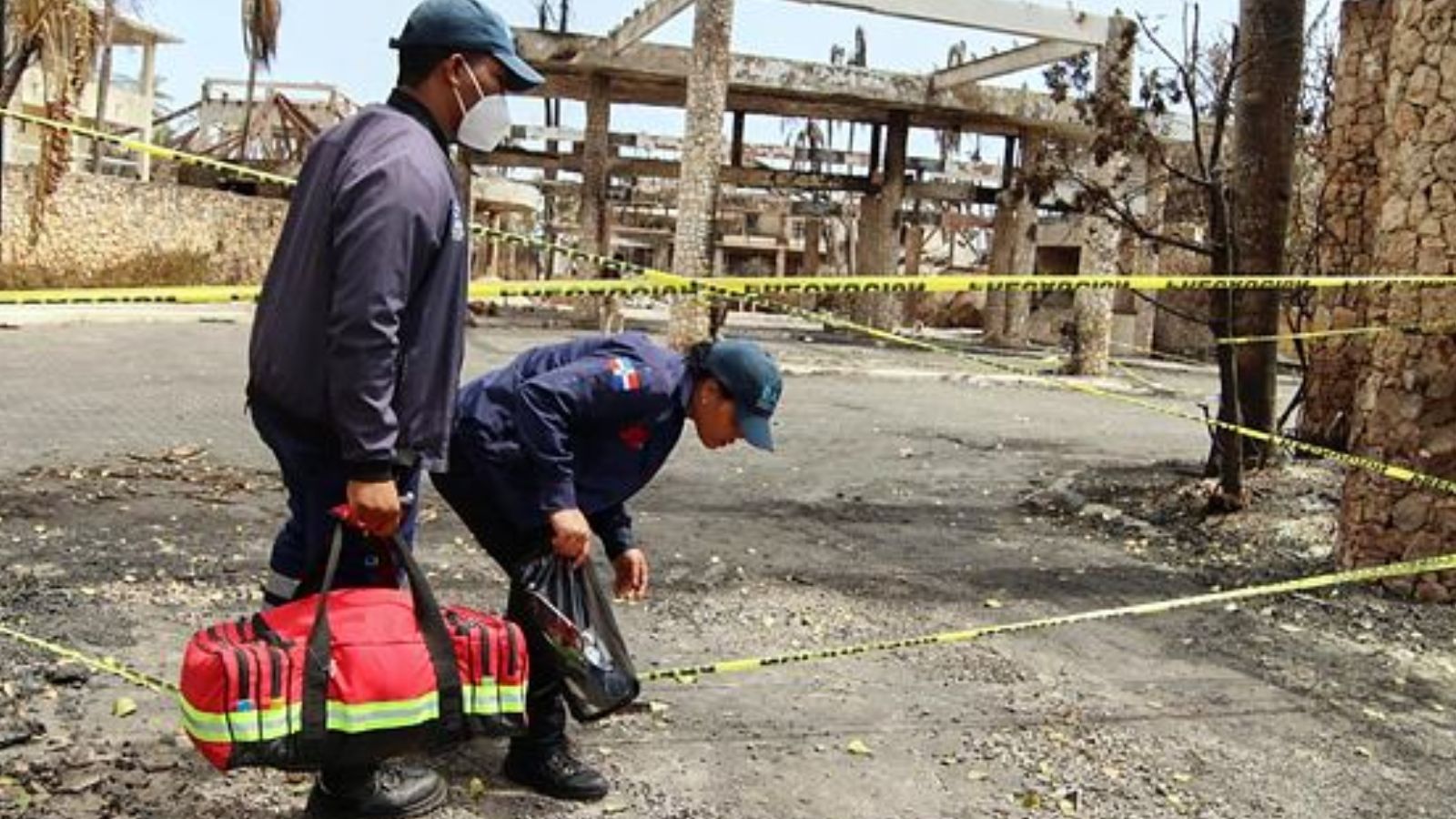
Large-scale hospitality operations are built on a fragile equilibrium between high-density guest containment and rapid egress capabilities. When an emergency disrupts this balance—such as the recent catastrophic fire at a Dominican Republic resort that resulted in the death of an Italian tourist and forced the evacuation of 1,700 guests—it exposes systemic vulnerabilities in international hospitality risk management. Standard news reporting focuses on the immediate chaos of the event. A structural analysis, however, reveals that such disasters are rarely the result of a isolated spark; instead, they represent a compounding failure across three distinct vectors: structural containment, operational readiness, and localized regulatory gaps.
Understanding these vectors requires moving past narrative descriptions and examining the cold mechanics of hospitality safety systems. For an international resort, managing a crisis involving thousands of concurrent occupants presents a logistical bottleneck identical to high-occupancy industrial facilities, yet it must be executed by untrained, transient civilians.
The Triad of Hospitality Risk Exposure
Hospitality infrastructure vulnerability can be quantified through three intersecting risk domains. When these domains fail simultaneously, a localized hazard escalates into a mass casualty or mass evacuation event.
1. The Passive Fire Protection Gap
Passive fire protection relies on structural engineering to contain smoke and flame within a specific zone, buying time for occupants to escape. In many tropical resort designs, architectural aesthetics frequently compromise passive protection.
- Material Flammability: The use of thatched roofs (palapas), exposed wooden beams, and synthetic aesthetic composites accelerates the rate of flame spread. These materials possess high heat release rates and generate dense, toxic smoke.
- Compartmentalization Failure: Open-air corridors, soaring atriums, and unsealed vertical service shafts create a chimney effect. This structural design draws fire upward and horizontally, bypassing standard room-level containment measures.
- Proximity of Assets: High-density layouts place guest accommodations in immediate physical proximity to high-risk infrastructure, such as commercial kitchens, laundry facilities, and main electrical distribution hubs.
2. Operational Egress Mechanics
The physical presence of life safety systems means nothing if the operational mechanics of evacuation fail. Evacuating 1,700 individuals simultaneously introduces severe crowd dynamics friction.
The first breakdown occurs during the detection-to-notification window. In optimal conditions, an automated system detects smoke, alerts a central monitoring station, and triggers audible alarms within seconds. In sub-optimal operational environments, delayed notification occurs because staff attempt to verify or suppress the fire internally before alerting guests, fearing false alarms or reputational damage. This delay reduces the available safe egress time.
The second breakdown involves the human element. Resort guests are unfamiliar with the physical layout, often disoriented by darkness or smoke, and frequently face language barriers with staff. When emergency lighting fails or emergency exit signage is obscured by smoke, crowd velocity drops significantly. This creates structural bottlenecks at primary exit points, increasing the risk of crushing injuries and smoke inhalation.
3. Regulatory and Enforcement Variance
International hospitality brands frequently operate under a dual standard. While internal corporate mandates may dictate strict adherence to international codes—such as the National Fire Protection Association (NFPA) standards—the actual execution is tethered to localized enforcement capabilities.
In developing tourism markets, municipal oversight often lacks the technical expertise or resources to conduct rigorous, unannounced inspections of complex suppression systems. Fire hydrants may lack adequate water pressure, local fire departments may lack specialized aerial apparatus, and municipal water grids may fail to sustain high-volume suppression efforts. The resort effectively becomes an isolated island responsible for its own structural survival during the critical first thirty minutes of an incident.
Quantifying the Cost of Prevention vs. Failure
The financial architecture of resort management often miscalculates the true cost function of life safety infrastructure. Capital expenditure on advanced suppression systems is frequently viewed as a sunken cost with zero direct return on investment. This perspective changes radically when calculating the total economic liability of an active failure.
The direct costs are immediate: property destruction, structural remediation, and immediate structural stabilization. The indirect and systemic costs, however, are far more severe and can permanently impair an asset’s valuation.
Total Crisis Liability = Direct Asset Damage + Business Interruption Losses + Litigation and Settlement Costs + Brand Equity Degradation
Business interruption losses extend far beyond the immediate closure period. A resort forced to displace 1,700 guests must absorb the immediate cost of relocation, refunds, and contract cancellations with major tour operators. Future bookings drop sharply as global distribution systems and travel agencies flag the property as high-risk.
Litigation and settlement costs in the wake of a fatality involving an international citizen introduce cross-jurisdictional legal battles. The parent brand, the local operating entity, and the insurance underwriters face protracted discovery processes probing maintenance logs, employee training records, and compliance certifications. If systemic negligence is proven, liability thresholds can easily exceed the limits of standard commercial general liability policies.
Implementing the Redundant Safety Protocol
To mitigate these risks, hospitality operators must shift from a posture of regulatory compliance to one of predictive engineering. This requires deploying a framework focused on structural and operational redundancy.
Phase 1: Hardening the Physical Infrastructure
The physical asset must be engineered to fail gracefully. This means isolating high-risk zones from guest zones using fire-rated assemblies capable of withholding intense heat for at least two hours. All architectural thatch or decorative organic material must be treated with certified fire-retardant chemical penetrants annually, with compliance verified through laboratory burn samples.
Automated suppression must feature zone-isolated pre-action sprinkler systems to prevent accidental discharge while ensuring immediate delivery when thermal thresholds are crossed. Furthermore, secondary back-up generators dedicated exclusively to life safety systems—powering emergency illumination, smoke evacuation fans, and fire pumps—must be housed in reinforced, detached structures to prevent them from being compromised by a primary building fire.
Phase 2: Operationalizing the Human Network
Operational readiness cannot rely on passive employee handbooks. It requires a continuous loop of practical testing.
Staff must undergo mandatory, position-specific emergency training every quarter. Housekeeping personnel, who possess the deepest knowledge of guest room layouts, must be trained as primary evacuation wardens, equipped with clear protocols to clear floors systematically. Night shifts require special attention; staffing levels are lowest when guest vulnerability is highest due to sleep. Night audits and security teams must be authorized to initiate a full-scale automated evacuation immediately upon verified system activation without waiting for executive managerial approval.
The Strategic Path Forward
The occurrence of catastrophic fires in high-density tourism zones demonstrates that the status quo of relying on localized building codes is an unacceptable risk management strategy for international operators. Brands must assume total institutional responsibility for their life safety environments.
The next logical step for asset owners and management companies is the implementation of mandatory, third-party audited fire safety indices across all properties. These ratings should be decoupled from local regulatory approvals and tied directly to international underwriting standards. Operators who fail to achieve top-tier metrics must face immediate capacity restrictions or insurance premium penalties. In the modern hospitality economy, structural safety is no longer a hidden operational metric—it is the core baseline of operational viability.


