When a priest was murdered in Poland, the reaction from nationalist political factions was instantaneous. A tragedy occurred, and opportunistic politicians immediately seized the narrative to demand a sweeping immigration crackdown against Ukrainian nationals living in the country. This reflex is familiar. It is the predictable playbook of modern populism, where individual criminality is repurposed as collective indictment. Yet, looking only at the political posturing misses the deeper institutional strain gripping Central Europe.
Warsaw faces a complex social reality. Millions crossed the border seeking refuge following the escalation of the conflict to the east. Initially, the response was defined by open doors and grassroots solidarity. Ordinary citizens opened their homes. Schools absorbed children with zero preparation time. Bureaucracy bent backward to accommodate an unprecedented humanitarian wave.
That goodwill now collides with economic friction, housing shortages, and the quiet erosion of public patience. When a violent crime pierces the surface of society, it acts as a chemical catalyst. It forces dormant anxieties out into the open. Politicians do not create these anxieties from whole cloth. They harvest them from existing grievances, channeling public fear into specific policy demands.
To understand why a single violent act can trigger parliamentary calls for mass border restrictions, one must examine the fragility of long-term integration structures. Emergency hospitality has an expiration date. What feels noble and necessary during the acute phase of a crisis curdles into resentment when systems buckle under sustained pressure.
Housing markets in major Polish cities strained under the weight of sudden demand. Healthcare clinics absorbed patients without proportional funding increases. Schools struggled with language barriers. These are mundane administrative failures, but they accumulate. They create an undercurrent of public unease. When a high-profile crime occurs, it provides a focal point for that diffuse anxiety. The crime becomes a symbol for every minor frustration an overburdened citizen has felt over the past several years.
Nationalist politicians understand this dynamic with clinical precision. They do not wait for investigations to conclude before weaponizing the details. Every procedural nuance of the criminal justice system is bypassed in favor of broad generalizations. The argument shifts effortlessly from holding an individual perpetrator accountable to questioning the fundamental integrity of an entire nationality.
This approach relies on a specific rhetorical sleight of hand. It conflates the actions of a single rogue actor with the statistical baseline of an entire diaspora. Hundreds of thousands of people work, pay taxes, and quietly rebuild their lives within Polish society. They staff hospitals, drive delivery trucks, and keep manufacturing lines moving. Yet, their daily normalcy holds no news value. Only the exception makes headlines. Only the worst-case scenario fuels the political machinery.
The demand for a crackdown is rarely about public safety in the truest sense. It is about control. It is about signaling to a domestic electorate that the state can still draw hard lines on a map, even when global forces make borders porous and unpredictable. When citizens feel powerless against economic inflation and geopolitical instability, the promise of a wall or a deportation decree offers psychological comfort. It is a simple answer to a deeply complicated structural problem.
Consider how institutional memory shapes this dynamic. Poland has historically been one of the most ethnically homogeneous nations in Europe. Rapid demographic shifts, even when culturally proximate, challenge traditional notions of national identity. The cultural proximity between Poles and Ukrainians initially softened the transition. Both nations share Slavic roots, historical ties, and a common geopolitical adversary. But proximity does not eliminate friction. Cultural differences, historical grievances regarding past conflicts, and linguistic nuances bubble up under high-stress conditions.
When politicians call for tighter controls, they tap into these latent historical anxieties. They whisper that the hospitality was a mistake, that the guests have overstayed their welcome, and that national sovereignty requires defensive isolation. This narrative gains traction precisely because it feeds on a kernel of truth. Integration is messy. Assimilation is incomplete. Not every arrival is a model citizen.
Yet, treating a crime committed by an individual as evidence of a systemic policy failure requires ignoring basic principles of criminal jurisprudence. Individual accountability gets replaced by collective guilt. If the logic holds, every nationality must answer for the worst acts of its worst members. No society could survive such a standard for long.
The economic argument against a sudden crackdown is equally stark, though rarely voiced by those shouting the loudest on parliamentary podiums. The Polish economy absorbed the new labor force rapidly. Sectors facing severe labor shortages found relief in the influx of workers. Construction, logistics, and agriculture rely heavily on this labor pool. A sudden, politically motivated expulsion or severe restriction of workers would create immediate supply chain disruptions and wage spikes that would hurt domestic consumers.
Populist rhetoric rarely concerns itself with economic collateral damage. The objective is polarization. By framing immigration as an existential threat, politicians create an us-versus-them binary that leaves little room for nuance or compromise. You are either for secure borders and national sovereignty, or you are soft on crime and indifferent to the safety of citizens. This false dichotomy paralyzes rational debate.
The mainstream political establishment often struggles to counter this narrative. To defend the broader migrant population against unfair generalizations is portrayed by opponents as dismissing the gravity of the crime itself. This puts defenders of human rights and pragmatic policy on the defensive. They are forced to apologize for an individual's monstrous actions while trying to explain complex sociological data to an electorate inflamed by grief and anger.
Behind the political theater lies the human tragedy of the crime itself. A life was cut short. A community lost a spiritual leader. That pain is real. It demands justice through the courts, a thorough investigation, and accountability under the law. Turning that grief into a political football dishonors the victim. It substitutes vengeance for justice and prejudice for policy.
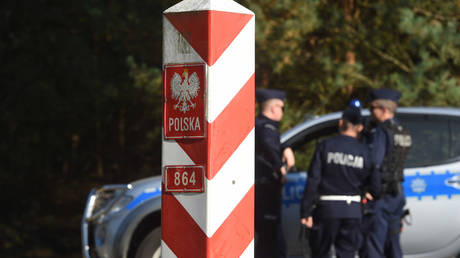
As the debate moves from television studios to parliamentary committees, the real test for Poland is not whether it can secure its borders. Modern states can always build fences and pass stricter visa regulations. The true test is whether institutional systems can resist the temptation to govern by panic. When a nation surrenders its long-term strategic interests to the emotional shock of a single violent event, it invites instability of a different kind.
The populist demand for a crackdown will likely produce legislative proposals, heated debates, and symbolic votes. Whether those measures translate into effective policy remains doubtful, given the economic realities binding the two nations together. But the rhetorical damage is already done. Trust frays a little more. The social fabric stretches a little thinner.
The underlying friction points will not disappear when the news cycle shifts. They will persist in crowded emergency rooms, oversubscribed classrooms, and factory floors across the country. Managing those frictions requires patience, administrative competence, and an unwavering commitment to the rule of law. None of those qualities make for an effective soundbite. None of them fit neatly on a protest banner. Yet they remain the only tools capable of holding a fractured society together when the worst happens.