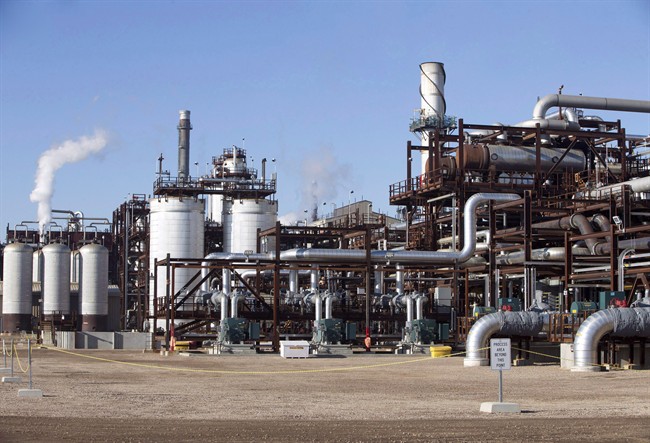
The proposed expansion of Alberta’s hydrocarbon export capacity—specifically the development of a new one-million-barrel-per-day pipeline to the Pacific coast—hinges entirely on an enforcement mechanism dubbed the "grand bargain" by federal and provincial authorities. To secure regulatory clearance for this export infrastructure, the newly restructured Oil Sands Alliance must execute a structural emissions offset: the construction of a CAD 16.5 billion Carbon Capture and Storage (CCS) network designed to sequester 16 million tonnes of carbon dioxide annually by 2035.
While political discourse treats this infrastructure trade-off as a binary policy negotiation, a rigorous engineering and economic evaluation reveals that the project’s primary bottleneck is not ideological, but structural. The physical architecture of the proposed system requires a distributed capture model across highly heterogeneous industrial assets, connected to a centralized sequestration hub via a complex midstream network. Bridging the gap between this capital-intensive infrastructure and economic viability requires a precise alignment of thermodynamic efficiency, geological realities, and sovereign risk mitigation frameworks. You might also find this similar article interesting: The Anatomy of Peruvian Mining Risk: Why Campaign Platforms Jeopardize a $63 Billion Capital Pipeline.
The Three Pillars of the Structural Architecture
The proposed network operates across three distinct operational segments: decentralized industrial capture, a midstream trunkline collection system, and a deep saline aquifer storage hub. Each phase introduces distinct thermodynamic and volumetric variances that dictate total system expenditures.
1. The Capture Variance Function
Emissions capture is localized at 13 distinct oilsands facilities managed by five discrete operators: Canadian Natural Resources Ltd., Cenovus Energy Inc., Imperial Oil Ltd., Suncor Energy Inc., and ConocoPhillips Canada. Because these assets encompass both surface mining operations and steam-assisted gravity drainage (SAGD) facilities, the flue gas composition varies significantly. As reported in latest articles by Harvard Business Review, the implications are significant.
The thermodynamic cost of carbon separation is inversely proportional to the partial pressure of $CO_2$ in the source stream. Flue gases from standard steam generators and process boilers contain highly diluted $CO_2$ concentrations, typically between 4% and 14%, mixed with nitrogen, water vapor, and particulate matter. Isolating the target molecules requires an energy-intensive chemical absorption process using aqueous amine solvents. The cost function of this phase is highly sensitive to the parasitic energy load—the diversion of process steam and electricity from regular operations to regenerate the solvent matrix and drive the compression phase, which converts gaseous $CO_2$ into a supercritical fluid.
2. Midstream Gathering and Hydraulics
Once isolated and compressed, the supercritical fluid must enter a 650-kilometer pipeline network comprising 16 lateral gathering segments that feed into a central transmission artery. Supercritical $CO_2$ behaves with the density of a liquid but the viscosity of a gas, requiring precise pressure management above its critical point of 7.39 MPa (1,071 psi) and temperature of 31.1°C.
Maintaining this phase envelope across 650 kilometers of sub-Arctic terrain requires strategic booster compression stations to prevent phase separation. If the pipeline pressure drops below the critical threshold, two-phase flow occurs, triggering severe hydrodynamic vibration, cavitation, and localized cooling that threatens the structural integrity of the steel pipeline.
3. Geological Sequestration Mechanics
The final destination is the Basal Cambrian Sandstone formation located near Cold Lake, Alberta, at depths ranging between 1,000 and 2,000 meters. The selection of this reservoir depends on two critical geological variables: porosity and permeability. The sandstone acts as a subterranean sponge, offering interconnected pore spaces to host the injected fluids. Concurrently, containment integrity relies on an upper bounding seal consisting of thick, non-porous evaporite rock salt formations.
$$\text{Containment Margin} = P_{\text{fracture}} - P_{\text{injection}}$$
Long-term containment security requires that the reservoir injection pressure never exceeds the mechanical fracture pressure of the overlying caprock. Exceeding this threshold risks inducing micro-seismic events or creating artificial migration pathways for the sequestered gas to escape back into shallow freshwater aquifers or the atmosphere.
Capital Expenditure Asymmetry and the Margin Bottleneck
The financial structure of Canadian CCS deployment is fundamentally different from the asset-monetization frameworks utilized in the United States. This structural variance creates an asymmetric risk profile for domestic producers.
| Dimension | Canadian Framework | United States Framework (45Q) |
|---|---|---|
| Primary Incentive Type | Capital Expenditure (CapEx) Subsidies | Operational Credit (OpEx) Monetization |
| Federal Mechanism | Investment Tax Credit (ITC) | Direct Pay / Transferable Tax Credits |
| Provincial/State Support | 12% Alberta CCUS Grant | Supplemental State Low-Carbon Fuel Standard (LCFS) |
| Long-Term Revenue Model | Compliance-Driven Carbon Offset Markets | Fixed Performance-Based Revenue ($85/tonne for Sequestration) |
| Sovereign Risk Exposure | High (Policy-dependent market pricing) | Low (Statutory federal tax code guarantees) |
The Canadian policy design concentrates public capital injections at the front end, offering federal tax credits and provincial grants to offset a portion of initial construction costs. However, it leaves the ongoing operational viability of the project exposed to the volatility of domestic compliance credit markets. Conversely, the United States utilize the Section 45Q tax code, which provides a guaranteed, federally backed payment per metric tonne sequestered over a 12-year operational window. This statutory guarantee allows American operators to secure low-cost project finance debt against predictable, fixed cash flows.
Canadian operators face a compounding economic challenge: operating expenditures on existing commercial-scale facilities within the province are inflating at double the rate of actual volume throughput. This margin compression stems from the rising costs of chemical reagents, power consumption for continuous compression, and specialized maintenance required for highly corrosive supercritical fluid systems. Because the capital grant model fails to shield operators from these escalating variable inputs, the risk profile shifts entirely onto the back-end operational life cycle of the asset.
Policy Friction and the Economics of Sovereign Risk
The economic viability of the project depends entirely on an artificial price signal generated by industrial carbon pricing policy. The recent bilateral agreement between the federal government and the province of Alberta establishes a target industrial carbon price of CAD 130 per metric tonne by the year 2040. Financial modeling from independent policy groups suggests that a sustained carbon price between CAD 130 and CAD 150 per tonne is the baseline economic threshold required to achieve a net-positive present value for the infrastructure network.
However, a structural deficit persists because of policy uncertainty. A long-term infrastructure asset requiring a 25-to-30-year amortization period cannot be financed on a market price that is subject to regulatory changes or shifting political administrations. If a future legislature repeals or lowers the industrial carbon pricing schedule, the asset's revenue stream disappears, leaving the unamortized capital stranded.
To mitigate this structural risk, project proponents have conditioned final investment decisions on the execution of Carbon Contracts for Difference (CCFDs). These contracts function as a sovereign insurance mechanism:
- Strike Price Stabilization: The state guarantees a fixed floor price for every tonne of carbon sequestered (e.g., CAD 130/tonne).
- Market Clearing Settlement: If the actual market value of industrial carbon credits falls to CAD 90 due to policy changes or credit oversupply, the sovereign counterparty pays the operator the CAD 40 difference.
- Liability Allocation: Under the terms of the recent implementation framework, if either tier of government unilaterally alters the underlying climate policy or repeals the enabling legislation, that specific jurisdiction assumes sole financial liability for fulfilling the outstanding contractual payments.
This framework transforms political risk into a quantifiable sovereign balance-sheet liability, providing the revenue predictability required to justify capital deployment.
Structural Liabilities and Public Risk Transfer
Even if financial viability is achieved via sovereign contracts, long-term operational liabilities present a significant challenge. The physical process of permanent geological storage introduces structural liabilities that span centuries.
During active injection, the primary risk is pressure build-up within the Basal Cambrian Sandstone. High-pressure injection can alter regional hydrogeological flow regimes. If the displaced hypersaline brine migrates vertically into shallower groundwater zones, it can cause irreversible salinization of agricultural water resources. Furthermore, the introduction of large fluid volumes into deep formations alters the local stress state, risking induced seismicity along previously unmapped fault lines.
The long-term financial risk arises from the post-closure phase. Once an injection well reaches its volumetric capacity and is plugged, it requires continuous measurement, monitoring, and verification (MMV) to confirm that the plume remains contained beneath the evaporite salt seal. This involves seismic imaging, satellite deformation monitoring, and geochemical sampling of overlying horizons.
Under current Alberta regulatory frameworks, these long-term monitoring obligations and their associated financial liabilities are scheduled to transfer to the public domain after a specified post-closure monitoring window. If containment failure occurs decades after the transfer—resulting in slow atmospheric leakage or groundwater contamination—the public assumes the financial burden of remediation, litigation, and the purchase of replacement carbon credits to offset the leaked volumes. The industry privatizes the near-term economic upside of continued production and export capacity while transferring the long-term tail risks of geological containment to the provincial balance sheet.
The Strategic Path Forward
To resolve the impasse and advance the infrastructure network toward a final investment decision, stakeholders must pivot from political negotiations to a performance-indexed capital allocation strategy.
First, the Oil Sands Alliance must transition its engineering focus from generalized capture targets to a standardized, modular deployment of advanced amine and solid-sorbent carbon capture units across all 13 targeted sites. By decoupling the midstream pipeline construction from the immediate completion of every upstream facility, the consortium can initiate Phase 1 operations using only high-concentration, low-parasitic-load emission sources. This targeted deployment optimizes early capital utilization, lowers immediate energy input requirements, and establishes a baseline operational cash flow before expanding into more complex, low-concentration flue gas streams.
Second, the federal and provincial governments must finalize a risk-balanced Carbon Contract for Difference facility that features a declining strike-price schedule indexed to technology maturation. The floor price should start at CAD 140 per tonne to absorb early inefficiencies, then gradually step down to CAD 110 per tonne over a 15-year horizon. This structure incentivizes operators to aggressively reduce post-capture operating costs through process optimization and energy efficiency gains, ensuring that the project shifts toward market self-sufficiency and away from open-ended public reliance.
Finally, to address long-term public liability concerns and secure community support, the consortium must establish a privately funded, long-term environmental remediation trust. This fund must be capitalized during the active injection phase via a mandatory levy per tonne of sequestered $CO_2$. The resulting capital pool will remain dedicated to financing post-closure monitoring and remediation work, protecting the public from structural tail risks while clearing the regulatory pathway for the essential export pipeline to the West Coast.