The asymmetry between unilateral enforcement claims and actual physical maritime throughput in the Strait of Hormuz exposes a structural decoupling of geopolitical rhetoric from logistics data. On June 20, 2026, the Iranian Islamic Revolutionary Guard Corps declared the strategic waterway closed, citing ceasefire violations. Concurrently, United States Central Command reported the unhindered transit of 55 commercial vessels moving over 17 million barrels of oil within the same 24-hour window. This divergence reveals that maritime control in narrow waterways is not a binary state of open or closed, but a complex risk function driven by state-approved routing, naval enforcement parameters, and corporate risk tolerances.
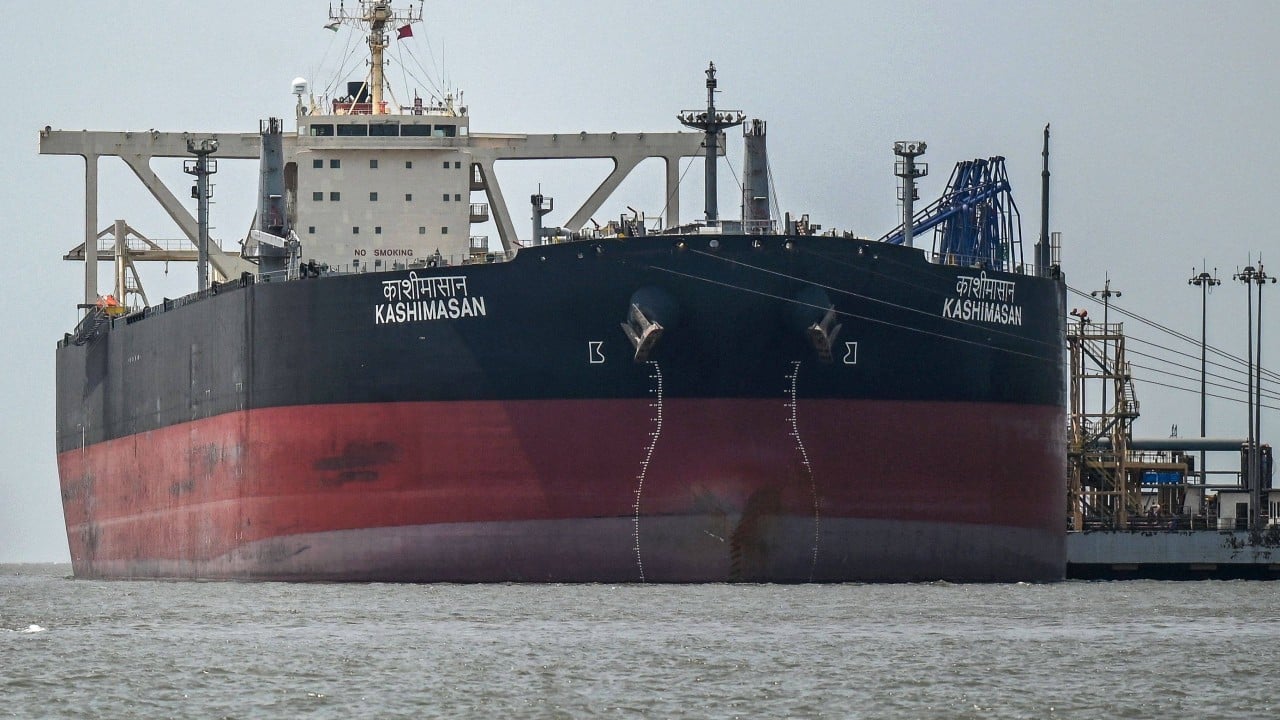
The clear operational expression of this dynamic is the successful exit of three Indian-flagged crude oil supertankers—the Desh Vaibhav, Desh Vibhor, and Sanmar Herald—from the Persian Gulf into the Gulf of Oman. Carrying a combined volume of approximately 860,000 metric tonnes (nearly 6 million barrels) of Iraqi and Kuwaiti crude oil, these vessels did not breach a hard blockade. Instead, they navigated a highly calculated, state-coordinated corridor that highlights the real-world mechanics of modern maritime choke points.
The Operational Mechanics of the Frictionless Corridor
The successful passage of Indian tonnage during a declared blockade indicates that transit security depends on three operational variables rather than abstract geopolitical alliances.
1. Cargo Origin and Diplomatic Neutrality
The crude oil carried by the three supertankers originated from Iraq and Kuwait, not sanctioned Iranian terminals or Western-aligned states directly involved in active hostilites. By transporting non-contentious energy assets destined for a neutral major importer, the vessels minimized their profile as high-value retaliatory targets. Iran’s strategy relies on selective interdiction to maximize political capital while avoiding total economic isolation. Targeting Indian-bound neutral energy supplies risks alienating one of the few remaining major non-aligned economic actors in the region.
2. State-Approved Tracking and De-escalation Passages
Ship-tracking data indicates that the supertankers targeted paths proximate to Qeshm Island before re-emerging in the Gulf of Oman. This route strongly implies adherence to specific corridors permitted by Tehran's maritime authorities. Under this operational framework, selective transit is granted to shipping lines that cooperate with local transponder signaling protocols, effectively creating a multi-tiered shipping lane where compliant, neutral entities move safely while non-compliant or adversarial hulls face interdiction.
3. Asymmetric Naval Coverage
While United States naval assets maintain an active presence to enforce freedom of navigation, their protection mechanism acts as a general deterrent rather than an individualized escort system. The primary protection for these three specific tankers was not direct Western intervention, but the diplomatic alignment between New Delhi and regional authorities. This balance allows commercial operators to bypass the high insurance premiums associated with war-risk zones by utilizing state-level channels to secure safe passage.
The Cost Function of Transit Risk and Insurance Friction
The primary constraint on global energy logistics during a choke point crisis is not the physical destruction of vessels, but the financial friction introduced by capital markets. When a state declares a waterway closed, it shifts the risk equations for maritime insurers, re-allocating capital away from affected shipping lanes.
The economic impact follows a predictable sequence:
- War Risk Premium Spikes: Once a blockade is declared, underwriting syndicates impose additional premiums on hulls transiting designated zones. These costs can scale to a significant percentage of the vessel's total asset value per transit, rendering unescorted or non-aligned commercial voyages economically unviable.
- The Surcharging of Diverted Tonnage: If operators avoid the Strait of Hormuz entirely, the alternative involves multi-week rerouting around the Cape of Good Hope. This introduces massive operational friction, increasing fuel consumption expenditures and tightening global vessel capacity.
- The Cargo Discount Equilibrium: To offset these soaring logistics expenses, landlocked Persian Gulf producers are forced to discount their crude barrels at the terminal. This discount maintains the competitiveness of the oil against alternative global benchmarks like Brent or West Texas Intermediate, which do not carry the same geopolitical friction.
India’s strategic reliance on the Persian Gulf for over 70% of its crude requirements prevents long-term supply diversification. The Indian Ministry of Ports, Shipping, and Waterways manages this systemic vulnerability by coordinating directly with regional coast guards and deploying domestic naval escorts when necessary. This tactical intervention guarantees that state-owned vessels can maintain imports without relying solely on volatile commercial commercial insurance markets.
The Structural Limits of Choke Point Interdiction
A critical assessment of the conflict shows that absolute control over international straits is a strategic impossibility for middle-tier regional powers. While Iran possesses the asymmetric capacity—via fast attack craft, loitering munitions, and anti-ship cruise missiles—to disrupt traffic temporarily, sustaining a total blockade triggers diminishing strategic returns.
The first limitation is the economic dependency of the blockading state on global supply lines. A prolonged, absolute closure of the Strait of Hormuz halts all commercial traffic, including the blockading nation's own imports of refined products and industrial equipment. This creates a severe domestic supply bottleneck that undermines the sustainability of the military operation.
The second limitation is the inevitability of a combined international response. The global economy cannot absorb a permanent 20% contraction in liquid energy supply without entering a severe recessionary cycle. Consequently, a total closure acts as a trigger for direct, high-intensity naval operations by importing nations to restore commercial throughput.
The strategy therefore shifts from physical closure to strategic ambiguity. By keeping the legal and physical status of the strait uncertain, regional actors can artificially sustain a geopolitical risk premium on global oil prices. This dynamic serves domestic revenue requirements while avoiding the direct military retaliation that a literal, airtight blockade would provoke.
The real threat to maritime energy logistics is not an absolute barrier, but a fragmented system where separate blocks of vessels operate under completely different security protocols. Western-aligned tonnage faces high operational friction and active denial, while neutral or state-protected vessels navigate specialized bilateral corridors. Commercial operators must discard traditional assumptions of open international waterways. Survival in disrupted maritime sectors requires direct integration with sovereign diplomatic frameworks, rigid adherence to localized routing protocols, and the financial capacity to absorb localized insurance spikes.