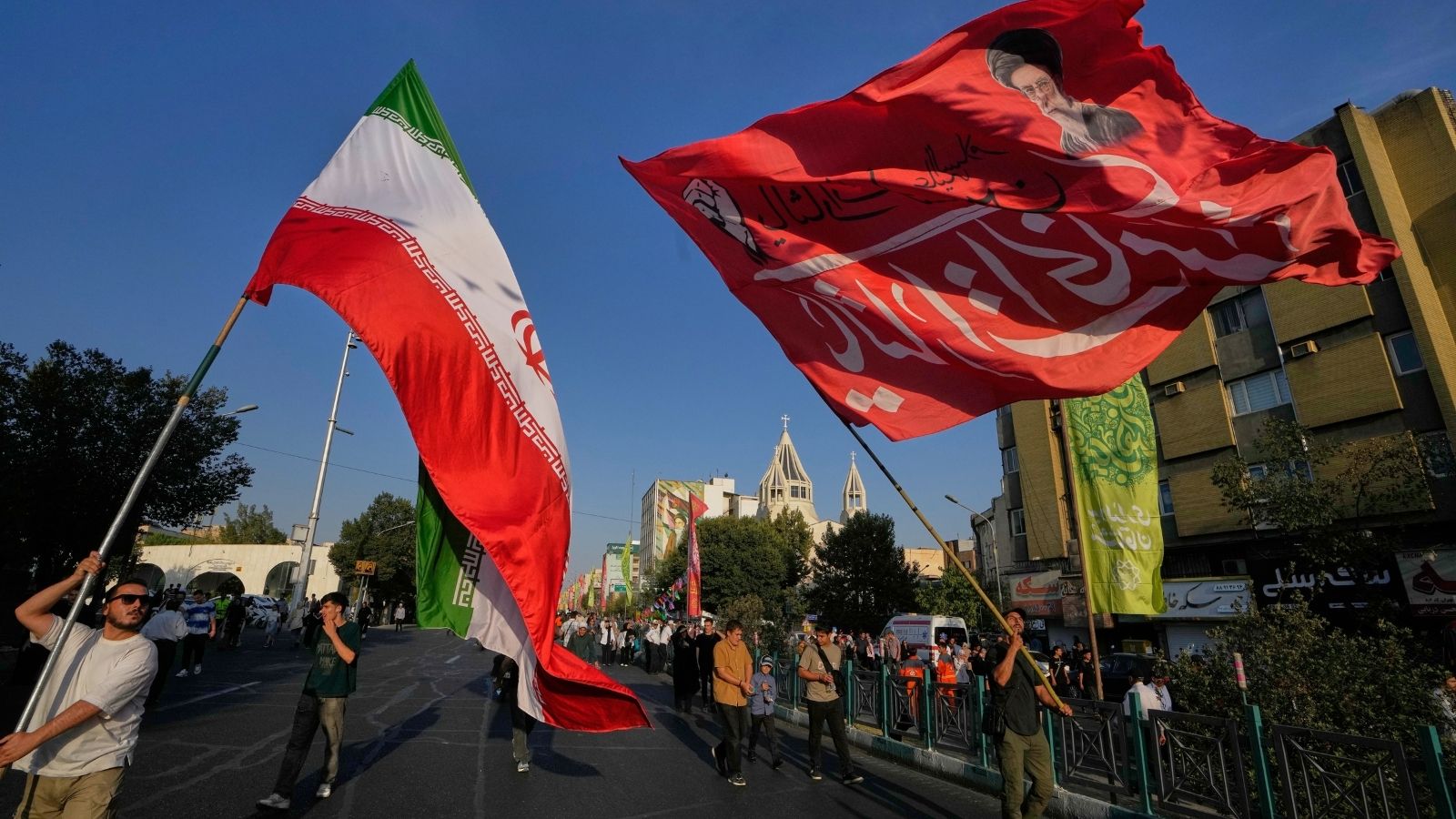
Geopolitical stability in the Persian Gulf depends on a fragile equilibrium of missile defense systems, maritime choke points, and economic pressure campaigns. When air defense networks intercept incoming projectiles over territorial waters, the event represents the terminal phase of a complex chain of military escalation and economic statecraft. Understanding this security architecture requires analyzing the mechanical realities of modern aerial threats, the cost functions of interception, and the broader strategic feedback loops dictating state behavior in the Middle East.
The Cost Function of Modern Air Defense
The economic asymmetry of modern missile and drone warfare creates a severe structural disadvantage for defending nations. Low-cost uncrewed aerial vehicles and rudimentary rockets require exponentially more expensive kinetic interceptors to neutralize.
- The Unit Economics Gap: Offensive systems like loitering munitions or basic prop-driven drones can be manufactured for a fraction of the cost required to deploy sophisticated surface-to-air missile batteries.
- Resource Depletion Metrics: Sustained interception operations force militaries to burn through finite stockpiles of precision-guided interceptors faster than industrial supply chains can replenish them.
- Collateral Risk Mitigation: Intercepting threats over sovereign territorial waters or populated landmasses introduces debris hazards, requiring multi-layered interception rings that drive up operational expenditures.
When defense ministries report successful neutralizations over coastal zones, the physical act masks an underlying financial attrition strategy. State actors employing asymmetric drone tactics rely on the mathematical certainty that forcing a defender to expend high-value assets yields long-term strategic fatigue.
The Maritime Choke Point Feedback Loop
Aerial escalations do not occur in a vacuum; they function as direct levers applied to global trade corridors, specifically the Strait of Hormuz. The security of maritime traffic and airspace sovereignty are coupled variables within the broader theater.
[Economic Sanctions] ---> [Asymmetric Naval/Aerial Posture] ---> [Choke Point Disruption] ---> [Air Defense Activation]
When international financial pressure intensifies against resource-dependent economies, the targeted state often responds by escalating kinetic posturing near vital maritime transit lanes. Minelaying operations, offshore rocket deployments, and long-range drone vectoring serve as direct counter-measures to economic isolation.
- The Trade Route Vulnerability: A significant percentage of global energy supplies transit through narrow regional corridors, making localized drone and missile vectors an effective tool for disrupting international markets without triggering total war.
- Sovereignty Violations: Incursions into territorial airspace compel neutral or aligned regional states to abandon diplomatic neutrality, forcing rapid alignment shifts and commercial airspace closures.
- Retaliatory Precision: Counter-strikes against localized missile launchers are generally calibrated to be limited and precise, designed to degrade offensive capabilities without escalating into full-scale regional conflict.
Strategic Realities of Regional Deterrence
Deterrence architecture in the Gulf relies on overlapping security umbrellas and rapid intelligence sharing. However, the introduction of advanced air defense exports and bilateral defense agreements alters the regional balance of power.
Nations modernizing their defensive matrix through multi-layered air defense systems are attempting to solve the coverage problem created by saturation attacks. Yet, technology acquisition does not eliminate strategic vulnerability. The operational readiness of air defense networks depends entirely on early warning radar fidelity and the speed of command-and-control response chains.
The strategic play moving forward relies on decoupling airspace security from maritime economic coercion. Until defensive systems achieve cost parity with asymmetric offensive vectors through directed-energy solutions or low-cost interceptor variants, regional actors will remain locked in a high-expenditure defensive posture. The objective for front-line states is to institutionalize automated, multi-tiered threat elimination while insulating commercial logistics from the recurring shocks of asymmetric engagement.
UAE Air Defence Intercepts Iranian Missiles And Drones
This footage and analysis provides visual context on how modern air defense systems coordinate responses during multi-vector aerial engagements in the region.