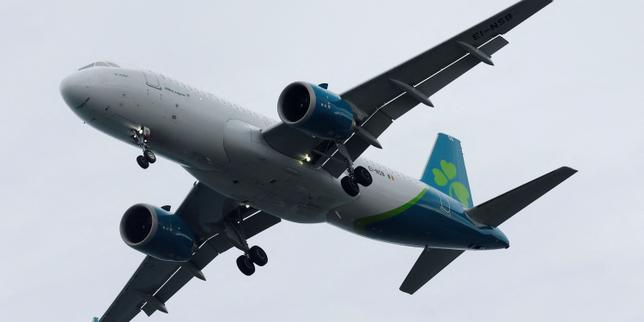
When a commercial airliner suddenly descends below 10,000 feet during an active security alert, aviation safety protocols—not structural failure or pilot panic—dictate the maneuver. Standard media coverage frequently frames a rapid altitude drop during a bomb threat as an uncontrolled plunge, obscuring the deterministic physics and regulatory procedures that govern commercial flight decks under threat conditions. Understanding why an Aer Lingus flight or any commercial carrier executes a rapid descent below the 10,000-foot threshold requires deconstructing cabin pressurization mechanics, explosive overpressure physics, and international air traffic priority hierarchies.
The Physics of Cabin Pressurization and Structural Integrity
Commercial transport aircraft operate at cruising altitudes between 31,000 and 41,000 feet to maximize aerodynamic efficiency and fuel economy. At 35,000 feet, ambient atmospheric pressure drops to approximately 3.46 pounds per square inch (psi), compared to 14.7 psi at sea level. To keep passengers and crew conscious without supplemental oxygen masks, the aircraft environmental control system compresses bleed air from the engines to maintain an internal cabin altitude equivalent to roughly 6,000 to 8,000 feet, equating to an internal pressure of roughly 10.9 to 11.8 psi.
This operational environment creates a massive pressure differential across the aluminum or composite fuselage skin—often exceeding 7.5 to 8.6 psi. Every square inch of the pressure vessel bears outward mechanical stress. Under normal operating conditions, the fuselage manages this hoop stress effortlessly through redundant structural frames and stringers.
Introducing a credible explosive threat alters this structural calculus immediately. If an explosive device detonates inside a pressurized cabin at 35,000 feet, two distinct destructive mechanisms occur simultaneously:
- Blast Wave Overpressure: The localized kinetic shockwave from the detonation damages adjacent structural ribs, control cables, or hydraulic lines.
- Explosive Decompression: The breach in the fuselage allows the high-pressure internal air to rush violently toward the low-pressure external atmosphere. The sudden pressure equalization tears away weakened structural panels, multiplies the initial blast radius, and exposes occupants to immediate hypoxia and extreme sub-zero temperatures.
By initiating an emergency descent to an altitude below 10,000 feet, the flight crew systematically eliminates the pressure differential. At or below 10,000 feet, ambient outside air pressure rises to roughly 10.1 psi or higher. The outflow valves open, equalizing internal and external pressures. Eliminating the pressure differential removes the secondary structural threat of explosive decompression. Should a small device detonate at 8,000 feet, the damage remains localized to the immediate blast radius rather than cascading into a catastrophic hull failure driven by escaping pressurized air.
The 10,000-Foot Physiological Threshold
The selection of the 10,000-foot ceiling is anchored in human respiratory physiology and regulatory engineering standards. Above 10,000 feet, the partial pressure of oxygen in the atmosphere falls below the threshold required to maintain adequate blood oxygen saturation in unacclimatized humans. At 35,000 feet, the Time of Useful Consciousness (TUC)—the window during which an individual can perform rational, life-saving tasks before cognitive impairment sets in—is between 30 and 60 seconds.
Commercial airliners carry chemical oxygen generators or compressed gaseous oxygen systems designed to bridge the gap between a decompression event and a descent to breathable air. Chemical oxygen generators typically provide a finite supply lasting 12 to 22 minutes.
Descending below 10,000 feet achieves two operational objectives:
- Elimination of Hypoxia Risk: Passengers and crew can breathe ambient air indefinitely without supplemental oxygen systems, rendering potential damage to overhead oxygen manifolds irrelevant.
- Preservation of Flight Crew Cognition: Pilots retain full cognitive acuity to manage complex diversion checklists, communicate with air traffic control (ATC), and execute an overweight or off-schedule landing.
Operational Mechanics of an Emergency Descent
An emergency descent is a standardized, high-energy maneuver practiced biannually by commercial pilots in full-motion simulators. When a flight crew receives notification of a credible security threat—whether discovered via a physical note, an electronic transmission, or an onboard suspicious item—they execute a strict sequence of actions prioritized by the aviation axiom: aviate, navigate, communicate.
Step 1: Altitude and Speed Selection
The pilot flying disconnects the autothrottle, retards the thrust levers to idle, and deploys the flight spoilers (speed brakes) to maximize aerodynamic drag. The pilot simultaneously dials the target altitude—typically 10,000 feet or the Minimum Sector Altitude (MSA) if terrain dictates a higher floor—into the Mode Control Panel (MCP).
Step 2: Pitch and Airspeed Management
To achieve maximum vertical descent rates without exceeding the aircraft’s structural speed limits—Maximum Operating Limit Speed ($V_{MO}$) or Maximum Operating Mach Number ($M_{MO}$)—the aircraft pitches nose-down. Vertical descent rates during this phase commonly reach 4,000 to 6,000 feet per minute. While alarming to passengers unaccustomed to negative vertical acceleration, these rates remain well within the certified structural envelope of modern narrow-body and wide-body aircraft.
Step 3: ATC Coordination and Squawk 7700
The pilot monitoring sets the transponder to code 7700, the universal aviation squawk code for an in-flight emergency. This triggers an immediate visual and auditory alert on ATC radar screens across the sector. Simultaneously, the crew broadcasts a "Mayday" call on the active frequency, stating their callsign, the nature of the emergency, their immediate intentions, and the number of souls on board plus fuel remaining. ATC immediately clears all airspace below and ahead of the aircraft, vectoring conflicting traffic away to grant the distressed flight unrestricted vertical and lateral priority.
Threat Assessment Frameworks in Commercial Aviation
Not every security anomaly triggers a rapid descent and immediate diversion. Airlines and national aviation authorities utilize structured threat assessment matrices—often categorized into tiered levels—to balance operational safety against the risks of an unscheduled emergency landing.
Level 1: Unspecific or Low-Credibility Threats
Threats received via external channels (such as anonymous phone calls to a call center) lacking specific flight details, device descriptions, or corroborating physical evidence onboard generally trigger enhanced ground monitoring and destination screening rather than an immediate emergency descent.
Level 2: Credible or Unverified Onboard Anomalies
The discovery of an unidentified package, an erratic passenger making explicit threats, or a physical note found inside the cabin elevates the event to a high-priority security incident. Because the flight crew cannot verify the inert nature of a suspicious object while airborne, standard operating procedures mandate treating the threat as genuine.
Level 3: Confirmed Threat or Imminent Hazard
Direct visual confirmation of a device or an active security breach triggers immediate descent and diversion to the nearest suitable airfield.
This decision matrix carries inherent operational trade-offs. Executing an emergency descent and immediate diversion introduces secondary risks:
- Overweight Landings: Short-haul and medium-haul flights departing with full fuel tanks may exceed their Maximum Structural Landing Weight (MLW) if forced to land shortly after takeoff. Pilots must either burn fuel, jettison fuel (if equipped, primarily on wide-body aircraft), or execute an overweight landing, which requires longer runway distances and post-landing structural inspections of the landing gear and airframe.
- Aerodrome Limitations: The nearest airport geographically may lack the runway length, fire-fighting category (ARFF), or specialized bomb disposal units required to safely isolate a large commercial jet. Flight crews must weigh proximity against infrastructure capability.
Post-Landing Isolation and Ground Protocols
Touching down safely marks the transition from aerodynamic risk management to ground tactical containment. Air traffic control directs the aircraft away from active terminals to a designated Isolated Aircraft Parking Position (IAPP)—a remote taxiway or apron area located at least 100 meters away from other aircraft, buildings, and public areas, clear of underground fuel pipelines and electrical substations.
Once the aircraft comes to a complete stop, the flight crew sets the parking brake and shuts down the engines. Depending on the immediacy of the threat, the captain decides between two distinct disembarkation methods:
- Emergency Evacuation via Slides: Used when an immediate detonation or fire risk is suspected. Evacuation slides deploy, allowing all occupants to exit within 90 seconds. This method carries a high statistical probability of minor passenger injuries (sprains, fractures, friction burns) and renders the aircraft immediately immobile until ground crews reset the doors.
- Controlled Disembarkation via Mobile Stairs: Used when the threat is contained or unverified, and time permits airport authorities to bring portable airstairs to the remote stand. Passengers exit calmly, leaving carry-on luggage behind so security personnel can screen the cabin and cargo holds systematically.
Law enforcement and Explosive Ordnance Disposal (EOD) teams then establish a perimeter, sweep the cabin with canine units and trace detection equipment, and reconcile every piece of checked baggage against the passenger manifest—a regulatory mandate known as Positive Passenger Bag Match (PPBM).
Limitations of Current In-Flight Security Protocols
While the rapid descent and diversion protocol effectively neutralizes the threat of high-altitude explosive decompression, the system relies entirely on reactive mitigation once an aircraft is airborne. Three structural vulnerabilities persist within current aviation security frameworks:
- Information Asymmetry: Flight crews operate with incomplete data. A crew at 36,000 feet cannot inspect the cargo hold, nor can they conduct forensic analysis on a suspicious item. Consequently, protocols must bias heavily toward false positives—diverting flights for hoaxes—to guarantee zero false negatives.
- Asymmetric Economic Disruption: A single unverified threat costs an airline tens of thousands of dollars in fuel burn, crew overtime, passenger compensation, and downstream fleet displacement, while costing the perpetrator virtually nothing to initiate.
- Ground Bottlenecks at Secondary Airports: Regional diversion airports often lack the customs infrastructure and ground handling equipment to process hundreds of displaced international passengers rapidly, creating prolonged containment delays on the tarmac while EOD sweeps conclude.
Strategic Imperatives for Aviation Risk Management
Evaluating an in-flight security diversion requires looking past sensationalist descriptions of altitude drops and focusing on risk mitigation engineering. The rapid descent below 10,000 feet is a deliberate, physics-driven countermeasure designed to strip an explosive device of its primary force multiplier—cabin pressurization—while securing human survivability.
For aviation security planners and airline operations centers, reducing the operational friction of these events depends on three targeted upgrades:
- Real-Time Cabin-to-Ground Telemetry: Equipping flight decks with encrypted, high-bandwidth communication links allows ground-based intelligence and EOD specialists to evaluate images of suspicious items in real time, reducing unnecessary emergency descents triggered by benign misplaced objects.
- Pre-Mapped Diversion Profiles: Integrating automated airport suitability algorithms into Electronic Flight Bags (EFBs) enables pilots to instantly filter nearby airfields not just by runway length, but by real-time ARFF category and EOD availability.
- Standardized Passenger Bag Reconciliation: Enforcing automated, biometric-linked bag matching across all domestic and international connections closes the primary logistical gap that allows unaccompanied items to enter commercial cargo holds.