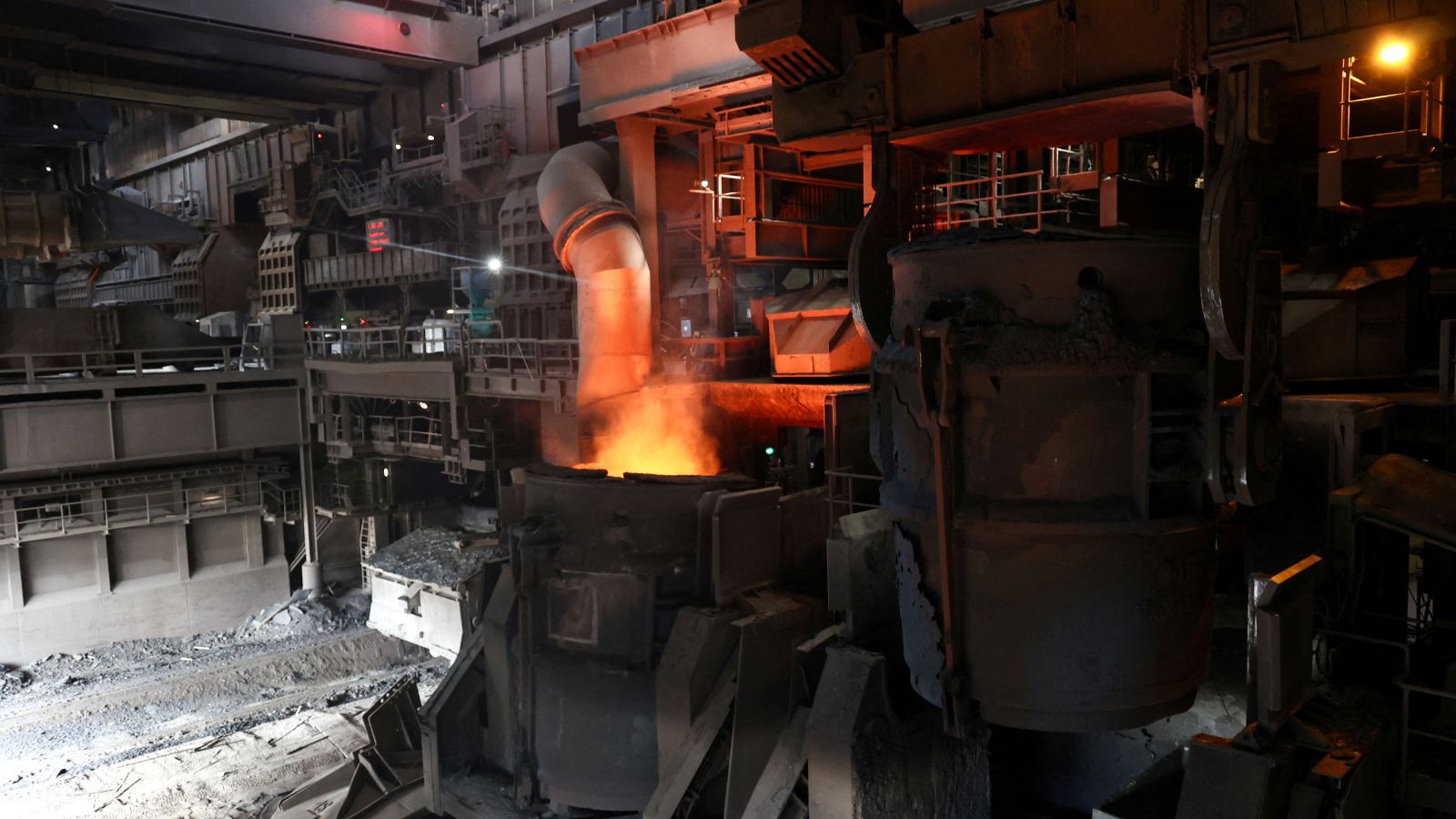
The European Commission's restructuring of its steel import architecture represents an aggressive intervention designed to forcibly reallocate market share from international producers to domestic mills. By shrinking the annual tariff-free import ceiling by 47 percent to 18.3 million metric tons and doubling the out-of-quota penalizing tariff from 25 percent to 50 percent across 26 distinct product categories, Brussels is attempting to engineer a supply-side shock to save a collapsing domestic industry.
To evaluate whether this framework can achieve its stated operational goals, one must look past political rhetoric and dissect the underlying structural economics. The regulatory mechanism addresses an industrial crisis defined by structural overcapacity, asymmetric energy pricing, and trade diversion risks. A cold financial and operational assessment reveals severe structural limitations inherent to unilateral trade protectionism. Learn more on a connected topic: this related article.
The Tripartite Catalyst: Why the Safeguard Mutated
The expiration of the 2018 temporary safeguard framework on June 30, 2026, forced a regulatory pivot. The previous system proved inadequate against a changing global macroeconomic environment. The new, more aggressive regime is driven by three specific market failures.
1. The Global Supply-Demand Asymmetry
Global steel overcapacity is projected to hit 721 million metric tons by 2027. This excess capacity—more than five times the total annual consumption of the entire European Union—creates an environment where state-subsidized foreign mills operate independent of market demand signals. With global utilization rates depressed, foreign producers dump excess volumes into open jurisdictions to sustain their internal employment and fixed-cost amortization. Additional reporting by Reuters Business highlights comparable perspectives on the subject.
2. The Import Penetration Paradox
Despite a 2.9 percent contraction in EU crude steel production to a historic low of 125.8 million metric tons, the market share of foreign finished and semi-finished steel expanded to a record 30 percent. Under standard market dynamics, falling domestic production should reflect falling demand or shifting downstream preferences. In this case, it reflects an uncompetitive domestic cost structure. European producers face structurally higher energy costs and carbon compliance penalties via the Emissions Trading System (ETS), making them vulnerable to cheaper imports from Turkey, South Korea, India, and China.
3. The Threat of Trade Diversion
The aggressive tariff landscape in the United States acts as a trade barrier, deflecting unabsorbed global steel supply away from North America. Unilateral US protectionism turns the EU into a default dumping ground for displaced global inventories. The 47 percent quota contraction functions as a preemptive defense mechanism to absorb this deflected trade flow.
The Strategic Allocation Framework: Bifurcating the Quota
The mechanical execution of the new policy splits the 18.3 million metric ton tariff-free quota into two distinct tranches to balance protectionist goals with international treaty obligations.
                  [Total Tariff-Free Quota: 18.3M Tonnes]
                                     |
                -------------------------------------------
               |                                           |
    [FTA Exclusive Tranche: 50%]                [Global Open Tranche: 50%]
    - 9.15 Million Tonnes                       - 9.15 Million Tonnes
    - Country-specific allocations              - Open to all partners
    - Threshold: >= 5% historic share           - Subject to rapid exhaustion
The FTA Exclusive Tranche (50%)
The European Commission allocated 9.15 million metric tons exclusively to preferential trading partners holding Free Trade Agreements (FTAs) with the bloc, such as the United Kingdom, Switzerland, Turkey, and Ukraine. Within this tranche, the EU applies a historical volume methodology. Countries that maintained at least a 5 percent average share of import volumes between 2022 and 2024 receive secure, country-specific allocations.
This mechanism protects preferred trading partners from the full force of the 47 percent reduction. Senior officials indicate that core FTA partners will retain up to 67 percent of their historic access capacity. This strategic insulation limits immediate retaliatory trade lawsuits under Article XXVIII of the General Agreement on Tariffs and Trade (GATT).
The Global Open Tranche (50%)
The remaining 9.15 million metric tons are pooled into a non-discriminatory global quota available to all trading nations, including FTA partners that exhaust their specific allocations. This segment operates under a first-come, first-served mechanism, which will likely lead to rapid quota exhaustion at the start of each quarter. Once this pool is depleted, any inbound volume triggers the 50 percent ad valorem tariff.
The Melt and Pour Mandate: Plugging the Transshipment Loophole
A critical failure of the previous safeguard regime was its vulnerability to transshipment arbitrage. Foreign producers evaded country-specific restrictions by routing unfinished steel slabs through intermediary nations for minimal processing—such as cold-rolling or galvanizing—before exporting the final product to the EU under a falsified rules-of-origin declaration.
To neutralize this tactic, the updated framework introduces a strict "melt and pour" traceability standard. Importers must supply verified supply chain documentation identifying the specific jurisdiction where the raw steel was initially melted and cast.
This administrative requirement transforms the restriction from a simple border tariff into a full structural audit. It prevents circumventing the system via third-party detours, targeting state-subsidized Chinese substrates processed in Southeast Asia or Turkey. It also effectively bars Russian steel inputs from entering the European supply chain through secondary transformation markets.
Capacity Utilization Economics: The Illusion of the 80 Percent Target
The European Commission openly designed this policy to force European steel capacity utilization back up to a baseline operational target of 80 percent. The economic rationale assumes that blocking 15 million metric tons of imports will automatically shift that demand to underutilized domestic blast furnaces and electric arc furnaces (EAFs).
The European Steel Association (Eurofer) offers a more realistic, conservative forecast, projecting capacity utilization to peak between 73 percent and 75 percent, up from the current baseline of roughly 67 percent. This variance highlights a fundamental flaw in the Commission’s supply-side logic. The domestic capacity equation is governed by three constraints that tariffs alone cannot resolve.
The Downstream Elasticity Bottleneck
Steel is a primary industrial input for automotive manufacturing, construction, industrial machinery, and aerospace. Forcing these sectors to substitute cheaper foreign steel with more expensive domestic alternatives raises their total cost of goods sold (COGS).
If downstream manufacturers cannot pass these higher input costs along to global consumers, their own international competitiveness drops. This can trigger a contraction in industrial manufacturing activity within the EU, lowering overall domestic steel demand and undermining the capacity utilization targets.
The Structural Cost Asymmetry
Tariffs modify the border price of a commodity, but they do not fix the structural input cost disadvantages plaguing EU producers.
$$Cost_{EU} = Input_{Raw} + Energy_{Premium} + ETS_{Carbon} > Cost_{Global} + Tariff_{50%}$$
Even with a 50 percent penalty on excess imports, highly efficient or state-subsidized foreign mills can often match or undercut the price floors required by European producers to break even. This is especially true for lower-margin commercial steel grades, where European energy costs and regulatory compliance fees remain prohibitively expensive.
The Green Transition Capital Crunch
The European steel industry is undergoing a capital-intensive shift away from carbon-heavy coal blast furnaces toward green hydrogen and EAF technologies. This structural transition requires billions of euros in capital expenditure. While higher short-term margins from import protection provide immediate cash flow, they also insulate domestic producers from real market pressures, potentially slowing down the operational efficiency gains needed to compete globally without protectionist support.
Tactical Realignments for Industrial Operators
The introduction of this import restriction requires industrial supply chain managers and global steel traders to immediately overhaul their procurement strategies. Relying on historic import channels without adjusting to the new rules introduces major financial and operational risks.
Proactive Quota Velocity Tracking
Procurement teams must transition from monthly or quarterly ordering cycles to real-time tracking of quota exhaustion rates. Because the global open tranche will experience rapid depletion, logistics networks must be synchronized to ensure shipments arrive and clear customs at the immediate opening of each quota window. Managing customs bonds will be essential to avoid unexpected 50 percent tariff liabilities for shipments delayed at port.
Supply Chain Origin Auditing
Downstream manufacturing enterprises must immediately demand audited "melt and pour" certifications from all non-EU suppliers. Procurement contracts should be restructured to include explicit indemnity clauses. These clauses must shift the financial liability for any uncertified or misdeclared steel origin back to the exporter if a shipment is held or penalized by European customs authorities.
Reevaluating Nearshore and FTA Sourcing
Given the preferential protection built into the FTA tranche, supply chain managers should shift their procurement away from high-risk, non-preferential jurisdictions like India or South Korea. Sourcing should move toward insulated FTA partners like the UK or Switzerland, or toward domestic EU mills. While these options may carry higher base prices, they offer structural protection against the volatility of the 50 percent out-of-quota tariff.