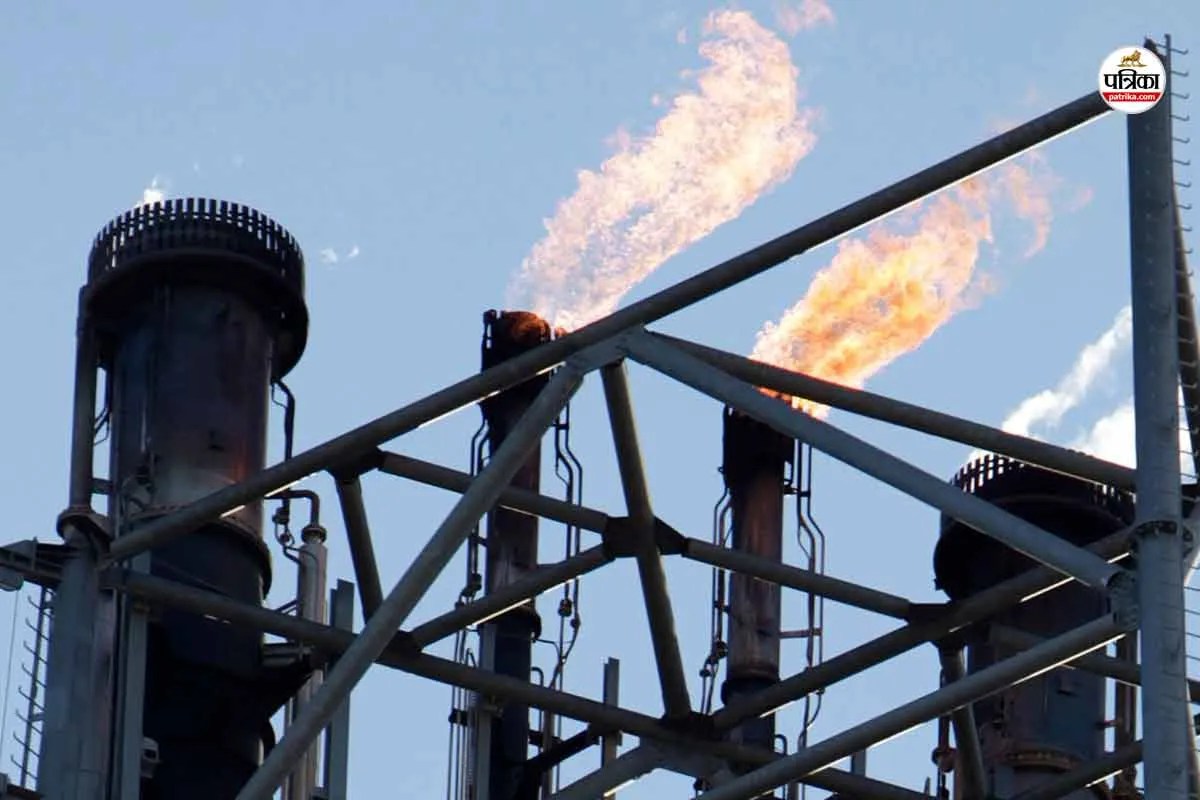
Strikes against energy infrastructure in Dhahran paired with retaliatory coalition operations against Houthi positions in Yemen expose a structural vulnerability in global oil markets: high-value processing and command nodes concentrate immense economic leverage inside geographically exposed coordinates. Headlines summarizing a strike on a Saudi Aramco facility in Dhahran alongside coalition strikes in Yemen capture the visible symmetry of action and reaction, yet they omit the underlying economic and operational mechanics. To understand what such incidents actually threaten, analysts must separate physical damage from supply-chain disruption, map the asymmetric cost exchange between low-cost long-range strike systems and expensive air-defense interceptors, and evaluate how retaliation in Yemen alters deterrence rather than eliminating strike capability.
The Structural Blueprint of the Crisis
Standard breaking-news reporting treats an attack on a Saudi Aramco building in Dhahran and retaliatory strikes in Yemen as a simple tit-for-tit exchange. A rigorous analytical model breaks the dynamic into four interconnected layers that determine real-world impact. Don't forget to check out our recent post on this related article.
- The Physical Target Layer: Dhahran sits in Saudi Arabia's Eastern Province, the historic nerve center of Saudi Aramco's corporate administration, engineering coordination, and regional energy logistics. A strike on an administrative or support structure carries a very different operational footprint than a direct hit on a stabilizer column, gas-oil separation plant, or export terminal, even when the headline looks identical.
- The Market Pricing Layer: Crude oil and refined product markets price expected supply interruption and risk premia rather than immediate physical barrels lost. When traders suspect that air defenses around Eastern Province processing and export nodes are being tested or saturated, risk premia widen across futures curves even before physical output changes.
- The Asymmetric Cost Layer: Long-range unmanned aerial vehicles, cruise missiles, and ballistic systems impose high defense costs relative to their unit manufacturing price. Firing multi-million-dollar interceptors against low-cost drones or rockets creates a fiscal and inventory drain on the defender over prolonged engagements.
- The Retaliatory Escalation Layer: Coalition strikes against Houthi sites in Yemen aim to degrade launch platforms, command nodes, storage depots, and logistics networks. Yet dispersed mobile launchers and hardened sites frequently survive initial waves, turning retaliation into an ongoing attrition campaign rather than a single decisive reset.
The first limitation of headline-driven coverage is that it conflates symbolic or administrative hits with throughput collapse. When an attack strikes a building in Dhahran, the immediate operational question for energy markets is not whether a facade or office wing sustained damage, but whether command-and-control continuity, power/utility feeds, or nearby processing and export pipelines face credible physical threat.
Why Dhahran Matters in the Energy Value Chain
Dhahran's significance stems from institutional centrality rather than standalone barrel production. Saudi Aramco's headquarters and operational hub anchor technical decision-making, reservoir management, maintenance scheduling, and commercial coordination across the Eastern Province. Disrupting offices or support facilities creates friction—rerouted workflows, heightened security lockdowns, personnel displacement, and slower emergency response—without automatically halting crude extraction or refining. To read more about the history here, Reuters offers an in-depth summary.
Consider a practical operational distinction. Suppose a strike damages an office complex or logistics building in Dhahran while leaving upstream fields, gas-oil separation plants, pipelines, and coastal export terminals intact. Production and exports can continue operating under business-continuity protocols, though insurance underwriters, shipping operators, and commodity desks immediately reprice tail risk across the Persian Gulf. Conversely, if an attack demonstrates that defense corridors can be penetrated near high-value nodes, the market treats the incident as a probe of air-defense coverage around critical export infrastructure.
This distinction explains why market reactions to strikes in Saudi energy hubs often split into two phases. The initial phase reflects fear of a repeat of major historical disruptions to Saudi processing capacity; the second phase adjusts as operators verify whether physical throughput, pipeline pressure, and terminal loading schedules remain unaffected.
The Cost Function of Asymmetric Strikes and Air Defense
Evaluating strikes on Saudi energy assets requires examining the Cost Function of Asymmetric Attrition, which governs how long a defender can absorb attacks without depleting interceptors or over-allocating military assets.
A defender faces a mathematical asymmetry whenever interceptors cost substantially more than incoming drones or rockets, or when interception requires scarce high-end radar and missile batteries to cover vast geographic perimeters. Even if air defenses achieve high intercept rates on a given night, each engagement consumes finite munitions that take months or years to replenish at industrial scale.
The second limitation of relying purely on kinetic interception is spatial geometry. Protecting every facility, pipeline junction, substation, and administrative site across a wide territory requires dense sensor-to-shooter coverage. Attackers exploit seams in low-altitude radar coverage, terrain masking, swarm saturation, or multi-axis routing to force expensive responses even when many projectiles are downed.
From a business and energy-security standpoint, this cost asymmetry shapes corporate resilience budgets. Energy operators cannot rely solely on state air defenses; they must harden critical control systems, maintain redundant power and communications, disperse spare parts, and pre-position contingency inventory so a single strike does not cascade into prolonged operational downtime.
Mechanics of Coalition Retaliation in Yemen
When a strike hits Saudi territory, coalition air and missile operations against Houthi positions in Yemen serve three distinct strategic functions: punishment, degradation, and signaling.
- Punishment: Striking launch sites, radar installations, weapons caches, and leadership or military infrastructure in Yemen imposes tangible costs on the attacking faction and demonstrates political resolve to domestic audiences and regional partners.
- Degradation: Targeting assembly workshops, storage bunkers, fuel supplies, and mobile launch corridors seeks to reduce the volume and accuracy of future launches. Degradation works best against fixed depots and concentrated logistics hubs, whereas mobile launchers and dispersed components are harder to eliminate permanently.
- Signaling: Retaliatory strikes communicate red lines and warn that attacks on Saudi soil carry immediate military consequences. However, deterrence only holds if the perceived cost of launching an attack exceeds the political or strategic payoff sought by the attacker.
The third limitation of cross-border retaliatory strikes is target persistence. When launch systems are mobile, modular, or concealed in rugged terrain, air strikes can destroy visible infrastructure while leaving underlying launch capacity intact. Consequently, retaliatory action in Yemen often reduces launch tempo temporarily rather than ending the threat outright.
Cause-and-Effect Chains Most Coverage Misses
Competitor summaries typically report two isolated facts—an attack in Dhahran and coalition strikes in Yemen—without tracing how each action alters downstream variables across markets, diplomacy, and operations.
| Mechanism | Direct Operational Effect | Downstream Market and Strategic Effect |
|---|---|---|
| Strike on Dhahran infrastructure | Security lockdowns, facility damage assessment, heightened alert posture | Widened geopolitical risk premium; tighter scrutiny of Gulf export security |
| Air-defense interception | Expenditure of interceptors, radar tracking load, airspace restrictions | Higher defense replacement cost; reassurance of partial perimeter protection |
| Coalition strikes in Yemen | Damage to targeted sites, bunkers, and launch logistics | Potential temporary drop in launch rate alongside risk of wider regional friction |
| Maritime and insurance repricing | Higher war-risk premiums and rerouting caution in regional waters | Elevated landed crude and freight costs for energy importers |
Several structural links stand out in this chain. First, security lockdowns slow routine maintenance. Even when a strike does not hit a production unit directly, elevated threat conditions restrict contractor movement, delay turnarounds, and extend inspection times. Over months, deferred maintenance can trim reliability margins.
Second, retaliation alters regional diplomacy and transit risk. Coalition strikes in Yemen can harden adversarial resolve, prompt retaliatory salvos, or spillover into maritime shipping lanes. Because global oil markets depend heavily on unimpeded transit through narrow regional chokepoints, shipping insurance rates and tanker routing decisions often transmit shocks to global prices faster than onshore facility repairs.
Third, information lag distorts early market moves. In the hours immediately following an attack on a major energy hub, verified damage assessments lag behind rumors and claims of responsibility. Algorithmic and speculative trading reacts first to headlines, creating sharp intraday volatility that often partially unwinds once technical teams confirm whether processing and export infrastructure remain intact.
Practical Risk Assessment for Decision-Makers
Readers tracking these events—whether energy analysts, corporate risk managers, supply-chain planners, or informed observers—need a structured method to separate noise from material risk.
- Verify asset criticality first: Distinguish between administrative or support facilities in Dhahran and core hydrocarbon processing, compression, or export assets. Operational continuity depends on whether flow rates and loading schedules are affected.
- Track sustained cadence rather than single incidents: One isolated strike or retaliatory wave signals tension, whereas repeated salvos across multiple days indicate a sustained campaign that tests interceptor stockpiles and facility resilience.
- Watch freight and insurance indicators: Rising war-risk premiums, slower vessel transits, or higher regional differentials signal tangible commercial friction even when official production figures hold steady.
- Separate claims from verified damage: Conflicting announcements during active strikes are standard. Grounded risk assessments wait for confirmed operational updates, satellite or physical verification, and pipeline or terminal flow signals.
Strategic Recommendation
Decision-makers exposed to Middle East energy volatility should treat Dhahran strikes and Yemen retaliation not as a brief headline cycle, but as indicators of persistent asymmetric risk that requires structural supply and operational redundancy. Energy buyers, industrial consumers, and logistics operators should diversify crude and refined product sourcing across multiple export corridors, build buffer inventories for critical inputs sensitive to freight and risk-premium spikes, and stress-test contracts against sudden transit delays or insurance surcharges rather than betting on rapid de-escalation.