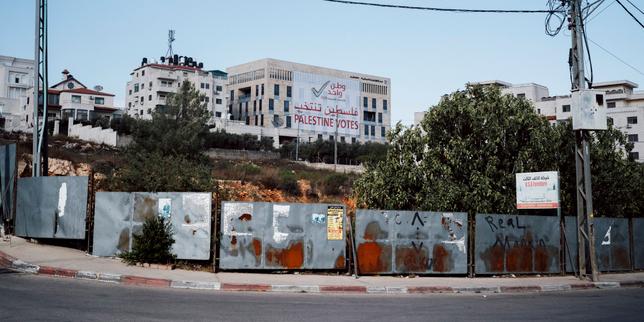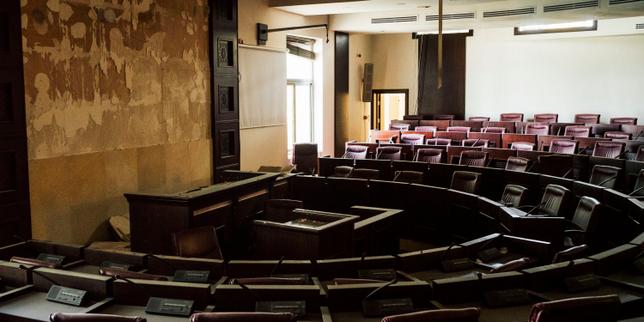
Two decades have passed since citizens within the Palestinian territories last cast ballots for the Palestinian Legislative Council. The January 2006 contest, which yielded a majority for Hamas and upended regional equations, marked the terminal point of competitive national suffrage. Since then, institutional sclerosis has replaced civic participation, creating a permanent structural crisis of governance. Analyzing this twenty-year hiatus requires moving past superficial diplomatic recriminations to examine the cold mechanics of power preservation, institutional decay, and the economics of postponed democracy.
The Mechanics of Institutional Preservation
When an executive authority operates without legislative oversight or electoral renewal, the state apparatus undergoes a predictable institutional mutation. The Palestinian Authority, established under the Oslo Accords as an interim self-government framework, has long outlived its transitional design. In the absence of a functioning parliament, the executive branch absorbed absolute legislative competence, transforming presidential decrees into primary law. You might also find this connected story insightful: Ramallah And The Anatomy Of A Frozen Political Transition.
This centralization of power creates a closed incentive loop. The ruling elite maintains legitimacy not through public mandate, but through bureaucratic patronage, security coordination frameworks, and external donor dependency. Under such conditions, holding elections ceases to be a mechanism of accountability and becomes an existential threat to the status quo.
The political cost function governing this stagnation is straightforward. For the incumbent leadership, the variance of outcomes in a free election carries an asymmetric risk. A competitive vote introduces high probability of loss or institutional fragmentation, whereas indefinite postponement preserves administrative continuity at the expense of systemic legitimacy. As discussed in latest coverage by NPR, the effects are significant.
The Structural Fracture Points
The twenty-year electoral drought cannot be attributed to a single variable; it stems from a compounding set of structural fractures that systematically neutralize attempts at democratic revival.
The primary structural barrier is territorial and administrative bifurcation. The physical and political division between the West Bank and the Gaza Strip since 2007 creates an intractable logistical paradox for any national electoral commission. A unified vote requires agreed-upon security frameworks, impartial judicial oversight, and freedom of movement across districts. When rival factions exercise absolute monopolies of force in separate geographic zones, the baseline conditions for free voter access vanish.
The second barrier involves the fragmentation of the political field itself. The historic duopoly of Fatah and Hamas is characterized by mutual distrust and incompatible strategic goals regarding international engagement and armed struggle. Neither faction possesses an incentive to submit to an electoral referee unless the rules are pre-engineered to guarantee their respective survival. Consequently, successive rounds of reconciliation talks mediated by regional actors invariably collapse when negotiators confront the zero-sum reality of vote counting.
The third constraint is generational displacement. Two decades without elections mean an entire demographic cohort—representing roughly half of the current population—has never participated in a national political transition. This creates a severe disconnect between an aging political leadership and a youthful populace facing chronic unemployment, economic stagnation, and localized despair. The youth demographic experiences governance as something imposed rather than representative, fueling political alienation and alternative forms of resistance or apathy.
The Economic and Diplomatic Toll of Stagnation
Prolonged governance without representation inflicts severe damage on institutional efficacy and fiscal transparency. International donors, who underwrite a significant portion of the Palestinian Authority budget, continually press for structural reforms, anti-corruption measures, and democratic renewal. Yet, fiscal aid disbursed without public oversight often reinforces administrative bloat rather than public infrastructure.
Without a parliament to scrutinize budgets, audit ministerial expenditures, or debate public policy, public administration degrades into clientelism. Civil service appointments and resource allocations respond to factional loyalty rather than meritocratic efficiency. This dynamic starves the public sector of innovative problem-solving capacity precisely when external crises demand maximum state resilience.
Furthermore, international credibility erodes progressively with each deferred decree. While diplomatic partners regularly issue statements declaring that elections are long overdue, the international community remains trapped in its own security calculus, frequently prioritizing short-term stability over long-term institutional legitimacy. This external complicity inadvertently validates the continuation of rule by decree.
Strategic Forecast and Systemic Vulnerability
The absence of a democratic mechanism does not eliminate political pressure; it merely compresses it until institutional rupture occurs. When succession questions are managed through backroom maneuvering rather than transparent constitutional procedures, transition periods carry systemic volatility.
The structural trajectory points toward prolonged paralysis followed by sudden, unstructured disruption. Because formal channels for transferring power are rusted shut, change will likely occur not through the ballot box, but through external shocks, internal generational friction, or acute administrative collapse. The long-term viability of Palestinian self-governance depends entirely on dismantling the architecture of indefinite postponement and re-establishing a direct link between the governed and the governing. Until the ruling structures alter their cost-benefit calculus regarding democratic risk, the political system will remain frozen in the amber of 2006.
The Palestinian Elections Crisis: Twenty Years of Stagnation
This short video examines the timeline and political factors behind the twenty-year absence of Palestinian legislative elections.