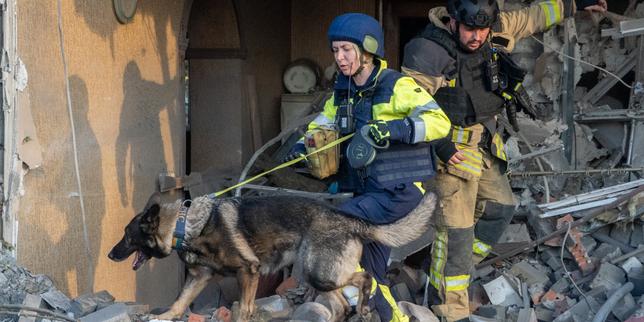
Breaking news alerts about two fatalities from a Russian drone strike in the Kharkiv region capture a tragic tactical event while obscuring the structural war of attrition taking place beneath the headlines. Standard live-blog coverage treats each strike as a standalone incident—a fatality count, a municipal update, and a brief list of damaged buildings. That approach misses how low-cost unmanned aerial vehicles (UAVs) and loitering munitions operate as an economic, psychological, and operational system across northeastern Ukraine.
To understand what a strike in Kharkiv Oblast actually accomplishes—and where standard reporting falls short—this analysis breaks down the logic of live-feed war coverage, introduces three analytical frameworks for drone warfare, separates verified facts from educated hypotheses, and outlines operational adjustments for defense planners, emergency responders, and risk analysts.
Deconstructing the Standard Breaking News Model
Live-blog reporting on drone attacks is built for speed rather than systems analysis. When local authorities or regional military administrations announce two deaths and several injuries in Kharkiv Oblast, rapid dispatches typically follow a predictable sequence: confirm the casualty figure, cite the regional governor or mayor, note whether residential or commercial structures caught fire, and move to the next alert.
That structure creates three blind spots:
- Event isolation over cumulative pressure: Treating each strike as an isolated headline hides how repeated attacks compound strain on regional grid repair crews, trauma wards, and municipal budgets over weeks and months.
- Unclear distinction between strikes and consequences: Casualty figures in a broad administrative region often aggregate incidents across multiple districts, blending direct kinetic hits on vehicles or buildings with secondary hazards such as fires, falling debris, or delayed medical complications.
- Missing unit economics: A headline noting two deaths does not show whether a high-value interceptor missile was expended to stop a cheap decoy or whether a low-cost airframe achieved outsized disruption against civilian routines.
Bridging those gaps requires moving from incident reporting to mechanism analysis. A single strike is a data point; the surrounding defense, logistics, and civil-response network is the system.
Three Frameworks for Reading Drone Strikes
1. The Cost-Exchange and Interceptor Ratio
Modern drone warfare is governed by asymmetric economics. Defenders rarely win a pure cost-exchange battle if they shoot down low-cost propellor drones or decoys using expensive surface-to-air missiles. Instead, air defense operates as a tiered filtering problem.
The first bottleneck is detection and tracking at low altitude, where terrain clutter, urban geometry, and electronic noise complicate radar locks. The second bottleneck is allocation: deciding whether a contact warrants a costly interceptor, mobile gun system fire, electronic warfare jamming, or point defense around critical nodes.
When a strike penetrates into a populated area or hits a road, kiosk, or residential block, it usually signals one of three conditions rather than a total failure of defense:
- Saturation or corridor routing: Launchers send volume or vary flight paths to overwhelm localized coverage or exploit gaps between sensor sectors.
- Altitude and acoustic masking: Operators fly low or adjust propulsion profiles to delay visual and acoustic early warning.
- Asymmetric target selection: Striking soft targets or civilian spaces requires minimal precision compared to hardened military installations, raising the probability that at least some airframes reach their aimpoints.
2. The Civil-Operational Ripple Chain
A kinetic impact does not end when a fire is extinguished. In an active front-adjacent region like Kharkiv Oblast, every strike triggers a cascading operational chain across public services.
First comes emergency dispatch load. Fire crews, paramedics, and police must mobilize under threat of follow-on strikes or falling debris. Rapid response saves lives, yet every deployment consumes fuel, specialized vehicles, protective gear, and human stamina.
Second comes infrastructure and service friction. Even localized damage to roads, power lines, heating facilities, or commercial kiosks forces workarounds. During colder months, disruptions to heat or electricity magnify the human cost of seemingly modest structural damage.
Third comes behavioral tax. When drones strike streets, transit routes, or everyday gathering spots, residents face a continuous risk calculation: travel now or wait, open a shop or stay closed, shelter in place or move. Over time, that friction erodes economic activity and civic normalcy even when casualty counts in a single event are low.
3. The Information-to-Action Lag
Official casualty counts and damage assessments are inherently iterative. Early statements from mayors, regional military administrations, prosecutors, and emergency services often update over hours as search teams clear rubble, hospitals treat incoming patients, and investigators identify munitions.
The third limitation of breaking news alerts is treating initial figures as final facts. Early reports are snapshots taken mid-response. Accurate analysis tracks how numbers evolve as verification catches up with the chaos on the ground, while recognizing that official announcements themselves serve both informational and strategic communication purposes.
Verified Facts vs. Educated Hypotheses
Rigorous assessment requires separating what can be verified from what can only be inferred without full intelligence access.
Known facts in this class of reporting include the occurrence of Russian drone strikes in the Kharkiv region, official statements from Ukrainian authorities reporting fatalities and injuries, and visible or documented damage to vehicles, civilian structures, or local infrastructure. It is also a known operational reality that air defense units, emergency responders, and local administrations face recurring workload spikes when strikes hit urban or peri-urban areas.
Educated hypotheses begin where public details end. When public reports state that a drone hit a road, car, kiosk, or residential area, analysts can reasonably hypothesize that operators are either hunting targets of opportunity, testing air-defense reactions, or applying sustained psychological and infrastructural pressure on the region—yet without telemetry, flight logs, or verified targeting data, intent cannot be proven from a headline alone. Similarly, inferring whether a penetration stemmed from sensor blind spots, interceptor depletion, or electronic countermeasures remains an educated hypothesis unless corroborated by technical reporting.
Operational Playbook for Analysts and Responders
Turning raw incident reports into actionable intelligence requires a disciplined workflow rather than reactive scrolling.
Step 1: Normalize the Incident Record
Log every strike report with five core fields: timestamp of report versus estimated time of impact, specific settlement or district, munition type if credibly identified, confirmed versus preliminary casualty counts, and specific infrastructure or civilian assets affected. Never conflate regional totals with single-impact lethality without checking district-level breakdowns.
Step 2: Map Spatial and Temporal Clustering
Plot strikes across rolling 7-day and 30-day windows. Look for repeated hits along transport corridors, utility nodes, or specific districts. Clustering reveals whether an area is experiencing random spillover, corridor transit, or deliberate systemic pressure.
Step 3: Track Secondary Bottlenecks
Pair kinetic logs with non-kinetic indicators: rolling blackouts, heating outages, hospital admissions, school or market closures, and emergency crew rotation strain. A two-fatality strike near a critical utility or transport hub carries different systemic weight than an isolated strike in an unpopulated field.
Step 4: Calibrate Protective and Response Measures
For local planners, security teams, and aid logistics, operational adaptation centers on reducing exposure during high-risk windows and hardening response routines. That means dispersing critical supplies, maintaining redundant communications when cellular or power nodes falter, staging medical and fire assets with clear cover protocols, and verifying alerts through multiple official channels before moving convoys or crews.
Boundaries and Limitations of This Approach
No analytical framework eliminates uncertainty in an active conflict zone. Information warfare, fog of war, and operational security mean public reporting is always incomplete. A strike reported as involving a specific drone type or target may be revised days later after forensic examination.
Furthermore, structured frameworks can create a false sense of precision if applied mechanically to thin data. Categorizing a strike under a cost-exchange or ripple-chain model helps explain how systems interact, not why a specific operator made a split-second choice. Sound analysis treats frameworks as lenses to test hypotheses, updating conclusions immediately when harder evidence arrives.
Strategic Recommendation
Prioritize tracking systemic recovery velocity and multi-layered air-defense sustainability over single-incident fatality tallies when assessing the trajectory of drone campaigns in Kharkiv Oblast. Two deaths in a single strike are a human tragedy, yet the decisive strategic variable is whether regional defenders and civil authorities can keep interceptors, electronic warfare, emergency services, and essential utilities functioning faster than incoming drone waves can degrade them. Anyone monitoring or operating in the region should build decision triggers around sustained corridor pressure and infrastructure recovery times rather than isolated daily headlines.



