The blue glow of a smartphone screen illuminates a face at 2:00 AM. Thumb scrolls. Cat video. Political rant. Local news. Then, a sudden pause. The image on the screen stops the scrolling finger dead in its tracks.
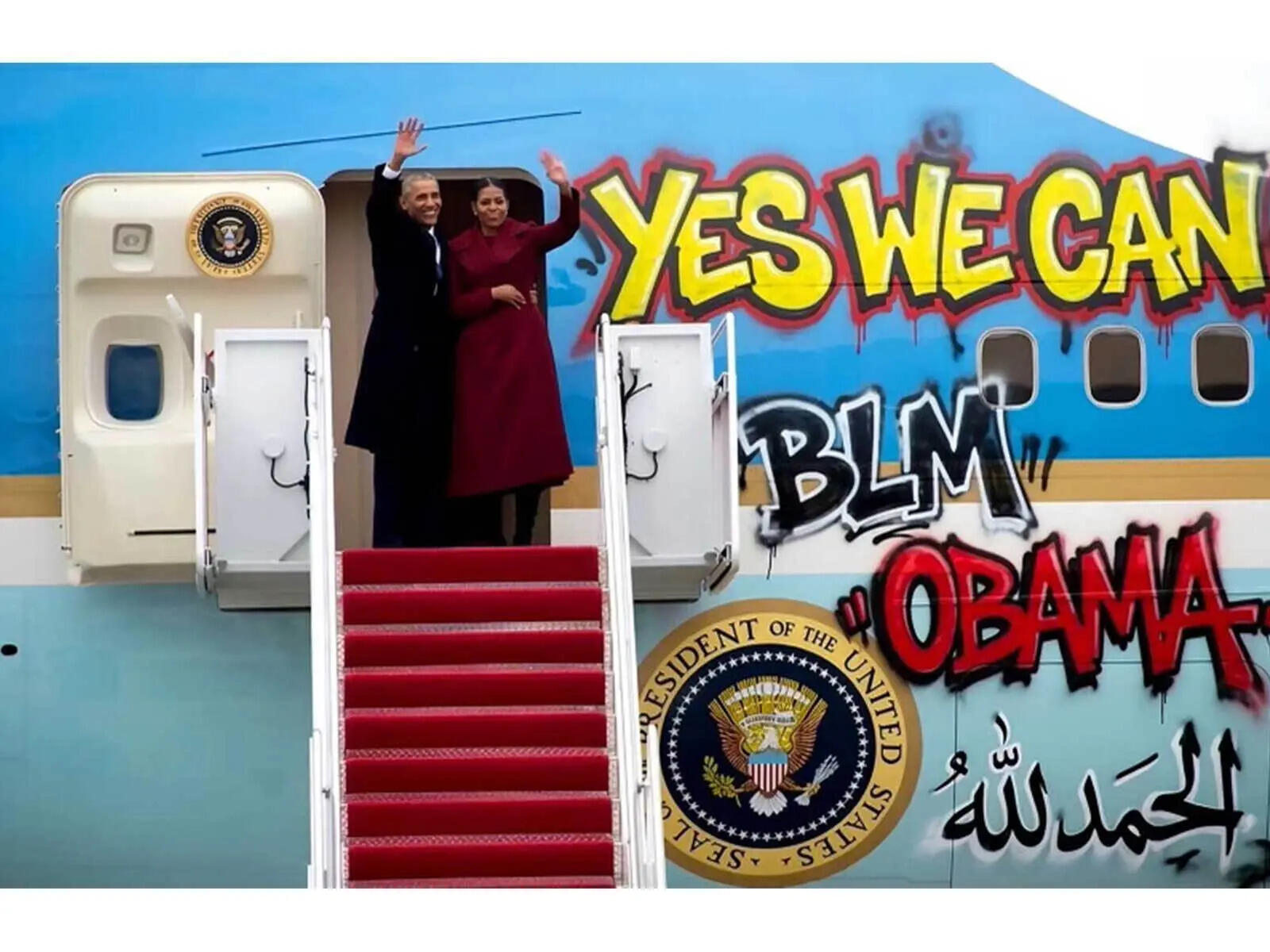
It shows former President Barack Obama and First Lady Michelle Obama stepping off Air Force One. But the iconic blue-and-white fuselage of the world's most famous aircraft is unrecognizable. It is covered from nose to tail in aggressive, chaotic spray-painted graffiti. The presidential couple walks down the tarmac, smiling, seemingly oblivious to the desecration of a premier symbol of American sovereignty right behind them. You might also find this connected coverage interesting: Why the Modi Subianto Meeting Shifts the Balance of Power in the Indian Ocean.
Shock. Outrage. A sudden spike in adrenaline. Within seconds, the user hits "share."
This scene played out thousands of times across social media platforms recently. The image looks raw. It looks real. It triggers an immediate emotional response, forcing a choice between furious condemnation or defensive skepticism. But beneath the surface of that single image lies a much deeper, quieter crisis about how we process truth in an era where pixels are weaponized. As reported in latest articles by TIME, the implications are widespread.
The truth is simple: the photo is an outright fabrication. The real photograph, captured years ago during a standard official arrival, shows the aircraft exactly as it has always been—spotless, gleaming, and heavily guarded. No spray cans touched the aluminum skin of the plane. The graffiti was digitally layered onto the image by an anonymous editor with a laptop and a specific agenda.
Yet, knowing the photo is fake does not erase the impact of its existence. The real story isn't the crude digital manipulation itself. The real story is why our minds are so incredibly vulnerable to the deception in the first place.
The Illusion of the Flawless Frame
Human beings are hardwired to trust their eyes. For hundreds of thousands of years, if you saw a predator in the brush or fire on the horizon, it was there. Visual evidence was the ultimate arbiter of reality. We still carry that evolutionary baggage into a digital world where an image can be altered in a matter of minutes by anyone with basic editing software.
When a digital artist decides to doctor an image like the one of Air Force One, they rely on a psychological concept known as cognitive fluency. If an image aligns with someone's pre-existing frustrations, anxieties, or political beliefs, the brain processes it with remarkable ease. The mind does not pause to ask logical questions.
Consider the sheer logistics required for someone to actually paint graffiti on Air Force One. The aircraft lives in highly secure, restricted hangars. It is surrounded by armed Secret Service agents, military personnel, and continuous surveillance. The idea that a vandal could walk up to the plane with a dozen cans of spray paint and tag the fuselage without being noticed is absurd. It defies every reality of modern military security.
But the brain reacts to the image before it consults the prefrontal cortex for a logic check. The emotion hits first. The outrage satisfies a craving for validation. If you already believe that a certain political administration is chaotic, weak, or disrespectful of tradition, the defaced plane becomes the perfect visual metaphor for that belief. The lie fills a slot that your subconscious mind had already carved out.
The Blueprint of the Hoax
To understand how these fabrications take root, we have to look closely at the anatomy of the original photograph. The base image was captured during a routine official trip. The lighting was natural, the focus sharp, and the subjects were captured in motion. This authenticity is exactly what makes the forgery so dangerous.
The manipulator did not build a scene from scratch. They took a genuine historical artifact and altered a single, high-impact variable. By leaving the Obamas, the tarmac, the lighting, and the shadows completely untouched, they preserved ninety percent of the photo's original truth.
When your eyes scan the image, they recognize the authentic elements first. The brain notes the familiar faces, the correct proportions, and the realistic textures of the concrete. Having verified those elements as real, the brain accidentally extends that stamp of authenticity to the fraudulent graffiti. It is a classic sleight of hand. The truth is used as a Trojan horse to deliver the lie.
This technique is far more effective than creating a completely fictional image. A totally synthetic image often triggers the "uncanny valley" effect, a subtle instinct that tells us something is deeply wrong with the faces or the physics of the scene. By modifying a real photograph, the hoaxer bypasses those mental alarm systems entirely.
The Cost of the Invisible Erosion
It is tempting to dismiss a doctored photo of a plane as harmless internet noise. People make jokes; people argue in the comments; the news cycle moves on to the next outrage. But this dismissal ignores the cumulative damage being done to our shared reality.
Every time a fabricated image goes viral, it leaves behind a residue of cynicism. Even after a fact-check emerges to clarify that the graffiti was fake, the emotional echo remains. The people who shared the image rarely issue a public retraction to their friends and family. The initial shock of seeing the defaced symbol sticks in the memory, while the quiet correction is ignored or forgotten.
Over time, this process causes a profound erosion of public trust. When everything can be faked, people stop believing anything at all.
This skepticism sounds healthy in theory, but in practice, it leads to a dangerous state of paralysis. If a citizen can no longer trust a photograph, a video, or an official record, they lose the ability to make informed decisions. They become completely dependent on their tribal allegiances to decide what is real and what is fake. Truth ceases to be an objective reality and becomes an exercise in political loyalty.
Reclaiming the Power of Pause
The technology used to alter reality will continue to evolve, becoming faster, cheaper, and more sophisticated every day. We cannot rely solely on software filters or social media algorithms to protect us from deception. The ultimate defense against digital manipulation is completely human.
It requires a deliberate return to skepticism. It requires us to resist the urge to immediately share things that provoke a powerful surge of anger or validation.
The next time an image appears on your screen that seems too shocking to be true, pause. Look past the immediate subject. Ask yourself about the logistics of the scene. Consider who benefits from you believing that the image is real.
That brief moment of hesitation is where the power of deception dies. By choosing to question the frame instead of reacting to it, we reclaim control over our own minds. We refuse to let a stranger with an image editor dictate how we see the world. The truth is rarely as loud or as shocking as a lie, but it remains the only foundation solid enough to build upon.