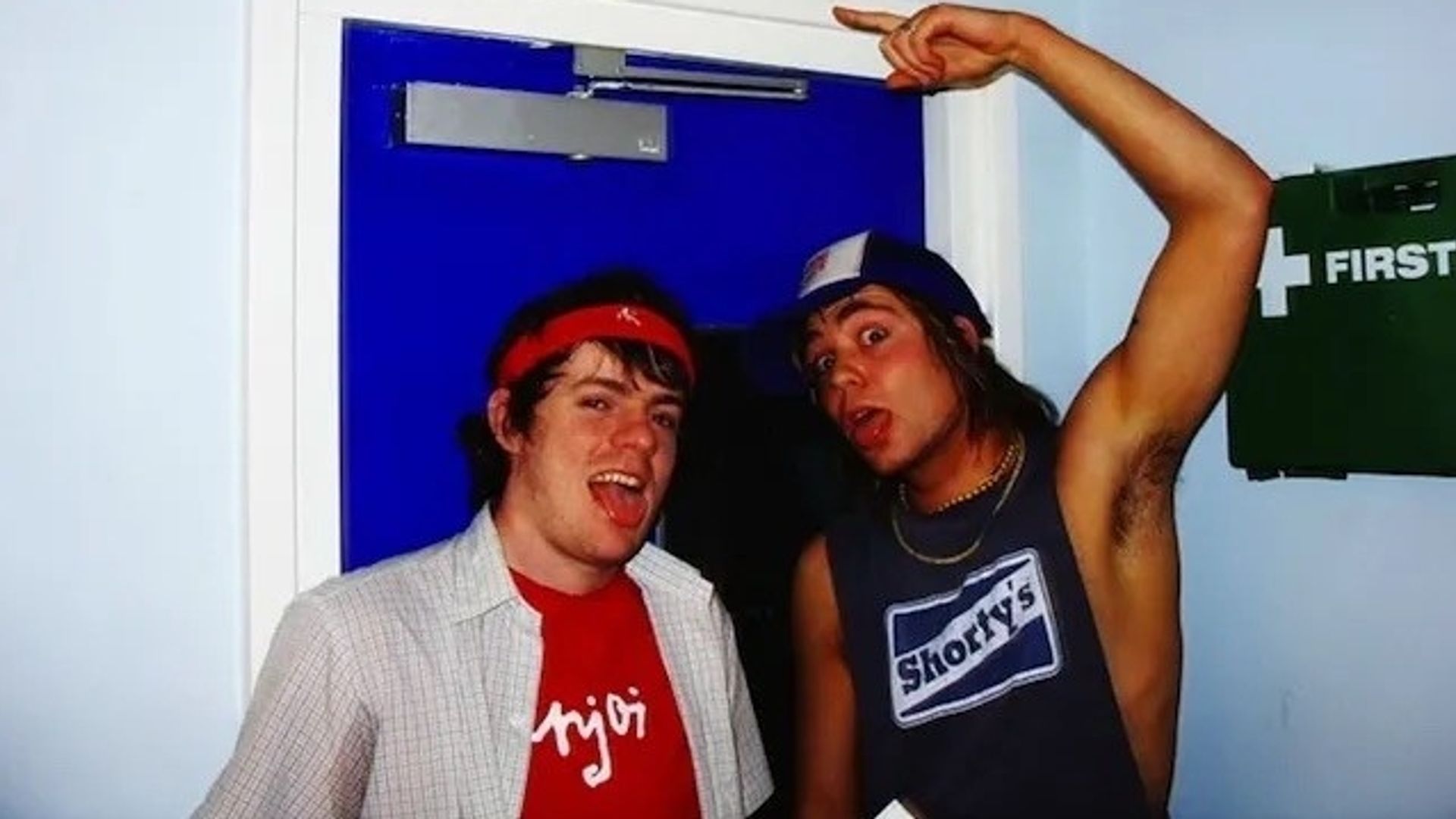
The 2003 infiltration of the UK music industry by Gavin Bain and Billy Boyd—performing as the faux-Californian duo Silibil n' Brains—represents a clinical case study in cultural arbitrage. By identifying a specific market inefficiency (the industry's bias against non-American hip-hop) and engineering a deceptive solution to exploit it, the duo bypassed established gatekeeping mechanisms. Their success was not a byproduct of musical superiority, but of a calculated alignment with the industry's cognitive biases regarding authenticity, marketability, and regional identity.
The Structural Bias of the 2000s Music Industry
To understand why a Scottish rap duo felt compelled to fabricate identities, one must first map the Geographic Value Gradient of the early 2000s music market. During this era, the valuation of hip-hop talent was heavily weighted by "provenance."
- US Domestic Market Dominance: Hip-hop was viewed as an American export. Domestic UK acts faced a "localism discount," where their accents and cultural references were seen as non-scalable or commercially inferior to the US aesthetic.
- The Authenticity Paradox: The industry demanded "authenticity," yet paradoxically defined it through a narrow lens of American street culture. A Scottish rapper was viewed as a parody; a Californian rapper was viewed as a product.
- Gatekeeper Heuristics: Talent scouts (A&R) utilized heuristics—mental shortcuts—to filter thousands of demos. Regional identity served as a primary filter. By assuming a Californian persona, Bain and Boyd effectively engaged in Signal Hijacking, bypassing the immediate rejection associated with their true origin.
The Three Pillars of Deceptive Branding
The duo's strategy rested on three operational pillars: Linguistic Adaptation, Aesthetic Anchoring, and Narrative Consistency.
Linguistic Adaptation
The most significant barrier to entry was the Scottish accent, which triggered the aforementioned localism discount. Their transition to a West Coast dialect was a form of Auditory Masking. They didn't just adopt accents; they adopted the vernacular, cadence, and slang specific to the Southern California region. This reduced the "friction" between the listener and the perceived brand, allowing the A&R scouts to categorize them within a familiar, high-value mental bucket.
Aesthetic Anchoring
Visual identity functioned as the "proof of work" for their fabrication. They adopted the uniform of the era's pop-punk and rap-rock scenes—over-sized clothing, specific hair styling, and high-energy stage presence. This was a strategic move into the Nu-Metal/Pop-Punk Hybrid Market, a segment that was highly lucrative and less scrutinized for "street" authenticity than traditional boom-bap hip-hop. By positioning themselves within this niche, they lowered the threshold of skepticism required from industry veterans.
Narrative Consistency
Deception requires a high degree of Internal Logical Coherence. Bain and Boyd crafted a backstory involving a move from Scotland to California at a young age, which explained any lingering phonetic inconsistencies while maintaining their "Cali" credentials. They maintained this persona 24/7, even in private interactions with friends and family, to prevent "leaks" in the brand identity. This level of commitment speaks to the Psychological Sunk Cost of the project; once the initial lie was accepted, the cost of confession exceeded the cost of continued performance.
The Cost Function of Synthetic Identity
Maintaining a false identity at this scale incurs massive operational and psychological overhead. From an analytical perspective, this can be modeled as an increasing Risk-Reward Differential.
- Operational Risk: The probability of exposure increases with every new stakeholder (managers, lawyers, PR agents) added to the ecosystem.
- Cognitive Load: The duo had to constantly monitor their speech and behavior to avoid "slips," leading to mental fatigue and eventual burnout.
- Opportunity Cost: While they secured a six-figure recording contract with Sony, they were unable to leverage their true personal histories, which are often the bedrock of long-term artistic sustainability.
The $250,000 (£150,000) advance they received represented the industry's valuation of the synthetic brand. However, because the brand was built on a foundation of fraud, the long-term Equity Value was effectively zero. The moment the deception was revealed, the brand's social capital liquidated instantly.
Why the Gatekeepers Failed: The Institutional Blind Spot
The fact that Sony executives and seasoned A&R professionals were fooled points to a systemic failure in Due Diligence.
- Confirmation Bias: Once the scouts decided the duo was talented and "Californian," they actively ignored or rationalized any anomalies that contradicted that belief.
- The FOMO (Fear Of Missing Out) Mechanism: In the hyper-competitive 2000s, the desire to sign the "next big thing" often overrode the rigorous verification of a performer's background.
- Outsourcing Validation: The industry often relies on "buzz." If one reputable manager or lawyer validates an act, subsequent players take that validation as a given, creating a Cascade of False Credibility.
The Mechanics of the Market Correction
The collapse of Silibil n' Brains was not caused by a single failure of talent, but by the eventual friction between the Synthetic Persona and Physical Reality. Record labels require documentation for international travel, tax purposes, and legal contracts. While the duo managed to navigate these hurdles temporarily, the logistical complexity of maintaining international identities eventually created an unsustainable "lie-debt."
When the duo finally stopped the act, it wasn't just a personal choice; it was a market correction. The industry realized it had bought a lemon—a product that was aesthetically correct but legally and ethically flawed. The backlash was severe because the industry felt its primary asset—its ability to "spot" talent—had been mocked.
The Modern Parallel: Digital Synthesis and AI
Today, the Silibil n' Brains case serves as a precursor to the rise of Virtual Influencers and AI-generated artists. The industry is once again facing a situation where the persona is decoupled from the physical reality of the creator.
- Persona as Product: The duo proved that if the "package" is right, the origin is secondary—until it becomes a legal or PR liability.
- The Erosion of Origin: In a globalized digital market, the "Geographic Value Gradient" is flattening. Accents are less of a barrier, and "authenticity" is now measured by digital engagement rather than a verifiable backstory.
- Algorithmic Gatekeeping: Modern A&R is less about "gut feeling" and more about data. While this reduces some forms of human bias, it creates new vulnerabilities to Data Manipulation (e.g., bot-driven streams), which is the digital equivalent of the Californian accent.
Strategic Framework for Authenticity Verification
For industry practitioners, the Silibil n' Brains saga highlights the need for a Multifactor Authentication (MFA) approach to talent scouting.
- Historical Verification: Independent cross-referencing of an artist's background beyond their provided narrative.
- Behavioral Consistency Checks: Assessing the artist in varying contexts (e.g., unrehearsed interviews, live performances in different regions) to identify phonetic or narrative drift.
- Network Mapping: Analyzing the artist's existing social and professional network to identify gaps or inconsistencies in their timeline.
The fundamental lesson is that while Market Signaling can be faked, the Operational Reality of a long-term career cannot. The duo's failure was not in their performance, which was technically proficient enough to secure a major deal, but in their misunderstanding of the Escalation of Commitment. A lie that gains you entry to the room is a lie that eventually traps you in it.
To avoid the pitfalls of synthetic identity, management must prioritize Verifiable Narrative Assets. An artist's true history is a unique, non-replicable asset. By discarding their Scottish identities, Bain and Boyd threw away the very thing that would have eventually made them distinct in a crowded market. The strategic play for any modern creator is to optimize their genuine narrative for the current market, rather than engineering a fabricated one to fit a transient trend.
The industry's reaction to Silibil n' Brains should not have been embarrassment, but an audit of its own valuation models. If a fake Californian is worth more than a real Scotsman, the problem lies in the metric, not the performer. The ultimate strategic recommendation for investors and labels is to de-weight regional stereotypes and re-weight Demonstrable Performance Metrics and Narrative Integrity. Fraudulent assets always carry a hidden liability that eventually matures; seeking out "true-origin" talent is the only way to ensure long-term brand stability.