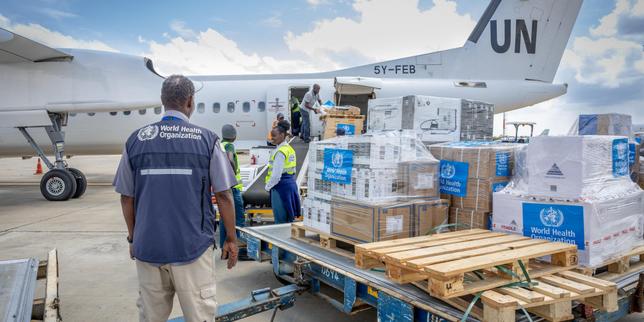
The declaration of a Public Health Emergency of International Concern (PHEIC) by the World Health Organization (WHO) regarding the Bundibugyo virus disease (BVD) outbreak in the Democratic Republic of the Congo (DRC) and Uganda exposes a profound, systemic vulnerability in global health security. Media coverage historically frames these declarations as warnings of a future threat. This perspective miscalculates the operational reality. A PHEIC designation is a lagging indicator. It is formal structural recognition that localized containment mechanisms have already failed.
The current epidemiological data establishes the gravity of this failure. As of mid-May 2026, the DRC’s Ituri Province reports eight laboratory-confirmed cases, 246 suspected cases, and 80 suspected deaths spanning three distinct health zones: Bunia, Rwampara, and Mongbwalu. Concurrently, cross-border transmission has occurred. Uganda has confirmed two distinct cases in its capital city, Kampala, within a 24-hour window. These patients, both travelling from the DRC, present no apparent epidemiological link to each other and are currently in intensive care units. This geographic dispersion over hundreds of kilometers reveals a complex, unmapped network of transmission chains.
The structural failure of containment can be quantified and analyzed through three specific operational axes.
The Asymmetry of Immunological and Therapeutic Deficits
The primary operational constraint governing this crisis is a complete asset deficit. Previous interventions against the Ebola Zaire strain relied heavily on highly effective countermeasures. The rVSV-ZEBOV vaccine and monoclonal antibody therapeutics like Inmazeb and Ebanga provided a reliable biological barrier that shortened transmission chains and dropped mortality rates from roughly 70% to under 10% when administered early.
No such medical countermeasures exist for the Bundibugyo strain.
Because the Bundibugyo virus possesses a distinct glycoprotein architecture, Zaire-specific vaccines and therapeutics yield zero cross-protective efficacy. The clinical management blueprint for BVD is stripped down to aggressive supportive care: intravenous fluid resuscitation, electrolyte stabilization, and symptomatic regulation. The lack of a vaccine creates an immediate structural bottleneck. Epidemic containment cannot rely on ring vaccination—the strategy of immunizing contacts and contacts-of-contacts to form a human firewall around index cases. Instead, containment is entirely dependent on non-pharmaceutical interventions: physical isolation, rigorous contact tracing, and strict infection prevention and control (IPC) protocols.
The biological vulnerability of the population is absolute. Without pharmaceutical intervention to depress the viral replication rate within the community, the transmission dynamics are governed solely by human behavior, systemic mobility, and environmental variables.
The Tri-Factor Formula of Border Vulnerability
The rapid transmission from the dense forests of Ituri to an urban center like Kampala demonstrates a predictable velocity model. The transborder risk profile between the DRC and Uganda is defined by three interconnected variables:
$$V = f(M, C, I)$$
Where:
- $M$ represents high population mobility fueled by cross-border trade and migration.
- $C$ represents the density of informal healthcare networks.
- $I$ represents localized physical insecurity.
The geographic link between Ituri Province and neighboring East African states is characterized by highly porous borders. Formal checkpoints monitor only a fraction of daily crossings, while a vast network of informal transit paths remains unmonitored.
When an individual exhibits early, non-specific febrile symptoms—which mimic malaria or typhoid—their first point of contact is rarely a state-run hospital. Instead, individuals seek care within a large network of informal, unregulated community health structures. These facilities frequently lack basic personal protective equipment (PPE) and clean water infrastructure.
This introduces a severe epidemiological multiplier: healthcare-associated amplification. In Ituri, at least four deaths among healthcare workers have occurred within clinical contexts strongly suggestive of viral hemorrhagic fever. When a healthcare worker is infected, the clinic transforms from a point of treatment into a highly efficient amplification hub, distribution node, and vector for the community.
Physical insecurity adds a final layer of friction. Ituri and North Kivu provinces have endured decades of armed conflict. The presence of non-state armed groups restricts the physical mobility of epidemiological surveillance teams. Safe and dignified burial teams cannot access specific sectors without armed escorts, and contact tracers face direct physical threats. Consequently, active surveillance is blind in conflict zones, allowing active transmission chains to propagate completely unnoticed until a patient travels to a city like Kampala or Kinshasa in search of specialized medical care.
Structural Blind Spots in Case-Fatality and Positivity Metrics
Standard public health reporting evaluates outbreaks through raw case counts and crude case-fatality rates. In an active, uncontained outbreak of an atypical strain, these metrics are fundamentally flawed and obscure the true scale of transmission.
The current data shows a staggering mathematical discrepancy: eight laboratory-confirmed cases alongside 246 suspected cases and 80 suspected deaths. This indicates a severe diagnostic gap. If the true case-fatality rate of Bundibugyo virus disease historically hovers around 30% to 50%, the reported 80 suspected deaths point to an underlying patient volume that far exceeds the official count. This suggests that the vast majority of cases are degrading, dying, and being buried within the community without ever interacting with a diagnostic laboratory or an isolation facility.
Furthermore, out of 13 initial diagnostic samples collected across various sectors in Ituri, eight returned positive results. A positivity rate of 61.5% from a broad syndromic sample is an extreme statistical red flag. In a functional surveillance system with broad, proactive testing, the positivity rate typically remains low because teams cast a wide net. A 61.5% positivity rate proves that testing is lagging significantly behind the virus. It means diagnostic assets are only being deployed for patients in advanced, unmistakable stages of hemorrhagic illness, leaving asymptomatic, mild, or early-stage mobile vectors entirely unquantified.
The operational reality of this outbreak requires a shift away from standard containment strategies. Waiting for localized testing to confirm every suspected case before initiating isolation protocol creates a fatal multi-day delay.
First, regional response teams must pivot immediately to a syndromic isolation model. Any individual presenting with acute febrile illness accompanied by epidemiological links to Ituri must be treated operationally as a confirmed case, bypassing the diagnostic bottleneck.
Second, because ring vaccination is impossible, cross-border resource allocation must focus heavily on the informal healthcare sector. Direct distribution of standardized IPC kits—containing gloves, face shields, and chlorine disinfectants—to informal clinics and traditional healers along the DRC-Uganda border is a high-priority intervention to disrupt healthcare-associated amplification.
Finally, international coordination led by Africa CDC and the WHO must focus on deploying mobile high-throughput PCR laboratories directly to the transborder transit hubs rather than relying on centralized national reference laboratories in Kinshasa or Entebbe. The containment of the Bundibugyo virus depends on reducing the time between clinical presentation and physical isolation to less than twelve hours. Every hour beyond that window expands the geographic footprint of the pathogen.


