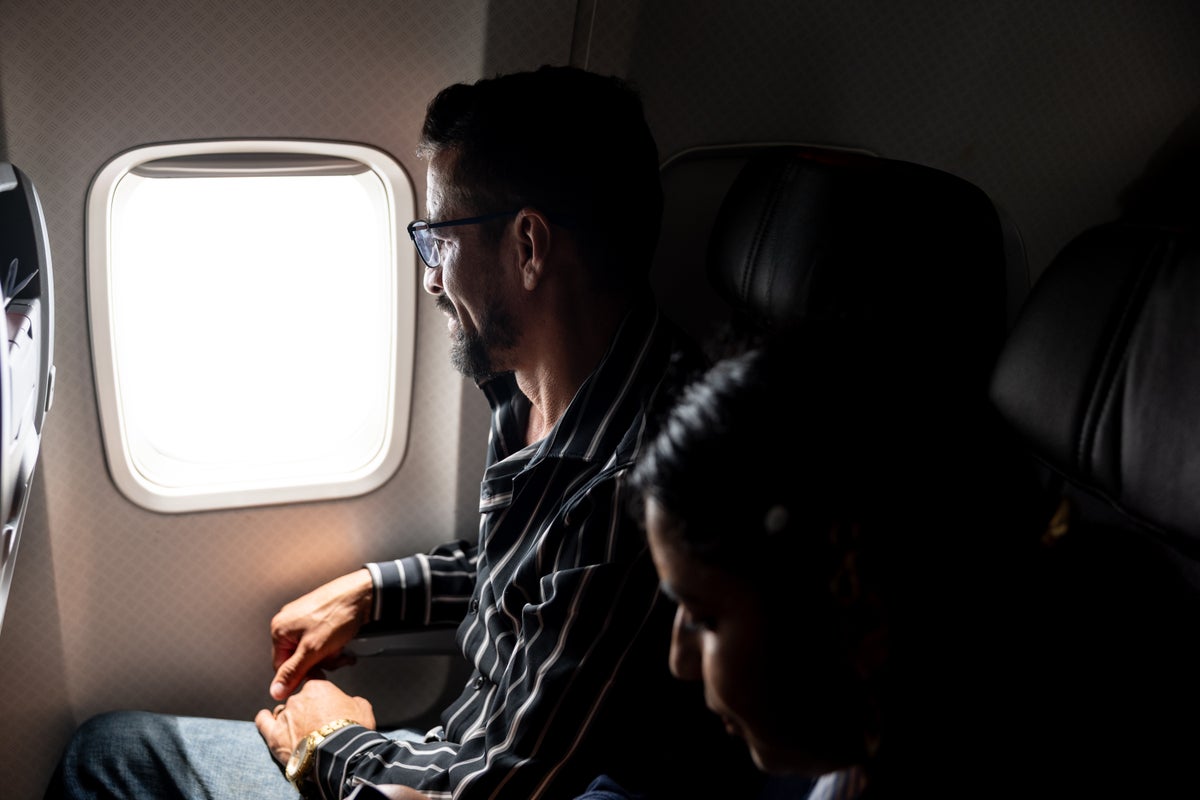
Ancillary fee structures operate on a foundational economic principle: consumers willingly pay a premium for explicit, utility-enhancing product attributes. When an airline unbundles its core service—transportation from point A to point B—and assigns an independent price tag to specific cabin micro-locations, it establishes a distinct contractual expectation. The operational failure to align digital inventory descriptions with physical aircraft anatomy forms the core of the class-action litigation facing United Airlines and Delta Air Lines.
U.S. District Judge James Donato’s denial of United’s motion to dismiss invalidates a long-standing defense within airline revenue management. Carriers have historically argued that a "window seat" defines a coordinate within a geometric grid rather than a physical amenity. By ruling that ticketing terms, booking interfaces, and boarding passes construct an enforceable expectation of an actual view, the court has forced a structural re-evaluation of how digital seat maps match physical fleet configurations.
The Structural Mechanics of the Windowless Wall
The presence of windowless spaces in standard aircraft cabins is not an engineering error; it is a mechanical necessity dictated by commercial aircraft architecture. In workhorse narrowbody fleets—specifically the Boeing 737, Boeing 757, and Airbus A321—the fuselage must accommodate critical systems that cannot run through open passenger space.
These blank cabin walls occur at the intersection of three primary engineering demands:
- Environmental Control System (ECS) Ducting: Conditioned air from the engine pack units must be routed from beneath the cabin floor up into the overhead distribution networks. The risers for these air-conditioning ducts require a solid fuselage segment, necessitating the omission of a physical window.
- Electrical Conduits and Avionics Wiring: Major power trunks routing energy from engine-driven generators to overhead systems, lighting, and cockpit electronics run through dedicated vertical channels within the fuselage skin.
- Structural Heavy Frames: Manufacturing joints, reinforcement brackets, and structural transition zones near exit doors or wing roots occasionally disrupt the uniform spacing of window cutouts.
When passenger cabins are configured for high density, seat pitch (the distance between seat rows) decreases. This compression ensures that seat rows no longer align cleanly with the fixed cadence of the fuselage windows. Consequently, a row can sit entirely flush against a mechanical blank space. The passenger sitting in this coordinate experiences not only a complete loss of visibility but an actual reduction in shoulder width, as the interior cabin wall lacks the inset recess provided by a standard window frame.
The Asymmetric Information Problem in Dynamic Pricing
The economic vulnerability for United and Delta stems from an asymmetric information gap created by their automated booking engines. Modern airline revenue maximization relies heavily on dynamic pricing algorithms that segment seats into micro-categories (e.g., Preferred, Economy Plus, Choice Seats). These categories command pricing premiums ranging from $15 to over $100 per segment, frequently based on the designation of being an aisle or window position.
The strategic breakdown occurs within the data structure of the Global Distribution Systems (GDS) and internal passenger service systems (PSS). For decades, inventory architecture classified seats along a binary horizontal axis: window or aisle. The system evaluated position relative to the fuselage shell, completely decoupled from the actual physical attributes of that specific row.
[Digital UI Layer]   ---> "Window Seat ($)" -> Consumer Premium Paid
         │
[Legacy Data Layer]  ---> Row X, Seat A = "Window Category" (Based on Grid Position)
         │
[Physical Asset]     ---> Row X, Seat A = Blank Fuselage (ECS Ducting Location)
This structural disconnect means the digital interface affirmatively marketed a specific utility—an exterior view or illumination—while the physical asset delivered a wall. Legacy carriers failed to pass data regarding localized fuselage variations down to the customer-facing seat map layer. Competitors such as American Airlines and Alaska Airlines mitigated this legal exposure years ago by updating their digital layouts to explicitly flag "missing window" or "misaligned window" seats, verifying that technology constraints are not an absolute barrier to transparency.
Legal Viability and the Preemption Defense Breakdown
The primary defense deployed by United’s legal team was the doctrine of federal preemption, specifically rooted in the Airline Deregulation Act (ADA) of 1978. The ADA dictates that states cannot enact or enforce laws related to the prices, routes, or services of an air carrier. Airlines have routinely weaponized this clause to dismantle consumer protection lawsuits brought under state fraud and deceptive business practices statutes.
Judge Donato’s ruling highlights the outer limits of this defense. The court determined that the ADA does not shield carriers from self-imposed contractual obligations. When an airline’s proprietary software showcases a seat as a "window" seat and assesses a distinct monetary charge for selecting it, the transaction falls under basic breach-of-contract principles. The airline entered into a specific agreement to provide a defined structural feature in exchange for an ancillary fee.
The scope of this litigation is amplified by its filing as a proposed class action, targeting damages on behalf of an estimated one million passengers per carrier. To quantify the potential financial exposure, the court must evaluate the delta between the value promised and the value received.
If a class is formally certified, damages will likely be calculated using a baseline restitution model:
$$\text{Total Exposure} = \sum (\text{Ancillary Fee Paid} - \text{Baseline Economy Seat Value}) \times \text{Historical Volume of Windowless Occupancy}$$
Even a conservative calculation of a $25 premium multiplied across hundreds of thousands of segments flown over multiple years yields a liability exposure scaling directly into tens of millions of dollars.
Operational Countermeasures and Data Integration
To neutralize ongoing exposure, United executed rapid hotfixes to its digital asset architecture, modifying seat maps in its mobile application and web booking engines to flag rows with obstructed or missing views. However, the systemic resolution requires deeper data orchestration across three internal divisions.
1. Fleet Engineering Configuration Audit
Airlines must generate high-fidelity, row-by-row physical attribute maps for every tail number in service. Because cabin configurations vary based on aircraft sub-types and custom interior retrofits, a generic layout map is insufficient. Engineering teams must log exact coordinate data for ECS ducts, heavy frames, and structural bulkheads.
2. PSS API Overhauls
The inventory database must move beyond simple Cartesian grid coordinates. Seat characteristic codes (such as those defined by IATA standards) must natively integrate physical limitations—such as restricted legroom, missing windows, or non-reclining mechanisms—directly into the seat availability API.
3. Dynamic Ancillary Fee Calibration
Revenue management systems must automatically strip pricing premiums from any seat coordinates flagged with physical deficits. If a row lacks a window, its price must default to standard economy baselines, removing the financial incentive for consumers to allege predatory upcharging.
The broader strategic implication for the airline industry is the end of generalized ancillary billing. As digital purchasing platforms grow more sophisticated, consumer tolerance for the variance between digital representation and physical reality narrows. Airlines that fail to audit their digital inventory maps against physical configurations face severe legal liabilities and systemic degradation of consumer trust.


