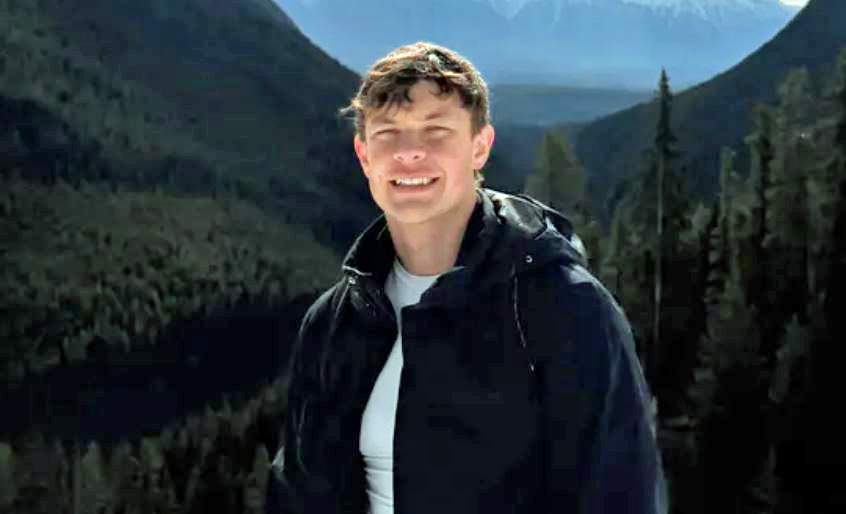
The recovery of a 25-year-old tourist's body from Johnston Canyon in Banff National Park illuminates a lethal operational friction: the severe divergence between a visitor's perception of risk and the cold mechanics of alpine hydrodynamics. On May 1, Pavlo Shemchuk entered Johnston Creek near the Lower Falls and did not resurface. The subsequent 25-day gap between the initial incident and the recovery on May 26 highlights the physical limitations of wilderness search and rescue operations when confronted with seasonal environmental surges.
Media coverage of outdoor fatalities frequently frames these events as unpredictable tragedies. A cold, structural analysis of the geography and physics involved reveals that these outcomes are highly predictable, driven by explicit mathematical and biological variables. Deconstructing these mechanisms clarifies why alpine water systems are fundamentally hostile to human survival, and why standard search tactics fail during the spring melt.
The Three Pillars of Alpine Water Hazards
The hazard profile of an alpine creek during the spring thaw is defined by three intersecting variables: temperature, velocity, and sub-surface architecture. When a human body enters this matrix, survival timelines are compressed from hours to seconds.
1. Thermal Shock and Metabolic Collapse
Johnston Creek is fed directly by glacial melt and high-altitude snowpack. During early May, water temperatures hover precisely above freezing, typically between 1°C and 4°C.
Entering water at this temperature triggers an immediate, involuntary physiological reaction known as the cold shock response. This response is marked by an instantaneous gasp for air, followed by hyperventilation. If a individual's head is submerged during the initial gasp, aspiration of water occurs immediately, accelerating the drowning process. The sudden constriction of peripheral blood vessels causes a rapid spike in heart rate and blood pressure, which can induce cardiac arrest even in young, healthy individuals.
Within minutes, thermal failure transitions into muscular incapacitation. Fine motor control disappears first, followed rapidly by the loss of gross motor function. Even expert swimmers lose the ability to propel themselves or keep their airways clear of the water's surface as muscle tissue cools to the point of paralysis.
2. Velocity and Kinetic Energy Realities
The kinetic profile of a mountain stream increases exponentially during the spring freshet—the period of rapid snowmelt. Water velocity is not a linear threat; the force exerted by moving water scales with the square of its velocity.
$$F \propto v^2$$
A current moving at a modest 2 meters per second exerts enough lateral force to sweep an adult male off his feet. Inside a narrow canyon topology like Johnston Canyon, water is funneled through restrictive rock channels, creating a venturi effect that dramatically increases velocity and pressure.
When an individual jumps into a plunge pool at the base of a waterfall, they are not entering a static body of water. They are entering a high-energy hydraulic system characterized by severe downward vectors. The falling water carries massive volumes of air deep into the pool, drastically reducing the density of the fluid.
Because the water is highly aerated, its buoyancy drops by up to 50 percent. A human body, even one with high lung volume, cannot generate enough upward force to reach the surface in highly aerated water. The downward momentum of the waterfall continuously pushes the individual toward the bed of the creek.
3. Sub-surface Entrapment Mechanisms
The visible surface of a mountain waterfall masks a complex, destructive subterranean topography. Plunge pools are carved out by centuries of hydraulic action, creating deep recesses, undercut boulders, and submerged ledges.
- Hydraulic Recirculation (Keepers): The force of a waterfall creates a powerful recirculating current at its base. Water flows down the falls, drives to the bottom of the pool, moves downstream along the bed, and then loops back upward and toward the face of the waterfall at the surface. This creates a perpetual washing-machine cycle that traps debris—and human bodies—underneath the falling water indefinitely.
- Strainers: Submerged logs, branches, and boulders act as mechanical filters. The relentless current pins an object against these obstructions with thousands of pounds of continuous force, making self-rescue or manual extrication by divers physically impossible without mechanical leverage.
The Strategic Dilemma of Wilderness Search and Recovery
Public pressure frequently demands immediate, continuous physical search operations following a disappearance. The operational reality faced by Parks Canada Visitor Safety Specialists and the Royal Canadian Mounted Police (RCMP) requires a strict risk-benefit calculation that prioritizes team survival over body recovery.
The initial search window for Shemchuk spanned from May 1 to May 4, after which operations were suspended due to hazardous water conditions. A secondary, targeted search on May 20–21 utilizing a private diver also failed to locate the individual. The body was only recovered on May 26 after naturally transitioning downstream from the lower pool.
This timeline illustrates the operational constraints dictated by the Environment Variable.
The Search and Rescue Risk Equation
First responders operate under a strict doctrine: if the risk to rescuers exceeds the probability of a live rescue, operations shift from an active rescue to a passive recovery.
[Turbulent Spring Melt] -> High Water Velocity + Zero Visibility
                                 |
                                 v
                     [Active Diver Deployment]
                                 |
                                 v
              {Risk to Rescuers > Probability of Success}
                                 |
                                 v
               [Operational Shift to Passive Recovery]
During a spring freshet, underwater visibility drops to near-zero due to high suspended sediment loads (turbid water). Deploying divers into a high-velocity, zero-visibility canyon environment with active hydraulic recirculation violates core safety protocols. The diver faces a near-certain risk of tether entanglements, impact trauma from submerged debris, or entrapment in the same hydraulic features that claimed the original victim.
Consequently, agencies deploy remote diagnostic tools, such as underwater cameras on extension poles or aerial drones. These technologies are fundamentally limited by water turbidity; if light cannot penetrate the water column, optical sensors cannot register anomalous shapes.
The eventual recovery occurred because of a shift in the body's buoyancy over a 25-day duration. Initially, a drowning victim's body sinks due to the loss of air in the lungs and a lack of inherent buoyancy. As decomposition progresses, internal gases accumulate within the abdominal cavity. This internal gas volume expands the body’s displacement without increasing its mass, lowering its overall density below that of water. Once the body becomes positively buoyant, it dislodges from sub-surface entrapments and surfaces, allowing for a safe, low-risk shoreline recovery.
Modifying Human Risk Infrastructure in National Parks
The structural breakdown of this event exposes a critical flaw in park infrastructure management: the failure of passive signage to modify human behavior in high-dopamine environments. Johnston Canyon features clear messaging prohibiting entry into the water, yet individuals regularly bypass these barriers.
To mitigate future fatalities, park management cannot rely on the assumption that visitors will make rational risk calculations when confronted with natural hazards. The human brain consistently underestimates systemic risk in environments that are highly commercialized or heavily trafficked by tourists. Because the trail is well-maintained and accessible, visitors subconsciously equate physical accessibility with systemic safety.
The operational solution requires moving beyond basic text-based signage toward physical behavioral architecture:
- Geometric Barrier Design: Replacing standard linear railings with non-climbable, inward-curving mesh barriers at high-risk transition zones to physically increase the effort required to breach the trail edge.
- Kinetic Warning Systems: Implementing highly visual, universal graphic indicators that communicate the invisible physical forces of the water—such as depicting hydraulic traps—rather than relying on text-based compliance mandates.
- Thermal and Velocity Data Feeds: Deploying digital displays at trailheads that show real-time water temperatures and current velocities framed in terms of human survival windows (e.g., "Water Temperature: 2°C. Muscle Paralysis: 3 Minutes.").
National parks remain wild ecosystems managed for public access. The boundary between a curated tourist experience and raw wilderness physics is paper-thin. When that boundary is crossed intentionally or accidentally, the laws of fluid dynamics operate without prejudice, rendering survival a matter of cold mathematics rather than physical capability.


