-(1).jpeg?width=1200&auto=webp&trim=0%2C0%2C0%2C0)
The modern battlefield is changing faster than international law can keep up. You've probably seen the headlines about artificial intelligence taking over logistics, surveillance, and target acquisition. But the real story is much more physical. Robot soldiers and autonomous systems are moving out of science fiction laboratories and into active operational planning across the United States defense apparatus.
Naturally, this shift is raising alarms among ethicists, international watchdogs, and military veterans alike. When you remove human empathy, hesitation, and conscience from the front lines, you don't just change how wars are fought. You change what makes war survivable for humanity.
The Reality of Autonomous Ground Systems
For years, military robotics meant a remote-controlled tracked vehicle diffusing an improvised explosive device or a flying drone scanning a ridge line from thousands of feet in the air. Those days are gone. Programs funded by the Defense Advanced Research Projects Agency (DARPA) and major defense contractors have evolved significantly.
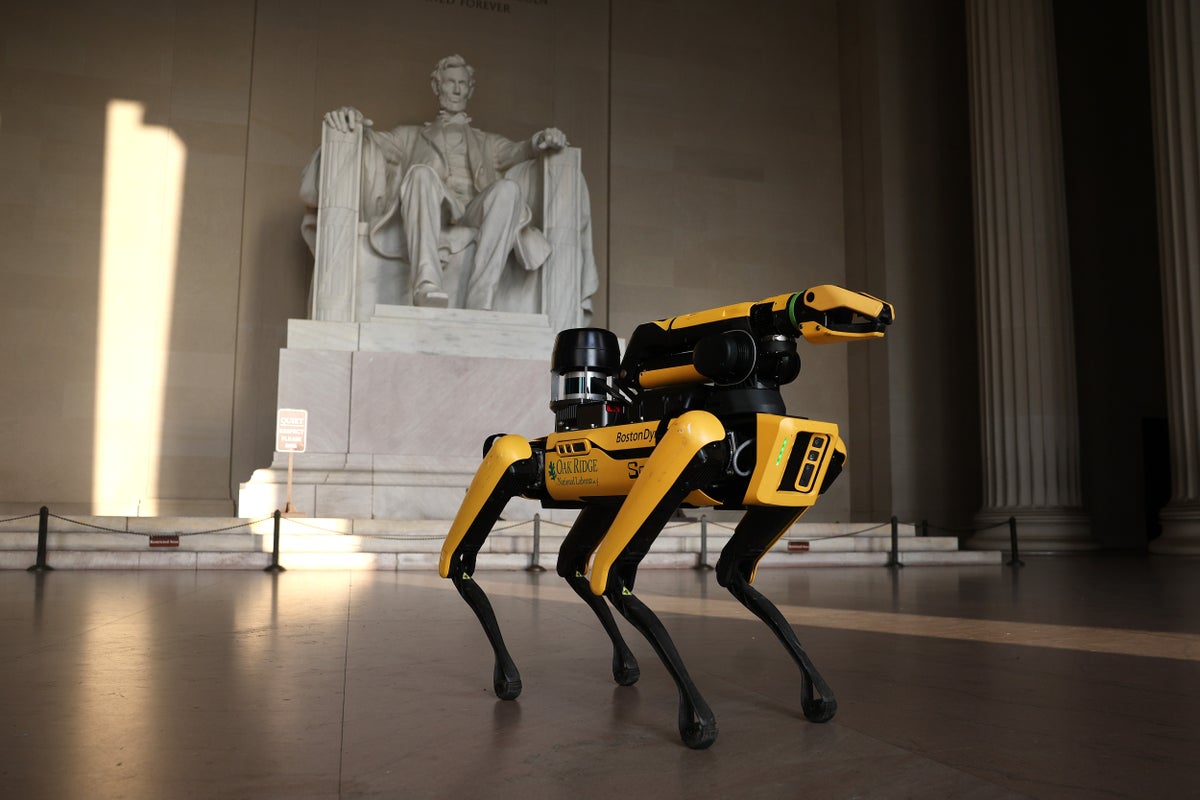
We are looking at quadrupedal ground units—similar in concept to commercial robot dogs—equipped with advanced sensors, communication relays, and increasingly, weapon attachments. The U.S. Air Force already utilizes automated security robots for perimeter patrols at sensitive installations. Meanwhile, experimental ground vehicles navigate rough terrain at speeds exceeding forty miles per hour without a human hand on the steering wheel.
The Pentagon's official Robotics and Autonomous Systems strategies outline a clear trajectory. The goal is to integrate self-aware, highly mobile units directly into combat formations. Proponents argue this saves American lives by putting machines in the line of fire instead of young infantrymen. It sounds pragmatic on paper. Yet, reality on the ground rarely stays neatly within tactical guidelines.
Why the Alarm is Growing Louder
The discomfort surrounding automated combat isn't just coming from pacifists. Military strategists are worried about escalation dynamics and accountability.
When a human soldier commits a war crime or makes a tragic miscalculation, courts-martial exist. Chain of command matters. Commanders bear responsibility. But who do you hold accountable when a machine learning algorithm misidentifies a civilian as a combatant due to corrupted training data or edge-case sensory errors?
Human beings possess a vital trait on the battlefield: hesitation. Doubt can prevent a disaster. An autonomous weapon system operating on optimized code doesn't doubt. It executes parameters.
Ethics initiatives like DARPA's ASIMOV program attempt to build quantitative benchmarks for ethical behavior into autonomous systems. They want machines to understand the Geneva Conventions. Honestly? That is a staggering engineering challenge. Translating centuries of complex, situational jurisprudence into binary logic isn't something you code over a weekend. If human lawyers and generals struggle to interpret international humanitarian law in the fog of war, expecting an artificial neural network to get it right under heavy fire is a massive gamble.
The Global Arms Race You Aren't Hearing About
America isn't building these capabilities in a vacuum. China and other global competitors are investing heavily in lethal autonomous weapons systems. This creates a terrifying geopolitical prisoner's dilemma. If Washington decides to halt development due to ethical concerns, adversaries will simply accelerate theirs.
We are hurtling toward a fully automated arms race. In places like Ukraine, the conflict has already forced a brutal acceleration of robotic deployment, with thousands of ground missions and uncrewed operations reshaping tactical doctrine daily. Once these systems prove they can clear trenches or hold a perimeter efficiently, pulling them back will become politically impossible.
The threshold between human-guided warfare and automated slaughter is disappearing. We are crossing that line right now, mostly in the dark, driven by the fear of falling behind. If we don't demand transparent international treaties governing autonomous lethality soon, the future of conflict will be decided entirely by algorithms that don't care who wins or loses.