The Strait of Hormuz is the world's most important oil chokepoint and it's currently a massive headache for the Trump administration. You've likely seen the headlines about rising tensions in the Persian Gulf. There’s a common assumption that because the United States has the most powerful navy on earth, it can simply sail in and "fix" the problem. It’s not that simple. Iran knows this. They’ve spent decades turning this narrow strip of water into a defensive fortress that makes traditional naval superiority look surprisingly vulnerable.
Let’s look at the math. Roughly 21 million barrels of oil pass through this strait every single day. That's about 20% of the world’s daily liquid fuel consumption. If that flow stops, the global economy doesn't just stumble—it breaks. Iran understands that it doesn't need to win a full-scale war against the U.S. to achieve its goals. It just needs to make the cost of intervention high enough that Washington hesitates.
The geography of a nightmare
The Strait of Hormuz is tiny. At its narrowest point, it’s only about 21 miles wide. However, the shipping lanes used by massive tankers are even narrower—just two miles wide in each direction, separated by a two-mile buffer zone. This isn't the open ocean where a carrier strike group can maneuver freely. It’s a literal alleyway.
Iran controls the northern coastline. They have the high ground. From these heights, they can monitor every single vessel that enters or exits the Gulf. Think of it as a sniper's nest overlooking a single-lane road. The U.S. Navy is forced to operate in a confined space where their greatest assets—long-range missiles and massive aircraft carriers—become big, slow targets.
Irans strategy of a thousand cuts
Iran doesn't plan to meet the U.S. Navy in a fair fight. They’d lose that in an afternoon. Instead, they use "asymmetric warfare." This is basically the art of using cheap, plentiful weapons to destroy or disable incredibly expensive, sophisticated ones.
First, consider their swarm of fast attack craft. These are small, engine-powered boats armed with missiles or explosives. One or two won't do much to a destroyer. But fifty? If they attack from all sides at once, they can overwhelm a ship’s defensive systems. It’s a terrifying prospect for any naval commander.
Then there are the mines. Naval mines are cheap, "dumb" weapons that are incredibly difficult to clear. Iran has thousands of them. Some are modern and sophisticated; others are basically just underwater bombs that wait for a hull to bump into them. In a narrow strait, you don't even need to hit a ship to be effective. The mere possibility of mines can shut down commercial shipping because insurance companies will instantly revoke coverage for any tanker trying to enter the area.
Why Donald Trump is stuck in a corner
The Trump administration has leaned heavily into "maximum pressure." The goal is to squeeze Iran’s economy until they agree to a stricter nuclear deal. It’s a bold move, but it has a massive flaw. When you back a regional power into a corner, they’re going to use the one lever they have left. That lever is the Strait of Hormuz.
Iran’s leadership has been very clear. If they can't export their oil because of U.S. sanctions, they’ll make sure nobody else in the region can either. This isn't just empty talk. We’ve seen mysterious "limpet mine" attacks on tankers and the seizure of foreign vessels. These aren't acts of random aggression; they’re calculated signals to the White House.
The dilemma for Trump is basically a trap. If he ignores the provocations, he looks weak and the sanctions lose their bite. If he retaliates with force, he risks a hot war that could spike oil prices to $200 a barrel right before an election cycle. It's a lose-lose scenario.
The missile threat from the mainland
Iran’s ballistic missile program is the largest in the Middle East. They’ve developed specialized anti-ship missiles specifically designed to hit targets in the Strait. These are launched from mobile trucks hidden in the mountains or underground silos.
The U.S. has Aegis missile defense systems, sure. But those systems aren't perfect. In the narrow confines of the Strait, the "flight time" for an Iranian missile is incredibly short. We're talking about seconds, not minutes. This reduces the reaction time for U.S. crews to almost zero. It’s a high-stakes game of chicken where one mistake leads to a sunken ship and hundreds of casualties.
The role of regional players
It’s not just about the U.S. and Iran. Saudi Arabia and the UAE are the ones actually shipping the oil. They’re terrified. On one hand, they want the U.S. to crush Iran. On the other, they know their desalination plants and oil terminals are sitting ducks for Iranian retaliation.
The U.S. has tried to build an international coalition to escort tankers. Most allies are reluctant. They don’t want to be dragged into a war they didn't start. Without a broad international mandate, the U.S. is essentially acting as the world’s most expensive security guard for a neighborhood that is increasingly unstable.
What actually happens if the Strait closes
Let’s be real about the consequences. If Iran even partially blocks the Strait, the global supply chain halts. Most people think about the price of gas at the pump. That’s just the tip of the iceberg.
Modern manufacturing relies on "just-in-time" delivery. A massive spike in energy costs ripples through everything—food production, air travel, shipping, and plastics. We saw a version of this during the 1970s oil crisis. Today, the world is much more interconnected. The shock would be faster and more violent.
Iran knows that a global recession is their best shield. They’re betting that the world’s hunger for cheap energy will eventually force the U.S. to back down and offer sanctions relief. It's a cynical, dangerous, and incredibly effective strategy.
The limits of naval power
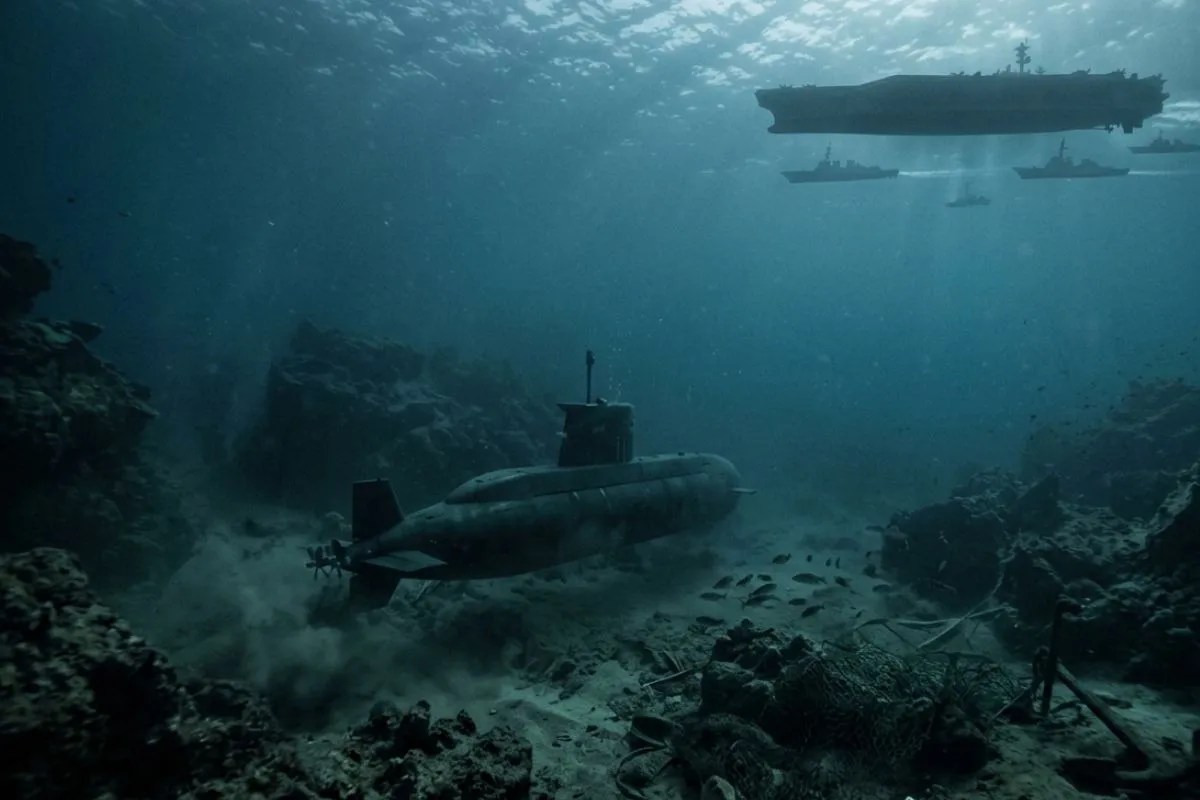
The U.S. Navy is designed for blue-water conflict—fighting other big navies in the middle of the ocean. In the "green water" of the Strait, all those advantages evaporate. Submarines struggle in the shallow, noisy waters. Carriers are too big to hide.
The U.S. would need to conduct a massive, weeks-long campaign to clear Iranian coastal defenses, minefields, and missile sites just to make the Strait "relatively" safe. During those weeks, the oil market would be in a total panic.
Honestly, the military solution looks less like a quick strike and more like a long, bloody grind. This is exactly what the U.S. wants to avoid after two decades of Middle Eastern wars.
Moving forward in the Gulf
Don’t expect a quick resolution. The standoff in the Strait of Hormuz is a symptom of a much deeper geopolitical conflict that won't be solved by a few extra destroyers. Iran is playing a long game, using geography and asymmetric tools to neutralize American brute force.
If you’re watching this situation, stop looking at carrier counts and start looking at oil insurance premiums and the rhetoric coming out of Tehran. The real war is being fought over the "risk" of passage, not just the passage itself. As long as Iran can make that risk too high for the global market to bear, they hold the upper hand in the Strait.
The next step for anyone following this is to track the development of bypass pipelines in Saudi Arabia and the UAE. Until those pipelines can handle the bulk of the region's exports, the Strait of Hormuz remains a loaded gun pointed at the heart of the global economy.