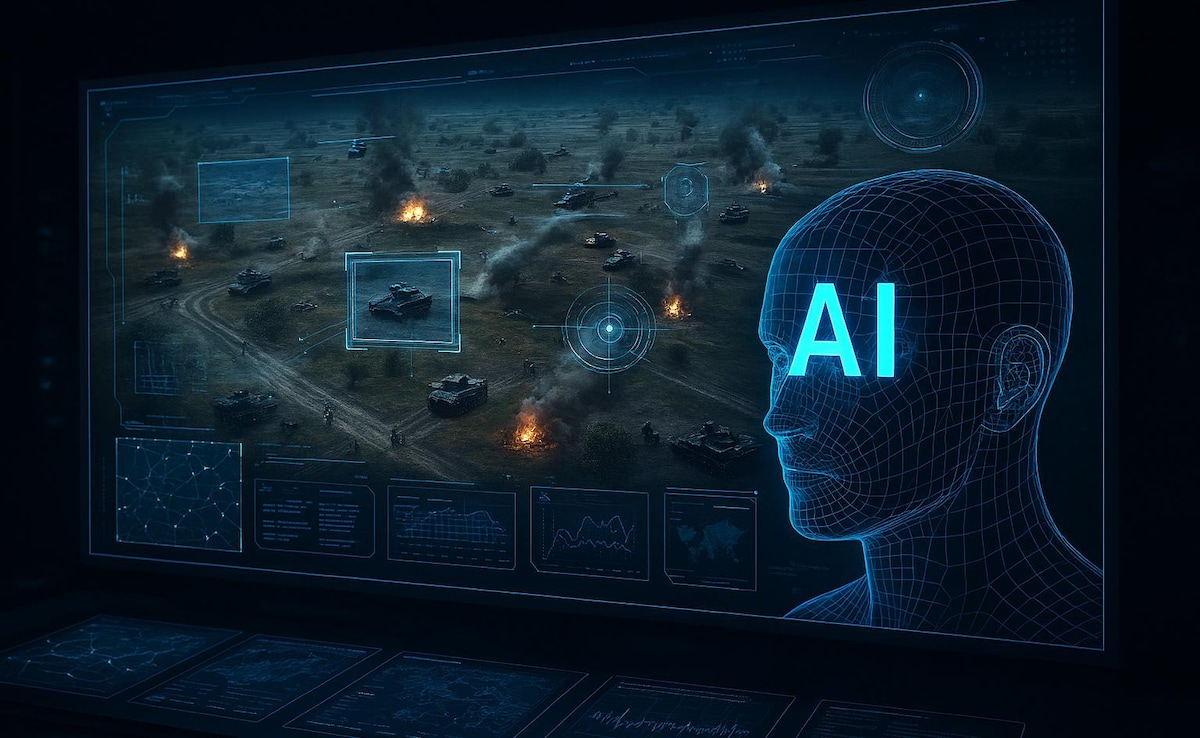
The convergence of consumer-grade generative artificial intelligence and high-stakes kinetic warfare has moved beyond theoretical modeling into active theater operations. The recent deployment of AI-augmented targeting systems in the Middle East, specifically targeting Iranian-linked infrastructure, represents a shift from human-in-the-loop oversight to human-on-the-loop strategic management. This evolution is not merely a change in hardware but a fundamental restructuring of the kill chain, reducing the latency between detection and neutralization to milliseconds. To understand this shift, one must analyze the transition from heuristic-based targeting to deep-learning-based visual identification and the subsequent impact on regional power dynamics.
The Triad of Algorithmic Targeting
The efficacy of modern AI-driven strikes rests on three distinct technological pillars that separate current capabilities from the "smart bombs" of the late 20th century.
1. Feature Extraction and Semantic Segmentation
Legacy systems relied on Heat Seeking (IR) or Radar Cross-Section (RCS) signatures. Modern systems utilize semantic segmentation—the ability of an onboard processor to identify the pixels of a "Launcher" versus those of a "School Bus" or "Hospital" even when the target is camouflaged or partially obscured. By training models on synthetic data generated by engines similar to those used in photo-editing software, military actors can simulate millions of lighting conditions and angles, creating a classifier that is significantly more resilient than a human pilot.
2. Edge Computing and Low-Latency Inference
The bottleneck of traditional drone warfare was the "satellite lag." High-definition video had to be beamed to a ground station, interpreted by an analyst, and then a command sent back. Current autonomous munitions perform inference at the edge. The neural network resides on the missile or drone itself. This eliminates the communication link, making the weapon immune to electronic warfare (EW) jamming that targets the control signal. If the link is severed, the AI continues the mission based on its internal visual "memory."
3. Probabilistic Threat Assessment
Autonomous systems now assign a "Confidence Score" to potential targets. If a mobile missile battery matches the training set with a 98% probability, the system executes. This moves the burden of ethical and strategic risk from the operator at the moment of impact to the data scientists and commanders during the model-weighting phase.
The Economics of Precision Attrition
The strike on Iranian-backed assets demonstrates a shift in the cost-exchange ratio of modern conflict. Historically, destroying a $50,000 mobile radar unit required a multi-million dollar cruise missile or a manned aircraft sortie. The integration of AI into lower-cost loitering munitions—often referred to as "suicide drones"—has inverted this equation.
- Manufacturing Scalability: By using off-the-shelf components and open-source AI frameworks, non-state actors and middle-tier powers can mass-produce precision-guided threats.
- Saturation Tactics: AI allows for "swarming," where dozens of units coordinate to overwhelm air defenses. A Patriot missile battery, costing millions per interceptor, cannot economically or physically defend against a swarm of 50 drones costing $20,000 each.
- The Data Feedback Loop: Every failed strike provides telemetry data used to retrain the model. The AI that "dropped the bomb" in this instance is already more capable than the one used six months ago because it has processed the visual data of its predecessor's terminal flight path.
Operational Limitations and the "Black Box" Risk
While the strategic advantages are quantifiable, the shift to algorithmic warfare introduces systemic vulnerabilities that are often overlooked in triumphalist reporting.
The primary risk is Adversarial Perturbation. Just as photo-editing AI can be tricked by specific pixel patterns, kinetic AI can be "blinded" by adversarial cloaking. A specific pattern of high-contrast paint on a hangar or a vehicle might confuse the neural network's feature extraction, causing it to misclassify a high-value target as a civilian object, or vice versa.
Secondarily, there is the Data Drift phenomenon. If the theater of war shifts from the desert to an urban or forested environment, the models trained on desert topography may experience a significant drop in accuracy. This necessitates a continuous, high-speed pipeline for data labeling and model deployment, a capability that only a few global powers currently possess in a "hot" war scenario.
Geopolitical Implications of the Iranian Theater Strikes
The strikes against Iran's interests serve as a live-fire demonstration of a "System of Systems." It is not just about the drone or the AI; it is about the integration of signals intelligence (SIGINT), satellite imagery (GEOINT), and real-time algorithmic processing.
The Iranian response—or lack thereof—highlights a widening technological gap. Conventional air defenses are designed to track objects with a specific flight profile and speed. AI-driven loitering munitions can mimic bird flight patterns, hover, and attack from unexpected vectors, rendering traditional radar-based early warning systems increasingly obsolete. This creates a "Security Dilemma" where Iran and its proxies must either invest in their own AI countermeasures or accept a permanent state of vulnerability to "invisible" precision strikes.
The transition to AI-controlled kinetic action signifies the end of the "Post-Cold War" era of precision bombing. We have entered an era of Predictive Attrition, where the goal is not just to hit a target, but to use algorithms to identify the precise node in an enemy's network that will cause the most systemic collapse when removed.
Strategic planners must now prioritize the "Data Moat." In this new paradigm, the side with the most diverse, high-quality training data and the fastest inference engines holds the high ground. Organizations must immediately move toward hardening their physical assets against visual-spectrum AI and investing in "Counter-AI" electronic warfare that targets the sensors of the munition rather than its communication links. The next phase of this conflict will be won in the training clusters, not just on the battlefield.