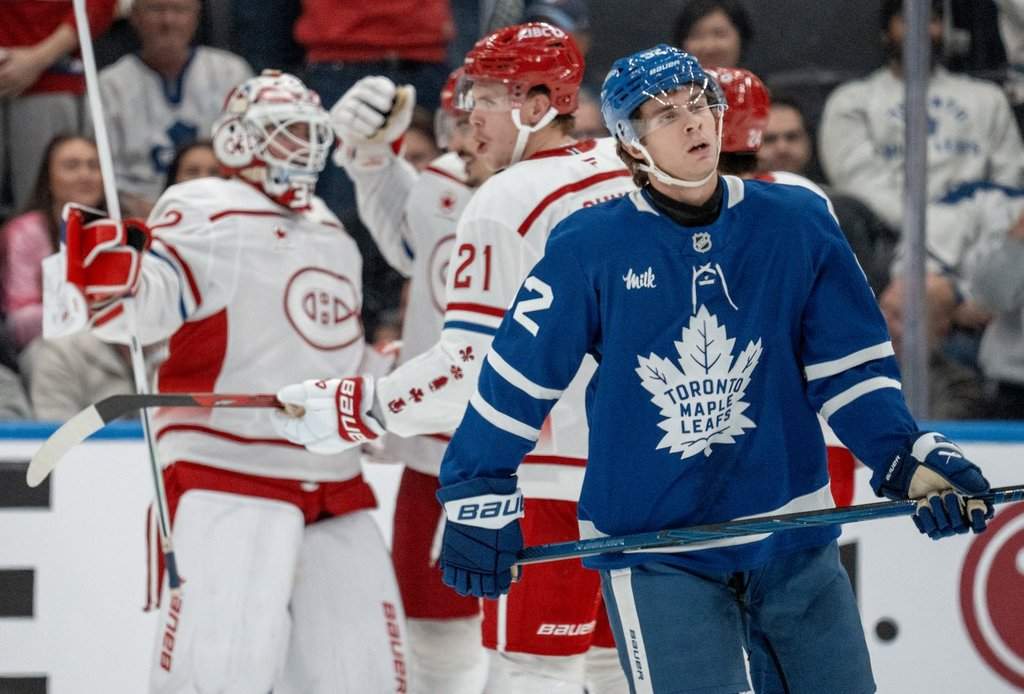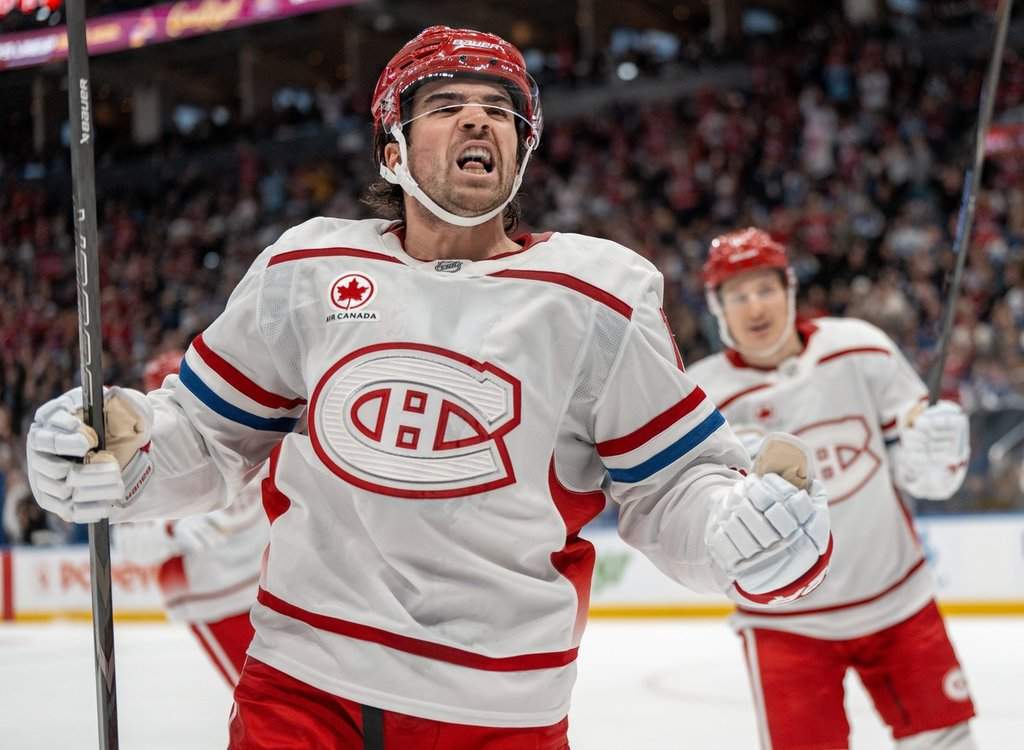
When Alex Newhook and Jacob Fowler powered the Montreal Canadiens past the Toronto Maple Leafs, the scoreboard told only half the story. The victory was not an accident of puck luck or an off night from a division rival. Instead, it was a clinical dismantling of Toronto's structural habits, driven by Montreal's relentless transitional speed and a goaltending performance that suffocated high-danger scoring chances before they could develop. For years, the Atlantic Division rivalry tilted heavily toward Toronto's top-heavy offensive firepower, yet this matchup revealed how quickly the tactical balance shifts when speed meets disciplined crease coverage.
Games between Montreal and Toronto carry historical weight that rarely needs manufacturing, though the underlying hockey mechanics often get buried beneath market noise. Strip away the sweaters and the media frenzy, and what remains is a fascinating clash of organizational philosophies. Toronto has spent a decade trying to refine a roster built around elite, high-cost offensive catalysts, perpetually searching for the right defensive insulation to survive tight-checking environments. Montreal, conversely, spent the past few seasons absorbing painful developmental losses while assembling a roster predicated on north-south pace, quick puck retrieval, and a pipeline of young talent designed to play fast under pressure. You might also find this similar coverage insightful: The Quiet Architecture of Greatness and the 2026 Hockey Hall of Fame.
The Anatomy of Speed in Transition
Hockey at the NHL level is largely won or lost in the neutral zone. Teams that surrender the defensive blue line easily invite sustained cycle pressure, while teams that clog the middle force turnovers that immediately convert into odd-man rushes. Against Toronto, Montreal executed a textbook neutral-zone trap that morphed into an aggressive forecheck the instant a Maple Leafs defenseman hesitated on a breakout pass.
Alex Newhook sits at the center of that tactical identity. Acquired from the Colorado Avalanche specifically because his skating profile matched the modern tempo of the league, Newhook thrives when play becomes stretched and chaotic. He does not beat defenders by overpowering them along the wall. He beats them by forcing defensemen to pivot early, backing off the blue line, and creating pockets of soft ice for trailing forwards. As discussed in recent reports by Sky Sports, the effects are widespread.
Consider how Newhook attacks a staggered defensive structure. When a defenseman steps up to challenge the puck carrier at the red line, a half-second delay in support leaves the weak side exposed. Newhook's first three strides close that gap faster than most middle-six forwards in the Eastern Conference. Against Toronto, that acceleration repeatedly forced the Maple Leafs' blue line into retreat mode, neutralizing their ability to hold the offensive zone and pinching off their secondary wave of attack.
Why Straight-Line Pace Breaks Structure
Many observers confuse frantic skating with effective speed. Moving fast without purpose simply runs a player out of passing lanes and into the corner boards. True transitional danger happens when a skater's feet move at maximum velocity while their hands and eyes process the ice at half-speed.
Newhook demonstrated this exact separation against Toronto. Rather than dumping the puck in when met with resistance at the offensive blue line, he used subtle lateral cuts to buy time for Montreal's weak-side wingers to enter the zone with momentum. That single adjustment turned routine zone entries into sustained possession sequences. Toronto's defensive coverage, which relies heavily on maintaining tight box-plus-one spacing around the slot, began to fracture as defenders chased the puck carrier higher into the zone than their system permits.
The Crease Factor and Jacob Fowler
Speed up front means nothing if the back end leaks goals on routine perimeter shots. For a young roster learning how to close out tight games against veteran contenders, goaltending is the ultimate stabilizer. Jacob Fowler provided precisely that stability against Toronto, turning away quality looks with a calm, economical style that stands in sharp contrast to the frantic scrambling often seen from young netminders under siege.
Fowler's development path through the NCAA ranks at Boston College prepared him for high-pressure environments long before he pulled on a Montreal sweater. At the collegiate level, where defensive breakdowns can be sudden and unforgiving, goaltenders survive by mastering depth control and post integration. Fowler rarely overcommits to the initial shooter. He holds his edges, reads the release angle rather than guessing the shot location, and absorbs rebounds into his chest so play stops on his terms.
Against a Toronto offense that thrives on east-west seam passes and quick-release wrist shots from the high slot, rebound control is non-negotiable. Give the Maple Leafs a second touch around the blue paint, and the puck almost always ends up behind the goal line. Fowler eliminated those second-chance opportunities. By steering low shots cleanly into the corners and smothering traffic-heavy point shots, he denied Toronto the chaotic net-front scrambles that usually bail them out when their primary cycle stalls.
Reading the Release Over Chasing the Puck
To understand why Fowler looked so composed against NHL shooters, you have to look at how modern goaltending mechanics have evolved. Ten years ago, coaching emphasized aggressive depth—challenging shooters well outside the crease to cut down angles. That approach works until elite passers start moving the puck laterally across the royal road, leaving an aggressive goalie stranded out of position.
Fowler plays a much more conservative depth profile. He trusts his frame and his lateral push to cover the net without exposing himself to backdoor tap-ins. When Toronto attempted to force cross-ice passes through the slot, Fowler stayed compact, rotated his hips cleanly, and arrived on angle before the shooter could get the puck off his blade. It is a quiet style of goaltending that does not produce many highlight-reel diving saves, mostly because proper positioning prevents the desperation moments from happening in the first place.
Where Toronto's System Stalled
Every dominant performance has a counterpart on the losing bench. While Montreal executed its game plan with precision, Toronto fell into familiar traps that have plagued the franchise across multiple coaching staffs and roster iterations.
The Maple Leafs' offensive attack relies heavily on puck possession and controlled zone entries. When their top units have time to set up in the offensive zone, their puck movement is nearly impossible to defend. They rotate high and low, pull defensemen out of position, and exploit seams with pinpoint passing. However, that entire ecosystem depends on clean breakouts from their own zone.
Montreal targeted Toronto's defensive zone exits with relentless two-man pressure. By sending the first forward hard onto the puck-retrieving defenseman and positioning the second forward directly in the strong-side winger's passing lane, the Canadiens forced Toronto's defenders to make blind reverse passes behind their own net or chip the puck weakly off the glass into neutral ice.
Once Toronto lost the ability to exit their zone with speed, their forwards were forced to receive passes standing still at the red line. An NHL offense cannot generate consistent scoring chances from a standstill. Instead of attacking Montreal's defense with speed, the Maple Leafs were reduced to chipping pucks deep and losing footraces to younger, fresher legs.
The Illusion of Shot Volume
Box scores frequently mislead casual viewers into believing a team played better than it actually did. A team can fire forty shots on net and still lose convincingly if thirty of those attempts come from the perimeter with clear sightlines for the goaltender.
Toronto generated stretches of zone time where the puck stayed along the half-wall and the point, producing low-percentage shots through traffic that never threatened the middle of the ice. Montreal's defensive structure remained disciplined, keeping five skaters inside the house and refusing to chase the puck carrier out toward the boards. Without interior penetration, Toronto's possession time became empty calories—impressive on an analytics chart, largely harmless on the scoreboard.
The Structural Shift in the Atlantic Division
One regular-season game does not crown a contender or bury a playoff perennial, yet certain matchups serve as accurate barometers for where organizations are heading. For the better part of a decade, the Atlantic Division hierarchy was rigid. Tampa Bay, Boston, Florida, and Toronto occupied the top tier, while rebuilding clubs like Montreal, Ottawa, and Detroit absorbed heavy losses while waiting for draft picks to mature.
That timeline is compressing rapidly. Montreal's management group made a calculated bet on positional size, skating speed, and institutional patience. Rather than rushing prospects into roles they could not handle or trading future assets for short-term fixes, the organization allowed its core to grow together through shared adversity.
- Pace as a baseline requirement: Every forward addition over the past three offseasons prioritized skating mechanics and transitional motor.
- Goaltending insulation: Investing high draft capital in netminders like Fowler ensured the franchise would not remain hostage to the volatile free-agent goalie market.
- Defined role clarity: Players like Newhook were placed in environments tailored to their exact athletic strengths rather than forced into ill-fitting checking roles.
Toronto faces the opposite organizational challenge. Operating perennially against the salary cap ceiling leaves very little margin for error on depth signings and defensive acquisitions. When top-end talent carries the bulk of the financial weight, the supporting cast must outperform their contracts every single night just to maintain structural balance. Against a younger, faster, and deeper opponent, those thin margins get exposed immediately.
The Psychological Weight of Rivalry Games
Tactics and analytics explain the mechanics of a hockey game, but human psychology dictates how players execute under pressure. The Montreal-Toronto rivalry carries an emotional charge that amplifies every mistake and magnifies every momentum swing.
In Toronto, every regular-season stumble is dissected as a referendum on the roster's playoff viability. That external pressure often manifests on the ice as overthinking—players holding onto the puck a fraction of a second too long, looking for the perfect pass instead of taking the simple play, or gripping their sticks tightly when trailing in the third period.
Montreal, unburdened by decade-long championship expectations, plays with a looser, more aggressive mindset. When a young team realizes it can skate step-for-step with an established division heavyweight, confidence spreads quickly through the bench. Shifts get shorter, passes become crisper, and players attack open ice without hesitation.
Managing Momentum Swings
The turning point in games like this rarely comes from a scripted set play. It usually arrives during a chaotic two-minute stretch in the second period when the ice tilts and one team either bends or breaks.
When Toronto pushed back hard in the middle frame, attempting to overwhelm Montreal with heavy shifts from their top line, the Canadiens did not panic or ice the puck repeatedly. Instead, Fowler froze the play when necessary, the defensemen kept their gaps tight at the blue line, and Newhook used his speed on a counterattack to flip the ice and draw a momentum-killing penalty. Managing those emotional swings is the clearest indicator that a rebuilding team is transitioning into a legitimate threat.
What Scouts Look For Beyond the Box Score
If you sit in the press box alongside veteran NHL scouts during a game between Montreal and Toronto, you quickly notice they rarely look at the scoreboard or the shot clock. They watch away from the puck. They track how quickly a center reloads back into the defensive zone after a turnover, how aggressively a defenseman boxes out in front of the crease, and how a goaltender communicates with his blue line on dump-ins.
Through that lens, the contributions of Newhook and Fowler stand out even brighter. Newhook's backchecking routes consistently disrupted Toronto's trailer options, eliminating the late-arriving shooter that so often catches young defenses off guard. Meanwhile, Fowler's puck-handling behind the net relieved immense pressure on his defensemen, allowing them to break out cleanly before Toronto's forecheckers could establish contact.
These details never show up on a highlight reel. They do not generate viral clips on social media or dominate postgame talk radio segments. Yet over an eighty-two-game grind, those quiet, repeatable habits separate teams that merely steal occasional wins from teams that build sustainable winning identities.
The Blueprint Moving Forward
For Montreal, the challenge is not replicating this performance once against a rival—it is maintaining that exact standard of pace and defensive discipline on a Tuesday night in February against a non-conference opponent. Young rosters naturally fluctuate in energy and execution. Sustaining a high-tempo system requires immense physical conditioning and mental buy-in from every line on the bench.
For Toronto, the loss serves as another reminder that raw offensive talent cannot consistently outscore structural vulnerabilities against fast, well-coached teams. Until the Maple Leafs solve their breakout efficiency under heavy forechecking pressure, opponents will continue to use the exact same template Montreal deployed: take away the middle of the ice, force defenders to turn their backs to the play, and punish every turnover with relentless north-south speed.