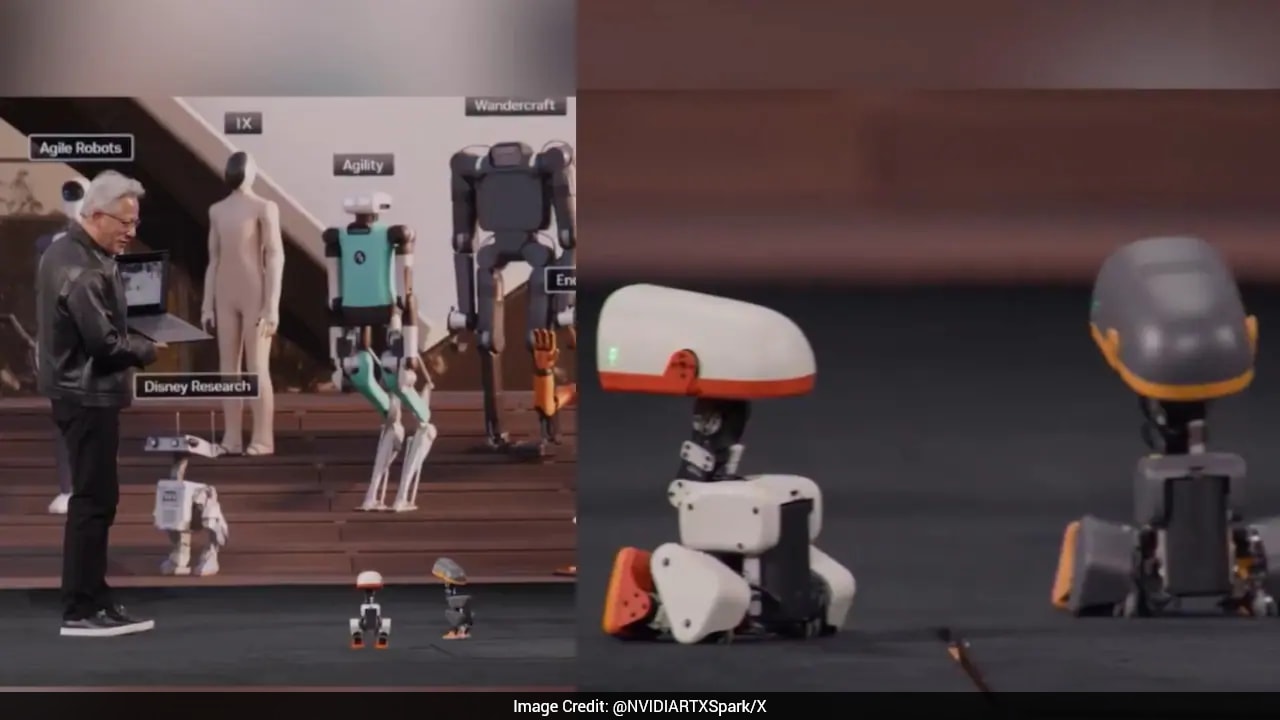
Stage demonstrations of compact, AI-driven microducks performing discrete commands like sitting, standing, and napping reveal far more about inference latency, simulation-to-reality transfer, and platform marketing than they do about commercial robotics. When a hardware leader showcases tiny autonomous agents executing posture changes on command, surface-level coverage treats the novelty as proof of imminent consumer readiness. Rigorous analysis separates the visible behavior from the underlying systems architecture: sensing pipelines, policy execution loops, actuator power budgets, and developer ecosystem lock-in.
This article deconstructs the typical narrative around AI microducks and replaces it with an operational framework for evaluating small-scale embodied AI. First, it maps the flaws in novelty-driven robotics reporting and establishes a structured model of embodied control. Second, it examines the physical, compute, and economic constraints governing micro-scale machines. Third, it translates those mechanics into a practical evaluation playbook for engineering leaders, investors, and product strategists.
Why Novelty Coverage Misreads Micro-Scale Robotics
Competitor coverage of stage demos typically relies on a simple chain of inference: a small robot responds to a prompt or cue, therefore general-purpose embodied intelligence is arriving at miniature scale. That logic conflates behavioral choreography with generalized autonomy. A robot that sits, stands, or enters a low-power resting pose on cue may be executing a well-trained reinforcement learning policy, a scripted state transition, or a remote/local command loop under tightly controlled stage conditions.
The first analytical gap in novelty reporting is environment compression. Keynote stages eliminate thousands of edge cases that dominate real-world deployment: uneven floor friction, stray cables, shifting lighting, acoustic noise, occlusion, and multi-agent collisions. A demo proves a policy can succeed inside a bounded operating envelope. It does not prove resilience across unstructured spaces.
The second limitation involves capability versus utility. Posture transitions such as sitting, standing, and napping are high-visibility demonstrations of balance, joint coordination, and mode switching. Yet entertainment and expressive motion carry a different cost-benefit profile than physical work. A small robot that changes posture has zero inherent payload capacity unless paired with manipulation or sensing utility that justifies its bill of materials.
The third flaw is treating a reference platform as a finished consumer product. In platform ecosystems, small, expressive hardware often serves as a low-friction developer kit or keynote prop designed to make abstract compute stacks legible to an audience. Confusing a demonstration vehicle with a standalone commercial category leads buyers and builders to misprice engineering effort.
Deconstructing the Embodied Control Stack
To evaluate any AI-powered microduck accurately, separate the system into four coupled layers: perception, policy inference, actuation, and power/thermal management. A failure or bottleneck in any single layer caps total system performance regardless of how impressive the demo looks.
Perception and State Estimation
Small robots face strict limits on sensor mass, volume, and power draw. Depending on the hardware design, state estimation relies on combinations of inertial measurement units (IMUs), joint encoders, low-power cameras, microphones, or time-of-flight depth sensors.
- Known fact: Compact mobile platforms depend heavily on high-frequency IMU integration and proprioceptive feedback (such as motor current or joint position) to maintain balance and posture transitions when visual bandwidth or compute is constrained.
- Educated hypothesis: Stage demos frequently rely on predictable floor geometry and clean visual/acoustic conditions that reduce sensor noise compared with homes, offices, or factories.
When sensor suites are minimal, observability becomes a primary constraint. If a robot cannot directly measure floor slip or subtle center-of-mass shifts, its control policy must infer them indirectly or operate conservatively within tested trajectories.
Policy Execution and Latency Budgets
Executing commands like sitting, standing, or napping requires translating high-level intent (a voice command, gesture, or system trigger) into low-level joint targets at tight control frequencies. High-level reasoning or multimodal interpretation can tolerate tens or hundreds of milliseconds of latency. Low-level balance and motor stabilization cannot.
This split creates a two-tier control architecture:
- Semantic and command layer: Interprets user intent, selects a behavior mode, or sets high-level goals. This layer may run onboard or via low-latency edge/cloud connectivity depending on hardware capability and network availability.
- Closed-loop motor control layer: Runs high-frequency control loops that keep actuators stable during transitions such as standing up or settling into a resting state.
If a system couples high-level language or vision models too tightly to raw motor outputs without deterministic safety limits or fast local loops, latency spikes produce jitter, instability, or delayed responses.
Actuation and Mechanical Trade-Offs
Scaling down actuators introduces severe mechanical realities. Small servomotors or micro-actuators have tight torque-to-weight ratios, gear backlash, and thermal limits under sustained load.
- Known fact: Holding a static non-neutral posture—such as a partial crouch or raised stance—can draw continuous holding current and generate heat unless mechanical geometry, braking, or low-torque resting ("nap") states relieve the load.
- Educated hypothesis: A "nap" or resting command on a micro-robot likely serves a dual role: conveying lifelike behavior to observers while dropping actuator torque and compute draw to manage heat and battery drain.
In operational engineering, thermal throttling and gear wear are silent killers of continuous operation. A robot that looks effortless for three minutes on stage may overheat or drift out of calibration after thirty minutes of continuous cycling.
The Economics and Strategic Logic of Platform Demos
Why do compute and robotics platform leaders showcase small, charismatic machines during major keynotes? Because abstract silicon benchmarks and software SDKs rarely hold attention for an hour, whereas physical agents make compute tangible.
Platform Signaling vs. Commercial Productization
In enterprise and developer ecosystems, a flagship keynote demo operates as a reference architecture. It signals where the vendor wants developers to build: simulation environments, synthetic data pipelines, foundation models for robotics, and edge inference runtimes.
For example, training policies in physics simulation (sim-to-real transfer) allows teams to randomize friction, mass distribution, and disturbances before touching physical hardware. Showcasing a small physical agent demonstrates that simulated policies can cross into real hardware without requiring a multi-million-dollar industrial arm.
However, a reference demo solves a demonstration problem, not a unit-economics problem. Consumer and commercial robotics require:
- Predictable manufacturing yields and low component cost at scale.
- Serviceability, durability, and clear safety certification.
- Ongoing software value or clear hardware margin after customer acquisition cost.
Without those elements, a charismatic prototype remains a developer tool, marketing asset, or research vehicle rather than a self-sustaining product line.
The Cost Function of Autonomy at Small Scale
Every gram and milliwatt on a micro-scale robot forces a trade-off. Adding a richer sensor increases mass and power draw, which requires a larger battery or heavier actuator, which in turn demands more torque. That mass-power spiral is a foundational constraint in small robotics and drones.
Consider two contrasting deployment scenarios for a micro-scale AI agent:
- Controlled showcase or lab testbed: Power can be topped up between runs, ambient conditions are known, and failure during a trial carries low consequence. Engineering effort focuses on responsiveness, expressive motion, and policy behavior.
- Continuous real-world environment: The device encounters clutter, pet hair, stairs or thresholds, variable lighting, and multi-hour uptime expectations. Engineering effort shifts heavily toward fault recovery, battery life, ruggedization, and edge-case containment.
Misreading a controlled showcase as evidence of continuous real-world readiness is one of the costliest mistakes in hardware strategy.
Tactical Evaluation Playbook for Builders and Buyers
If you are evaluating embodied AI demonstrations, scoping a robotics project, or assessing ecosystem partnerships, apply the following sequence before committing capital or engineering headcount.
- Audit the autonomy boundary: Identify which parts of the behavior are reactive/closed-loop, which are command-triggered, and how the system handles unexpected disturbances (such as a gentle push or uneven surface).
- Separate compute location from control frequency: Determine whether perception, planning, and motor control run locally on-device or rely on external compute, and check how network jitter affects task completion.
- Measure duty cycle, not peak motion: Look past a thirty-second clip of sitting, standing, or napping. Ask how long the unit can operate continuously before thermal limits, battery depletion, or drift degrade performance.
- Check simulation-to-real transfer claims: When policies are trained in simulation, verify what domain randomization was used and how real-world friction, actuator dead zones, and sensor noise were modeled.
- Map unit economics to a concrete job: Define the exact problem the form factor solves. If small size is a requirement (tight spaces, low mass, low cost), verify that payload and sensing limits do not prevent task completion.
Guardrails and Limitations of This Framework
This evaluation model is designed to prevent hype-driven misallocation, but it has boundaries. First, early-stage prototypes should not be judged by mature mass-production cost curves; evaluating a research or developer kit by consumer margin rules can cause you to miss foundational software or tooling shifts early. Second, lack of public hardware specifications means some conclusions must remain conditional hypotheses until teardowns, benchmarks, or production disclosures clarify exact sensor, compute, and actuator choices. Finally, expressive or social robotics values human perception and interaction nuance more heavily than industrial throughput, so pure task-efficiency metrics alone will undervalue well-designed human-robot interaction.
Strategic Recommendation
Treat AI microduck and mini-robot showcases as leading indicators of simulation, edge inference, and developer tooling maturity, not as proof of near-term consumer robotics breakout demand. Builders and strategists should invest first in reusable simulation pipelines, modular control/perception interfaces, and low-latency runtime infrastructure that remain valuable across form factors—while requiring hard duty-cycle, reliability, and unit-cost proof before betting on scaled physical hardware deployment.