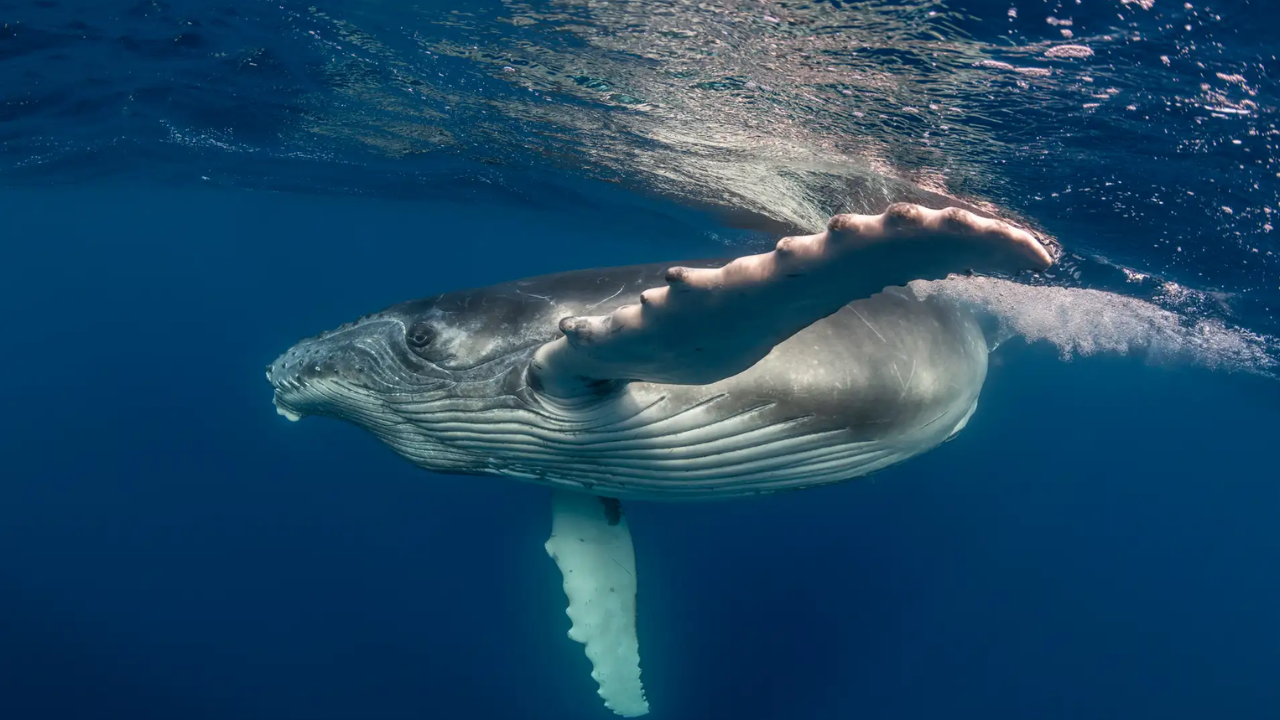
When a mother whale carries her dead calf across miles of open ocean for weeks, she is not merely acting on blind instinct. Recent field studies detailing extended maternal vigils among cetaceans reveal a profound intersection of mammalian neurology, hormonal trauma, and deep social bonds that marine biologists are only beginning to quantify. This behavior, known scientifically as epimeletic care, forces a radical reevaluation of how marine mammals process grief. For decades, marine science dismissed these haunting displays as misdirected maternal impulses or confusion. Today, hard data from tracking studies, necropsies, and behavioral observations proves otherwise.
The animal kingdom holds few sights as psychologically heavy as a cetacean pushing a lifeless infant through choppy water. The mother will balance the decomposing body on her head, clamp it beneath a flipper, or gently nudge it upward every time it begins to sink. She will fast for days, sometimes weeks, ignoring feeding grounds and exhausting her own metabolic reserves. Observers watch in silence from research vessels, witnessing a grief that looks terrifyingly familiar.
Science has historically struggled with this phenomenon because academia fears anthropomorphism like a plague. To assign human emotions to non-human species used to be the cardinal sin of zoology. Yet, as empirical data replaces rigid skepticism, a different picture emerges. Whales do not possess human minds, but their brains are massive, highly complex organs housing structures specifically associated with emotional processing, empathy, and social memory.
To understand why a mother whale subjects herself to weeks of physical exhaustion while guarding a corpse, we must examine the intersection of endocrinology and evolutionary biology.
The Hormonal Storm of Sudden Loss
Lactation and infant rearing in mammals are governed by a fierce chemical cascade. Prolactin, oxytocin, and endogenous opioids flood the maternal system, creating an unbreakable neurochemical bond between mother and offspring. When a calf dies suddenly from predation, illness, or environmental stress, that chemical supply does not vanish overnight. Instead, the mother experiences a sudden withdrawal accompanied by a biological imperative that has nowhere to go.
The physical shock of losing a calf triggers a state akin to severe mammalian depression. In terrestrial mammals like elephants, primates, and bears, researchers have documented similar post-mortem guardianship. Primates will carry dead infants until mummification sets in. Elephants will stand vigil over fallen family members, dusting them with soil and emitting low-frequency rumbles.
Cetaceans face a unique physical challenge because of their aquatic environment. They cannot leave the body on land. They must physically support the weight of the carcass against gravity and buoyancy shifts in the water column. Every push requires conscious muscular effort. Every mile traveled with the corpse is paid for in calories that the mother desperately needs to sustain her own life.
This is not a mistake. It is an evolutionary cost paid by highly intelligent, long-lived social animals. Cetaceans invest years into raising a single calf. The genetic and emotional investment is immense. Abandoning that investment instantly runs counter to the very mechanisms that ensure the survival of complex social species.
The Heavy Toll of the Long Carry
Consider the documentation surrounding specific high-profile vigils. In the Pacific Northwest, an orca known to researchers as J35, or Tahlequah, made global headlines when she carried her dead calf for seventeen days, traveling over one thousand miles. Marine scientists watched in real time as the pod adjusted its travel patterns to accommodate her slow, agonizing progress. Other pod members occasionally took turns helping support the heavy body, sharing the burden of grief.
That incident was not an anomaly. Archival records from whaling logs and modern marine mammal stranding networks contain dozens of undocumented or under-reported cases of post-mortem carrying across species, from sperm whales to bottlenose dolphins.
The physiological toll is severe. During a multi-week vigil, the mother's blubber layer thins. Her immune system, already taxed by lactation and birth, faces the stress of continuous exertion. In some cases, mothers who engage in extended epimeletic care show signs of severe physical deterioration. They risk shark attacks, pod separation, and navigational errors because their focus is entirely consumed by the floating weight of their dead offspring.
Why accept such risk? The answer lies in the architecture of cetacean society. Orcas, sperm whales, and pilot whales live in matriarchal cultures where knowledge is passed down across generations. The death of an infant is not just the loss of an individual gene carrier; it is a rupture in the social fabric of the pod. The grief observed by scientists is likely compounded by the disruption of complex social networks that rely on precise communication and mutual support.
Rejecting the Anthropomorphic Trap
For years, critics argued that reporting on whale grief was sensationalism designed to tug at public heartstrings. They maintained that the mother was simply confused, mistaking a floating object for a living calf.
That argument collapses under the weight of field observations. Mothers do not treat just any floating debris this way. They recognize the specific size, scent, and acoustic signature of their own offspring. When the decomposition reaches a point where the physical integrity of the body fails—when the skin sloughs off or the carcass begins to break apart—the mother eventually lets go. She does not continue carrying a shapeless log; she abandons the remains only when they cease to resemble her calf.
This behavioral distinction proves that recognition remains intact throughout the vigil. The mother knows the calf is dead. She simply refuses to sever the connection immediately.
Neurobiological findings support this behavioral reality. Cetacean brains contain a high density of von Economo neurons, specialized spindle cells also found in humans, great apes, and elephants. These neurons are implicated in rapid intuition, social awareness, empathy, and the processing of intense emotional pain. Evolutionarily, these cells appeared in lineages characterized by complex social structures and long lifespans. They are the hardware of grief.
When an animal with this level of neurological sophistication experiences the abrupt cessation of maternal feedback, the brain registers it as a catastrophic social and biological failure. The vigil is the observable manifestation of that internal state.
Technology Changes the Observation Game
Modern marine biology has moved beyond surface-level vessel sightings. Drone photography, underwater acoustic monitoring, and satellite tagging allow researchers to track epimeletic behavior with unprecedented precision.
Researchers can now measure the exact swimming kinematics of a mother carrying a calf. They can record the vocalizations of the surrounding pod. Studies show that during these vigils, pod vocalizations often drop dramatically, replaced by low-amplitude contact calls or long periods of silence. The acoustic environment of the pod changes to reflect a state of mourning.
These technological advances have silenced the old guard of skeptics who demanded quantifiable metrics before acknowledging emotional complexity in non-human animals. Science no longer asks whether whales feel grief; it asks how different species process that grief and what evolutionary advantages, if any, prolonged mourning might offer.
Perhaps mourning serves as a social reinforcement mechanism. By witnessing the mother's extended vigil, younger pod members learn the high value placed on offspring within the culture. It solidifies social bonds, reinforces pod cohesion, and ensures that the loss is shared by the collective rather than borne entirely in isolation.
The Silence Left Behind
When the vigil finally ends and the mother releases the remains into the deep ocean, the behavioral shift is often sudden. She rejoins the pod, resumes normal feeding patterns, and begins the long process of physical recovery. Yet, the ecological implications linger long after the carcass sinks.
Every documented vigil adds another data point to our understanding of mammalian consciousness. It challenges the legal and ethical frameworks that govern how human societies interact with marine life. If whales experience profound grief, our treatment of them in commercial shipping lanes, military sonar testing zones, and captivity takes on a heavier moral weight.
We are forced to look at the oceans not as biological resource pools, but as vast communities of sentient, feeling creatures navigating loss on a scale we are only beginning to comprehend. The mother whale swimming silently through the cold water with her dead offspring is holding up a mirror to the natural world. She reminds us that grief is not a human invention. It is the universal tax paid by those who love deeply enough to remember.