The transition from a normal Tuesday afternoon to a public health emergency happens in the space of a single breath.
One moment, you are walking through the bright, air-conditioned corridors of a modern shopping plaza in Tokyo. The ambient noise is a comforting hum of consumerism—the rhythmic chime of point-of-sale machines, the soft murmur of couples debating cosmetic brands, the distant clatter of a food court. Your mind is anchored to mundane logistics. Did you remember to buy the miso? Will you make the 5:15 express train home?
Then, the air changes.
It is not a dramatic explosion or a visible cloud of smoke. It is an invisible thief. A sudden, sharp, alien odor cuts through the artificial scent of expensive perfumes and fried pastries. Your throat tightens. Your eyes sting with a sudden, unprovoked heat. Around you, someone coughs. Then another person. Within minutes, the architecture of modern comfort transforms into a claustrophobic trap.
This is exactly what unfolded at the shopping mall attached to the bustling JR Akabane Station in Tokyo's Kita Ward. It was a seemingly ordinary weekday when the environment turned hostile, ultimately sending at least 19 people to the hospital.
When we read news tickers about chemical scares or mysterious odors in public transit hubs, we process them as statistics. We glance at the headline, note the casualty count, and scroll on. But to experience it is to understand a terrifying psychological truth: our modern world is entirely dependent on the invisible infrastructure of shared air, and we are remarkably vulnerable when that infrastructure fails.
The Ghost in the Ventilation
To understand what happened at Akabane Station, we have to look at the geometry of modern urban life. Tokyo is a masterpiece of vertical and subterranean engineering. Millions of people move through multi-level transit hubs that blend seamlessly into department stores, grocery markets, and subterranean arcades. We walk through these spaces with total confidence, giving no thought to the massive mechanical lungs hum-purring behind the drywall, regulating the oxygen for thousands of lungs simultaneously.
Imagine a hypothetical shopper named Mayu. She is thirty-four, running an errand on her lunch break, looking for a specific brand of sunscreen on the ground floor of the mall.
Mayu doesn't notice the ventilation grates. Nobody does. But when a "strong smell"—later described by witnesses as resembling paint thinner or a harsh solvent—begins to propagate through the floor, those grates become conduits of panic.
At approximately 1:30 PM, the emergency calls began flooding Tokyo’s dispatch centers. The reports were urgent but frustratingly vague. A strange odor. People choking. Sudden nausea.
When a crisis lacks a visible face—like a fire or a structural collapse—the human brain struggles to calibrate its terror. People did not run at first. They stopped. They sniffed the air, confused, looking at one another for social validation. Is it just me? Am I imagining this? This collective hesitation is a well-documented psychological phenomenon in urban disasters. We look to our peers to define the boundaries of safety.
But the body recognizes danger long before the intellect rationalizes it.
The Anatomy of an Evacuation
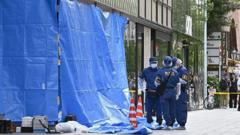
Within twenty minutes of the initial alerts, the area outside Akabane Station resembled a staging ground for a biological containment film.
Dozens of Tokyo Fire Department vehicles lined the streets, their red lights painting the glass facades of the shopping complex in rhythmic flashes. Firefighters in heavy, protective turn-out gear and specialized hazardous material suits pushed through the entrance doors, carrying air-monitoring equipment.
For the people inside, the transition from confusion to evacuation was swift. Security guards, their voices strained but disciplined, guided hundreds of shoppers out into the humid afternoon air.
Consider the logistical nightmare of clearing a multi-story urban marketplace during a chemical anomaly. You have elderly patrons who cannot use the escalators if power is cut. You have parents pushing strollers, shoppers clutching half-paid-for merchandise, and restaurant workers leaving grills burning in their haste to escape.
As the crowds spilled onto the sidewalks, the true scale of the incident materialized on the pavement. People were sitting on curbs, heads between their knees, clutching their chests.
Emergency medical technicians moved through the crowd with practiced, military efficiency, triaging patients on the fly. The primary complaints were universal: sore throats, persistent coughing, dizziness, and eyes that wouldn't stop watering. These are the classic physiological responses to an airborne irritant—the body’s desperate attempt to flush out a foreign invader.
Ultimately, ambulances transported 19 individuals to local hospitals. While officials reported that all victims remained conscious and none were in critical condition, the physical survival hides the psychological toll. To breathe in an environment that is actively rejecting you leaves a lingering scar. It breaks the unspoken contract we have with the spaces we inhabit.
The Search for the Source
What causes a modern fortress of commerce to turn toxic in an afternoon?
In the immediate aftermath of the Akabane incident, investigators faced a complex detective problem. When a strong smell hospitalizes nearly twenty people in a crowded station mall, the mind naturally leaps to the darkest possible historical precedents. Tokyo is a city that remembers. It remembers the 1995 sarin gas attacks on its subway system—an event that permanently altered the nation's collective psyche regarding airborne threats in public spaces.
Because of that historical trauma, the response to any reported vapor or odor in a Tokyo transit hub is massive, immediate, and unyielding.
Hazmat teams swept the building floor by floor, using chemical sniffers to detect volatile organic compounds, carbon monoxide, or more sinister agents. Yet, as is frequently the case with these urban mysteries, the culprit often turns out to be shockingly mundane rather than malicious.
While official investigations continued to pin down the exact chemical profile, initial assessments pointed toward localized maintenance work or an accidental spill of commercial-grade cleaning solvents or construction materials within an unventilated sector of the complex.
This reality does not diminish the danger; rather, it highlights an entirely different kind of anxiety. A misplaced bucket of industrial adhesive or a poorly timed maintenance shift on an HVAC unit can effectively paralyze a major urban center and send scores of people to medical wards. It reveals how tightly wound our urban ecosystems truly are. We live on a knife's edge of operational tolerance.
The Fragile Bubble of the Everyday
The day after the incident, Akabane Station returned to its relentless rhythm. The commuters returned. The shop doors swung open. The smell was gone, replaced once again by the neutral, filtered chill of commercial air conditioning.
We possess a remarkable capacity for collective amnesia. We have to. If we constantly dwelled on the vulnerability of the air we breathe, the water we drink, or the bridges we cross, society would grind to a halt under the weight of its own paranoia.
But every so often, the veil drops.
A sudden scent cuts through a crowded room. A throat tightens. A stranger catches your eye, and for a fleeting second, you both realize that the walls keeping the chaos out are much thinner than we like to admit.
You step back onto the escalator, descend into the subterranean warmth of the station, and take a long, cautious breath, hoping the air remains kind.