A standard parking space in a major metropolitan center measures roughly 160 square feet. In cities like New York, London, or Hong Kong, that sliver of asphalt or concrete often commands a higher price tag than a luxury studio apartment in a secondary market. We are currently witnessing a market distortion where the storage of inanimate machinery is prioritized over human habitation, driven by a toxic mix of antiquated zoning laws, predatory real estate speculation, and a fundamental misunderstanding of urban density.
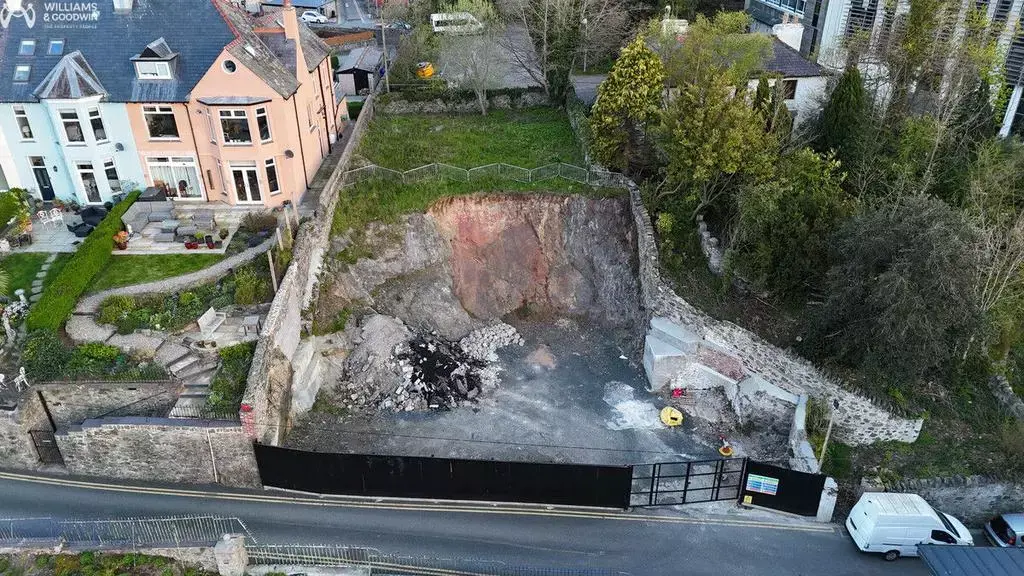
The "hole in the ground" isn't just a construction site or a basement level. It is a financial black hole. When a developer spends $100,000 to $150,000 to excavate and build a single underground parking stall, that cost is never absorbed by the firm. It is passed directly to the tenant or the homebuyer, regardless of whether they own a vehicle. This hidden tax on urban living is the primary engine behind the housing affordability crisis. We are building cities for cars that sit idle 95% of the time, while the people who drive them are squeezed out of the very neighborhoods they serve.
The Invisible Weight of Minimum Parking Requirements
For decades, municipal governments have operated under the delusion that every new building must provide its own "fair share" of parking. These mandates, known as minimum parking requirements, force developers to overbuild parking regardless of actual market demand or proximity to public transit.
Imagine a developer wants to build a twenty-unit apartment complex on a modest lot. Local zoning might require two parking spaces per unit. Suddenly, the project needs forty spaces. On a tight urban lot, the only way to go is down. Excavating deep into the earth, navigating utility lines, and reinforcing the foundation for subterranean levels can double the cost of the foundation.
If the cost of building those forty spaces is $4 million, each apartment must now carry an additional $200,000 in debt service or purchase price just to break even. The math is brutal. The "hole" makes the housing impossible for the middle class. By the time the permits are signed, the developer has no choice but to market the units as "luxury" to recoup the massive upfront investment in empty concrete boxes.
The Engineering Nightmare Beneath the Surface
Building down is significantly more expensive than building up. Once you break the water table, the costs spiral. You are no longer just pouring concrete; you are fighting physics.
Engineers must employ complex slurry walls and constant dewatering systems to keep the site from becoming a literal well. Every foot of depth adds exponential risk and expense. This isn't just about the cost of labor and materials. It involves massive insurance premiums and specialized geotechnical consulting. These are the "hidden" costs that the average renter never sees on their monthly statement, yet they represent a significant portion of their rent check.
The Financialization of the Parking Stall
In high-density hubs, parking has detached from its utility and become a pure speculative asset. In neighborhoods like SoHo or Mayfair, a single deeded parking spot can sell for upwards of $500,000.
This isn't just about convenience. It is about the scarcity of titled land. For a high-net-worth individual, owning a parking spot is a hedge against inflation and a liquid asset that requires zero maintenance. Unlike an apartment, a parking spot doesn't have leaky faucets, noisy neighbors, or tenant rights issues. It is a slab of concrete that appreciates in value as the city grows more congested.
This speculative frenzy creates a perverse incentive for developers. In many cases, it is more profitable to build a parking-heavy "luxury" tower with thirty units and sixty spots than a transit-oriented building with eighty units and zero spots. The market is being rigged to favor the storage of wealth in the form of automotive real estate, while the labor force is pushed further to the periphery.
The Opportunity Cost of Dead Space
Every square foot dedicated to a car is a square foot taken away from a grocery store, a daycare, or a small business. When you look at an aerial view of a typical American city, the sheer volume of "dead space" is staggering. Surface lots and oversized garages break the continuity of the streetscape, creating "dead zones" that discourage walking and kill local commerce.
Consider the tax revenue. A three-story mixed-use building with a cafe on the ground floor and apartments above generates significantly more property tax revenue for a city than a parking lot of the same size. Yet, many tax codes actually reward surface lot owners through low valuations, encouraging them to sit on "blighted" land while they wait for property values to rise. It is a "land bank" strategy that uses the car as a placeholder, preventing the organic growth of the neighborhood.
The Environmental Toll of the Concrete Sink
The environmental impact of these "holes in the ground" is rarely discussed in the context of climate goals. The production of cement is one of the world's leading sources of carbon dioxide. When we mandate massive underground garages, we are locking in thousands of tons of embodied carbon before a single resident even moves in.
Furthermore, these structures contribute to the urban heat island effect and create massive runoff issues. A city paved over for cars is a city that cannot breathe. The obsession with "storage" ignores the reality that our urban centers need to be sponges, capable of absorbing rainwater and providing green canopy. Instead, we have created an impermeable crust that funnels heat and pollution into our living spaces.
Breaking the Cycle of Mandatory Storage
There is a growing movement to abolish parking minimums, and the early results are telling. Cities like Minneapolis, Buffalo, and Austin have begun to peel back these requirements, allowing the market—rather than a rigid 1950s-era handbook—to determine how much parking is necessary.
When parking is "unbundled" from housing, the cost of living drops. Unbundling means that a tenant has the choice to rent an apartment without a parking spot. In a bundled system, the parking is hidden in the rent, forcing a carless student or a low-income worker to subsidize the parking of their wealthier neighbors. By separating the two, we expose the true cost of car ownership and provide a path to affordability for those who choose not to drive.
The Myth of the Parking Shortage
Whenever a new development is proposed without parking, the local outcry is predictable: "Where will everyone park?" This question is based on the fallacy that street parking is a birthright.
In reality, most cities don't have a parking shortage; they have a pricing problem. We provide massive amounts of free or heavily subsidized on-street parking, which encourages people to circle the block looking for a "deal," increasing congestion and emissions. If on-street parking were priced at its true market value—the value of the real estate it occupies—the "shortage" would vanish overnight as people opted for transit, biking, or smaller-scale mobility solutions.
The Rise of Adaptive Reuse and Ghost Garages
As autonomous vehicle technology and ride-sharing continue to evolve, we are approaching a "peak car" moment in urban centers. Many of the massive, expensive garages being built today may be obsolete in twenty years.
Smart developers are starting to design "future-proof" garages. These structures feature level floors (rather than sloped ramps) and higher ceiling heights, allowing them to be converted into office space or housing when the demand for parking inevitably craters. However, converting an underground pit into a livable space is a nightmare of ventilation and natural light requirements. The garages we are digging today are likely to become stranded assets—expensive, carbon-intensive scars that serve a dwindling purpose.
The Hard Truth of Urban Geometry
You cannot fit ten gallons of water into a five-gallon bucket. Similarly, you cannot fit a car-centric lifestyle into a high-density urban environment without destroying the qualities that make the city desirable in the first place.
The "hole in the ground" is a physical manifestation of our refusal to accept this reality. We are spending billions to bury our problems, quite literally, instead of designing cities for the people who live in them. Every time a city council approves a project with mandated parking, they are voting to increase the cost of housing and decrease the quality of life for the next generation.
We have to stop treating the car as a mandatory appendage of the human form. Until we stop subsidizing and mandating the storage of private vehicles on some of the most valuable land on earth, the "luxury" of an affordable home will remain out of reach for most. The path forward requires a brutal reappraisal of what we value more: a place for a person to sleep, or a place for a ton of metal to rust.
The era of the mandatory urban parking crater must end, not through a slow evolution, but through a radical decoupling of transportation and housing policy. Stop digging.