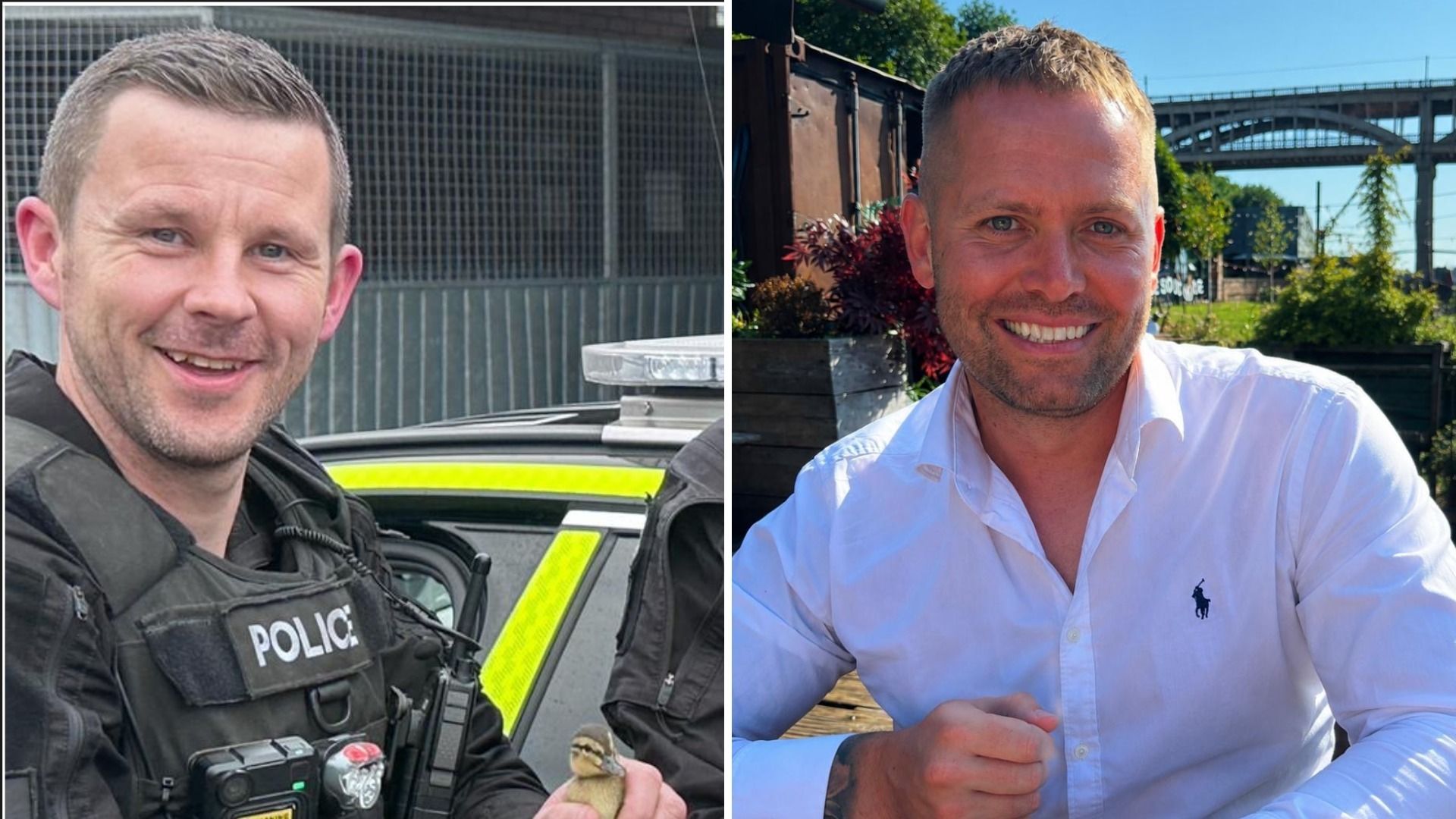
A digital appeal launched after a catastrophic collision on the A66 has shattered fundraising expectations by accumulating over £1.25 million for the families of two fallen Cleveland Police officers. PC Matthew Blades and PC Tom Clough lost their lives when their marked armed response vehicle was involved in a high-impact crash on the dual carriageway, an incident that also resulted in the deaths of five young men traveling in the opposing vehicle. The outpouring of public generosity, channeled largely through coordinated police federation efforts and online crowdfunding, demonstrates a profound public appetite to support the families left behind when emergency service workers die in the line of duty. Yet, beneath the staggering financial milestone lies an uncomfortable institutional silence regarding the structural vulnerabilities, high-speed tactical realities, and road safety crises plaguing British policing infrastructure today.
Financial compensation through public charity serves as an immediate balm, but it frequently masks systemic decay. When an online appeal hits seven figures in a matter of days, it exposes an underlying paradox of modern public safety. Citizens are remarkably willing to open their wallets to care for the widows, widowers, and children of slain officers, yet the state continues to lag behind in modernizing the operational environments that put these individuals in harm's way. A £1.25 million fund is a testament to national grief, but it is also a quiet indictment of a system that relies on crowd-sourced philanthropy to provide financial security for families when operational risk turns fatal. Building on this topic, you can also read: Why The Drone Panic Over Kyiv Is Missing The Real Economic Trap.
The Anatomy of a Dual Carriageway Disaster
The A66 is no stranger to tragedy. Stretching across critical northern corridors, it combines high speed limits, heavy commercial freight, and stretches of undulating rural road design that frequently challenge motorists and emergency responders alike. On the night of the collision, the stakes were high, the variables were chaotic, and the margins for error were razor-thin. A marked armed response vehicle colliding head-on or in intersection with a civilian vehicle carrying multiple occupants triggers immediate, urgent questions about pursuit protocols, response thresholds, and the sheer physical danger officers face while navigating poorly lit or ambiguously configured dual carriageways.
Initial reports from investigative bodies and regional updates indicate that the multi-fatality crash involved complex antecedent factors, including potential links of the civilian vehicle's occupants to organized criminal activity. When armed response units are deployed under emergency conditions to intercept or monitor high-risk targets, the kinetic energy involved in modern traffic dynamics increases exponentially. Vehicles weighing thousands of pounds traveling at elevated speeds leave no room for mechanical or human forgiveness. Police drivers undergo rigorous tactical training, yet training cannot permanently overcome the physical limitations of tarmac, weather, and unexpected civilian maneuvers on open roads. Experts at The Guardian have shared their thoughts on this situation.
The Cost of Uniformed Risk
Every time an officer straps on a ballistic vest or climbs into the driver's seat of a high-powered response vehicle, a silent social contract is activated. The public expects absolute protection, swift intervention, and total competence. In return, the state promises equipment fit for purpose and institutional backing when things go wrong. However, decades of austerity, stretched fleet maintenance budgets, and rising volumes of violent crime have left many regional forces operating on thin margins.
Cleveland Police, covering a geographically compact yet socioeconomically complex patch of the northeast, operates under immense strain. Armed response units are finite resources, deployed constantly to manage escalating threats across industrial and rural boundaries. When tragedy strikes these specific units, the ripple effects tear through the entire organization. Morale drops. Operational capacity dips. Officers look at their dashboard equipment, their shift patterns, and their aging vehicle fleets with a critical eye. Money raised via GoFundMe and federation portals helps pay mortgages and buy groceries for the grieving households, but it does nothing to fix a broken procurement pipeline or upgrade legacy safety systems across regional police fleets.
Why Crowdfunding Replaces State Security
The rapid accumulation of £1.25 million highlights a structural shift in how society handles catastrophe. Traditional pensions, death-in-service benefits, and force-level provisions have historically been viewed as the state's exclusive obligation. When an employee dies performing high-risk duties, the employer should ideally absorb the financial shock entirely, ensuring absolute security for dependents without requiring public pity or viral internet campaigns.
Instead, digital fundraising has become an unofficial pillar of emergency service welfare. While the generosity of strangers who contributed to the Blades and Clough families is commendable, it exposes a safety net woven from charity rather than legal certainty. What happens to the families of fallen personnel whose stories fail to capture the national media cycle? Why must grieving relatives rely on the algorithmic lottery of social media sharing to secure their financial futures? These questions expose deep institutional discomfort. Forces are eager to share links to official fundraisers because it demonstrates public affection, but they are considerably less eager to open a public debate on whether operational risk management protocols are genuinely keeping officers safe.
Beyond the Headlines
As the digital channels close and the final tallies are audited, the real work of grieving and rebuilding begins for the Cleveland Police community. The memorials will eventually fade from the station steps, and traffic on the A66 will return to its steady, mechanical rhythm of freight trucks and commuters. The £1.25 million will be distributed, offering a vital degree of comfort to households forever altered by a few seconds of absolute horror on a dark stretch of road.
Yet, the core dilemmas remain entirely unresolved. No amount of crowd-sourced capital can rewrite pursuit policies, fix dangerous road geometry, or reverse the chronic underfunding of frontline tactical infrastructure. Until policymakers address the root causes of emergency response hazards rather than simply applauding the public's willingness to fund the aftermath, officers will continue to drive into preventable dangers, and the nation will continue to rely on charity to pick up the pieces.