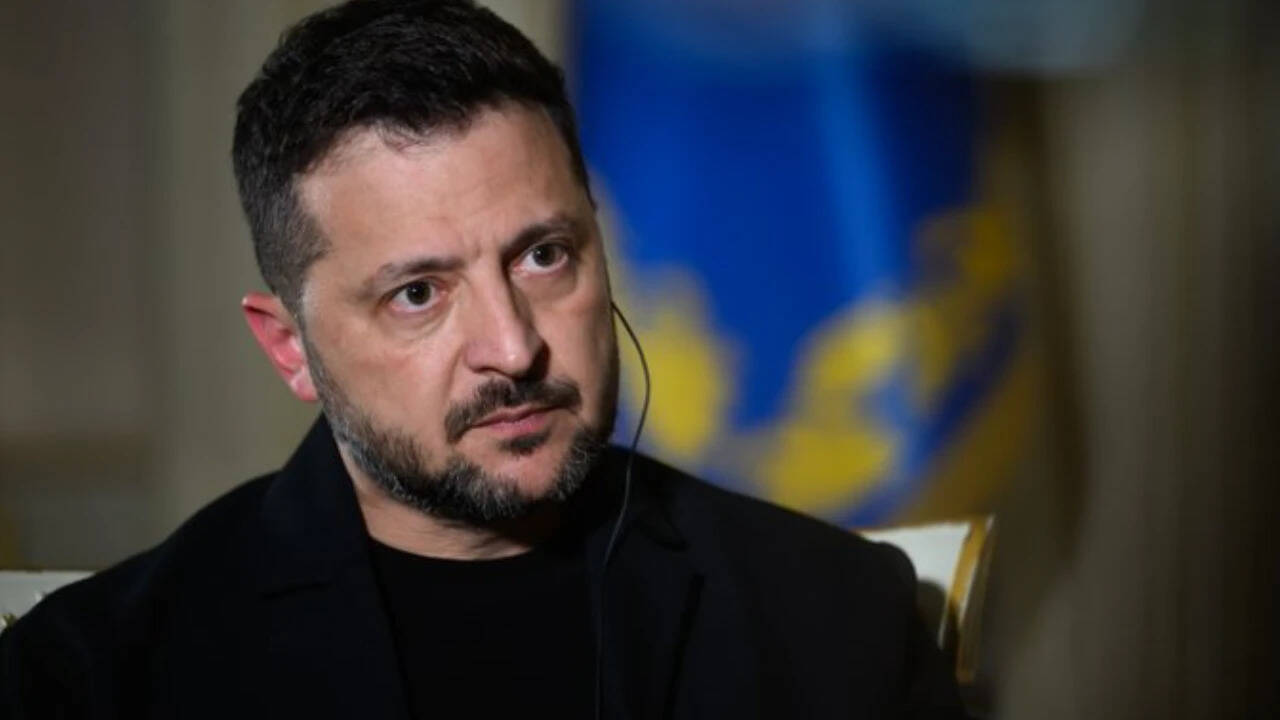
The headline sounds reasonable on the surface. Ukrainian President Volodymyr Zelenskyy signals readiness to hold national elections if Russia agrees to a 60-day ceasefire. Pundits immediately frame this as a breakthrough—a practical, democratic off-ramp that tests Moscow’s sincerity while restoring electoral legitimacy in Kyiv.
That framing misses the reality of modern warfare, constitutional law, and electoral logistics. Treating a 60-day pause in fighting as a viable window for a democratic election is not a peace strategy. It is a structural trap that hands a military adversary direct veto power over a sovereign nation's political survival.
The Lazy Consensus on Wartime Democracy
Standard geopolitical commentary treats elections as an administrative switch you can simply flip back on once the artillery stops firing. The prevailing narrative suggests that if Russia halts offensive operations for two months, Ukraine can print ballots, open polling stations, and let voters decide their leadership.
In practice, an election is not a one-day event; it is the culmination of months of institutional preparation, physical security, and open public debate. A 60-day ceasefire does not create a democratic environment. It creates a brief, fragile pause in active kinetic warfare while leaving every underlying obstacle intact.
Consider the sheer scale of displacement. Millions of Ukrainians are currently refugees across Europe, internally displaced within the country, or serving on the front lines. Under Ukrainian law—specifically Article 19 of the Law on the Legal Regime of Martial Law—conducting national elections while martial law is in effect is explicitly prohibited. Furthermore, Article 83 of the Ukrainian Constitution stipulates that if the term of the Verkhovna Rada expires during martial law, its powers are automatically extended until a new parliament is elected after martial law is lifted.
Lifting martial law for 60 days just to run a vote would instantly dissolve the legal framework governing Ukraine’s military mobilization, border controls, and wartime economy. You cannot pause martial law without dismantling the state's ability to defend itself on day 61.
The Mechanics of an Impossible Vote
Even if lawmakers rewrote the constitution overnight, the operational mechanics of running a credible vote in two months are virtually impossible under post-invasion conditions. Having observed post-conflict electoral missions from the Balkans to Eastern Europe, the pattern is consistent: rushed elections in fractured security environments do not stabilize nations; they delegitimize the winner.
| Electoral Requirement | Standard Peacetime Timeline | Reality Under a 60-Day Ceasefire |
|---|---|---|
| Voter Registry Audit | 6 to 12 months | Millions displaced; registries outdated due to destroyed municipal records and migration. |
| Infrastructure & Polling Sites | Secure civic buildings nationwide | Thousands of schools and community centers damaged, mined, or lacking bomb shelters. |
| Frontline & Diaspora Voting | Absentee ballots via established embassies | Hundreds of thousands of troops in trenches; European embassies lack capacity for millions of voters. |
| Campaign & Media Environment | Open debate, equal media access | Restricted airspace, security curfews, and heightened vulnerability to Russian cyber and information operations. |
Look at the diaspora problem alone. Roughly six million Ukrainian refugees live abroad, predominantly in Poland, Germany, and the Czech Republic. Ukrainian diplomatic missions in those countries are designed to process thousands of absentee ballots, not millions. Building out hundreds of secure, verified polling stations across dozens of foreign jurisdictions requires host-nation agreements, funding, and staffing that take months to negotiate before a single ballot is cast.
Then there is the frontline. Nearly a million citizens are serving in the defense forces. How do you guarantee a secret, uncoerced ballot for an infantry unit holding a trench line in Donetsk? And more importantly, how do those soldiers exercise their constitutional right not just to vote, but to run for office? An election that effectively disenfranchises the very people defending the country is a recipe for civil-military rupture.
Giving Moscow the Ultimate Leverage
The deepest flaw in tying elections to a temporary ceasefire lies in basic strategic incentives. If a 60-day ceasefire is the prerequisite for an election, Russia does not need to defeat Ukraine on the battlefield to derail its democracy. It only needs to fire a handful of drones on day 45.
Imagine a scenario where Kyiv lifts martial law, registers candidates, and begins campaigning during week three of a ceasefire. Suddenly, Russia has complete control over the political calendar. Moscow can:
- Manipulate the security environment: Escalate shelling in select oblasts to depress turnout in pro-Western regions while keeping other areas quiet.
- Weaponize the timeline: Trigger localized skirmishes right before election day, forcing Kyiv either to cancel the vote—looking chaotic and weak—or push forward under fire, guaranteeing low turnout and contested results.
- Exploit political divisions: Use the temporary lifting of wartime unity to amplify internal grievances, targeting war-weary voters with coordinated disinformation campaigns while Ukrainian forces remain pinned in defensive positions.
Security scholars like Thomas Schelling long ago demonstrated that temporary truces without enforcement mechanisms rarely freeze conflict; instead, they shift the contest into coercive bargaining. A 60-day window gives Russian forces two months to regroup, rearm, and rotate exhausted units, all while holding a loaded gun to Ukraine’s electoral process.
Answering the Questions People Are Actually Asking
When observers ask, "Can Ukraine legally hold elections during a ceasefire?" they are focusing on the wrong bottleneck. Laws can be amended by parliament; physical reality cannot. Even if the Verkhovna Rada passes emergency legislation, the state cannot conjure bomb-proof polling stations in Kharkiv or process four million ballots in Warsaw within eight weeks.
When critics ask, "Doesn't postponing elections make Zelenskyy an illegitimate leader?" they misunderstand how constitutional continuity works in parliamentary-presidential systems during existential wars. Great Britain did not hold a general election between 1935 and July 1945—two months after Germany surrendered. Parliament extended its own term annually because holding a national campaign while London was being bombed and millions of soldiers were overseas was recognized as strategic suicide. Legitimacy during total war comes from constitutional adherence and survival, not from performing electoral rituals under artillery range.
The Uncomfortable Downside of Waiting
Admitting that a 60-day ceasefire cannot support a real election carries a heavy cost. The contrarian reality is not painless: indefinitely delaying elections creates genuine democratic erosion.
Without electoral feedback loops, power inevitably centralizes in the executive branch. Oversight weakens. Local governance atrophies under military administrations, and opposition voices lose institutional channels to challenge policy mistakes. Over time, wartime necessity risks hardening into political habit. Pretending there is no democratic cost to postponing elections is just as dishonest as pretending a two-month truce can fix it.
What Actually Needs to Happen Instead
If Western policymakers and Kyiv want to preserve Ukraine’s democratic future, they need to stop entertaining short-term ceasefire gimmicks and focus on structural prerequisites:
- Separate ceasefire negotiations from electoral timelines: A ceasefire should be judged solely on military verification, buffer zones, and deterrence—never conditioned on a political calendar that rewards an aggressor for breaking the truce.
- Build the diaspora and digital infrastructure now: Ukraine’s Central Election Commission, backed by European partners, should spend the next year building out consular voting capacity and auditing voter registries so the system is ready when an actual, durable peace arrives.
- Strengthen parliamentary and judicial oversight during wartime: Rather than rushing a national vote, Kyiv can reinforce internal democratic checks right now by restoring full legislative transparency, empowering anti-corruption bodies, and protecting independent media.
Democracy is not a ceasefire-triggered event. It requires sovereign security, verified registries, and the absence of foreign coercion. Anything less than a durable, enforceable end to hostilities turns the ballot box from an instrument of self-determination into a weapon for the invader.



