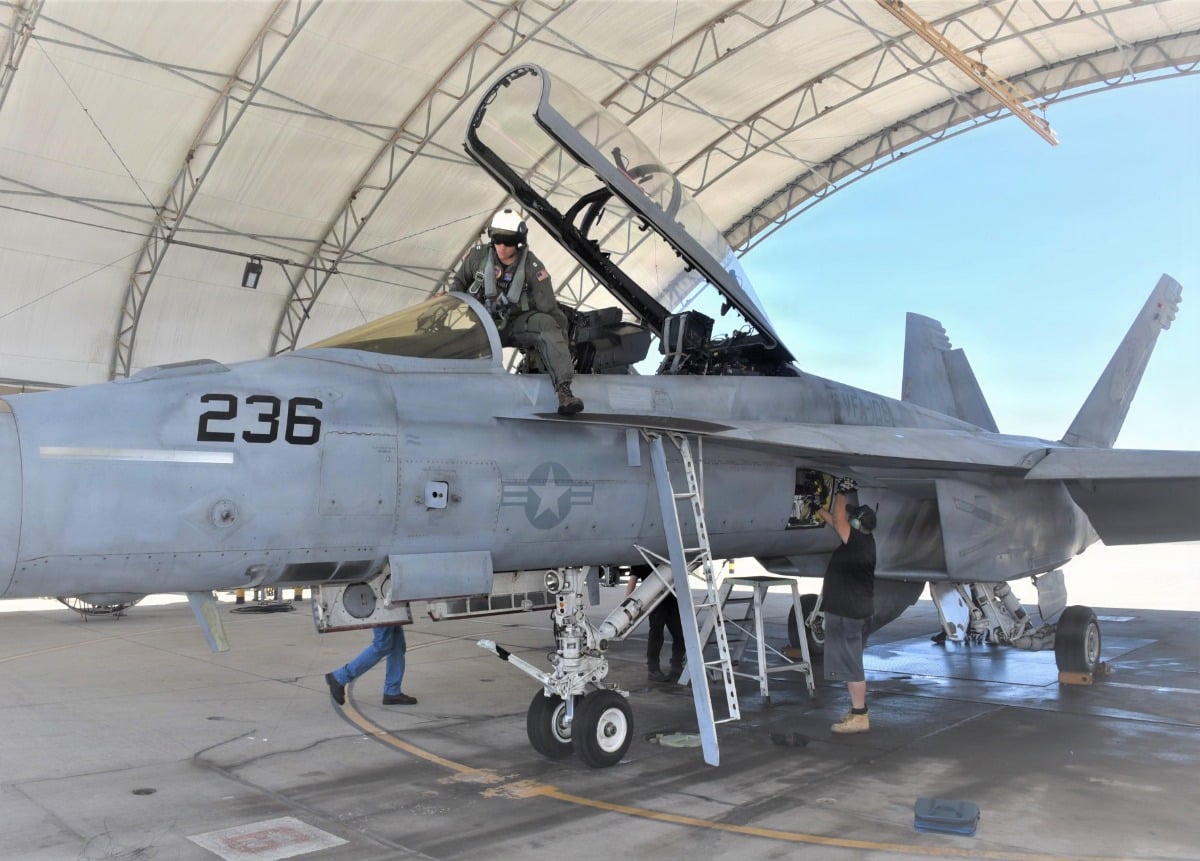
Military logistics is a quiet nightmare. You can build the most advanced fighter jet on earth, but it becomes an incredibly expensive paperweight if a single metal bracket snaps and the manufacturer takes nine months to ship a replacement. That is exactly the bottleneck the U.S. Navy is trying to smash. Recent fleet tests show they are turning to advanced additive manufacturing to manufacture flight-ready components right on the maintenance floor, getting aircraft back into the sky in days instead of quarters.
This isn't about printing plastic trinkets or prototype models. The Navy is installing structural, load-bearing metal components directly onto frontline strike fighters. If you think additive manufacturing is just a neat trick for tech startups, the military's latest testing proves it has become a logistical necessity.
The Logistics Crisis Grounding Top Tier Aircraft
When an F/A-18 Super Hornet or an F-35 Lightning II sits grounded on an aircraft carrier deck, it rarely happens because of a catastrophic system failure. Usually, a minor component wears out. It could be a fuel line bracket, a small environmental control system housing, or a specific structural fastener.
Under the traditional defense procurement model, replacing that part requires a massive chain of events. The Navy contacts the original defense contractor. The contractor spins up a production line that might have been dormant for years. They cast the metal, machine it down, inspect it, and ship it halfway across the world. Meanwhile, a seventy million dollar jet sits idle, taking up valuable hangar space.
Supply chain vulnerabilities became glaringly obvious over the last few years. Factory delays, raw material shortages, and shipping bottlenecks meant that component lead times skyrocketed. The Navy realized that depending entirely on a centralized manufacturing base thousands of miles away was a strategic liability. They needed to create parts where the planes actually operate.
From Blueprints to Flight Certification in Days
The Naval Air Systems Command, known as NAVAIR, has been quietly re-engineering how aircraft maintenance works. Instead of waiting on standard supply lines, engineers are using industrial metal 3D printers that employ a process called powder bed fusion. High-powered lasers melt layers of titanium or aluminum powder, building complex flight components layer by layer based on digital CAD files.
The turnaround time change is staggering. A part that previously required a six-month wait can now be designed, printed, post-processed, and cleared for installation in under a week.
During recent operational evaluations, maintenance teams targeted parts that historically suffer from high wear and tear but face long production delays. By printing these components on-site, the Navy demonstrated that it could bypass the entire traditional commercial supply chain during a crisis.
The Engineering Problems Nobody Talks About
It sounds incredibly simple. You lose a part, you find the digital file, and you press print. In reality, printing a component that can survive the extreme G-forces, intense vibrations, and corrosive salt-water environments of an aircraft carrier is an engineering obstacle course.
The biggest hurdle is structural integrity. Traditional forged metal is incredibly dense and uniform because it is hammered or pressed into shape under immense pressure. Printed metal can suffer from microscopic voids, tiny air bubbles trapped between layers that act as structural weak points. Under the stress of supersonic flight, those tiny pockets can expand into cracks, leading to catastrophic structural failure.
To solve this, the Navy uses rigorous non-destructive testing. Every critical printed part undergoes ultrasonic scanning or X-ray inspection to ensure there are no internal defects. They also use hot isostatic pressing, a post-printing process that subjects the component to extreme heat and pressure to squeeze out any remaining microscopic gaps. It makes the printed part just as strong, and sometimes stronger, than a traditionally machined component.
Another major hurdle is data management. The Navy cannot just print whatever it wants. It needs the intellectual property rights for the digital designs from defense contractors like Boeing or Lockheed Martin. Securing these digital blueprints and ensuring they are stored on highly secure, unhackable military servers is just as complicated as the physical engineering itself.
How On Demand Manufacturing Changes Carrier Operations
Imagine an aircraft carrier operating in the middle of the Pacific Ocean. Space on a carrier is at a premium. They cannot carry a spare for every single one of the hundreds of thousands of individual parts that make up an air wing.
On-demand printing fundamentally changes that math. Instead of filling cargo holds with physical crates of spare parts that might never be used, a carrier can hold containers of raw titanium powder and a library of secure digital files. The ship effectively becomes its own factory.
This shifts maintenance from reactive to predictive. If a technician notices a bracket showing signs of early stress corrosion during a routine inspection, they do not have to patch it up and hope it lasts until the next port visit. They can queue up the file, print a replacement overnight, and swap it out during morning maintenance.
Beyond the Military Fleet
The lessons the military is learning right now will inevitably filter down to commercial aviation and heavy industry. Commercial airlines face the exact same supply chain pain points as the Navy. When a commercial airliner is stuck on the tarmac waiting for a part, the airline loses thousands of dollars every hour.
As the military refines the safety standards, print speeds, and material sciences of additive manufacturing, commercial regulators like the FAA will have a clear framework to certify printed parts for civilian passenger planes. We are already seeing some commercial engine manufacturers use printed fuel nozzles, but the Navy's aggressive testing of structural airframe components accelerates the timeline for widespread adoption.
If you are tracking how industrial technology evolves, look past the consumer gadgets. The real revolution is happening in military hangars, where engineers are proving that the fastest way to fix a broken supply chain is to simply print your way out of it.
Your Immediate Next Steps
If you manage logistics, manufacturing, or engineering operations, you can apply the Navy's playbook to your own workflow.
First, audit your inventory to identify parts with the highest lead times and the lowest geometric complexity. These are your prime candidates for digital replacement.
Second, begin converting those physical parts into verified digital CAD models before you actually need them. Building a clean digital library now prevents production stops later.
Third, partner with local additive manufacturing bureaus to run test batches of those components, verifying their structural strength under real-world stress before committing to a full shift away from traditional suppliers.