The projection that a conflict with Iran would cost the United States $3.7 billion within the first 100 hours is not merely a high-water mark for military spending; it is a reflection of a shift from counter-insurgency economics to high-intensity peer-state attrition. This figure, while staggering, represents a baseline "sprint" cost. To understand the fiscal reality, one must move beyond the flat number and examine the underlying cost functions: the exhaustion of precision-guided munitions (PGMs), the loss of high-value capital assets, and the immediate disruption of global energy logistics.
The Triple-Pillar Cost Architecture
The fiscal impact of a 100-hour opening salvo is driven by three primary economic levers. Standard budgetary projections often fail because they treat military operations as a linear expense rather than a series of compounding tactical requirements.
- Expenditure of Precision-Guided Munitions (PGMs): Modern warfare relies on "smart" ordnance that costs significantly more than the platforms delivering them over a sustained period. A single Tomahawk Land Attack Missile (TLAM) carries a price tag exceeding $2 million. In a high-density Integrated Air Defense System (IADS) environment like Iran’s, the volume of fire required to achieve "Day Zero" suppression of enemy air defenses (SEAD) necessitates thousands of these units.
- Operational Tempo (OPTEMPO) Overhead: This includes the fuel, maintenance, and "wear and tear" life-cycle costs of carrier strike groups and stealth bomber wings. Flying a B-2 Spirit costs roughly $130,000 to $150,000 per hour. When 40 to 60 airframes are cycled through a continuous 100-hour rotation, the fuel and maintenance logistics alone reach hundreds of millions of dollars before a single shot is fired.
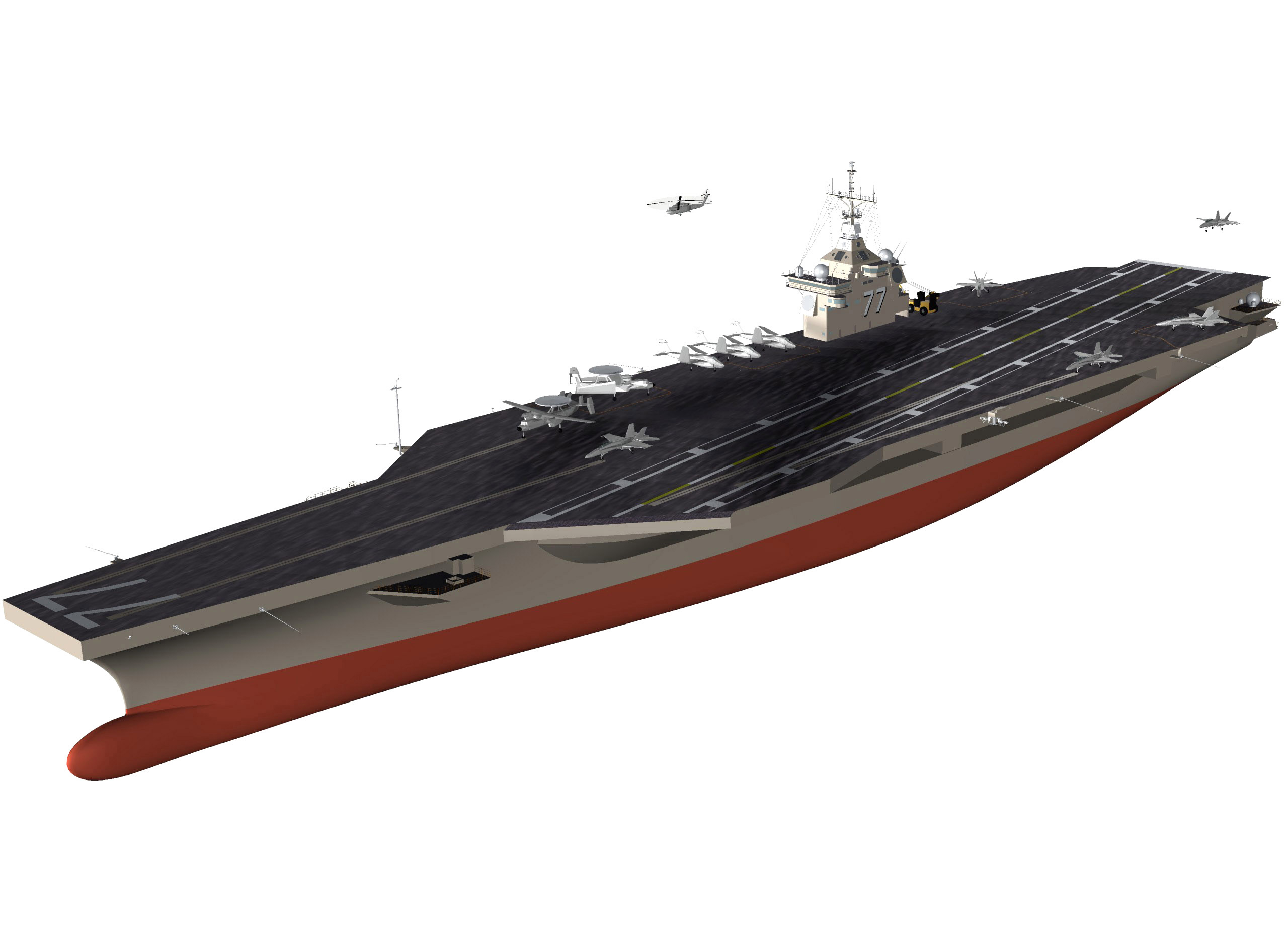
- The Attrition Variable: Unlike the last two decades of asymmetric warfare, conflict with a state actor possessing sophisticated anti-ship cruise missiles (ASCMs) and "suicide" drone swarms introduces the probability of losing $100 million aircraft or $1.5 billion destroyers. The $3.7 billion estimate likely excludes the replacement cost of sunk capital, focusing instead on the "flow" of operational spending.
The Physics of Escalation and Supply Chain Fragility
The primary error in simplified cost-modeling is the assumption of a "vacuum" environment. In reality, the cost of a 100-hour conflict is inextricably linked to the geography of the Strait of Hormuz. Approximately 20-25% of the world's total oil consumption passes through this chokepoint.
If kinetic action triggers a "tanker war" scenario, the cost to the US Treasury is dwarfed by the cost to the global economy. A spike in Brent Crude prices acts as a regressive tax on every sector of the US economy. This creates a feedback loop: high energy prices increase the cost of military logistics (JP-8 fuel), which in turn increases the projected budget deficit, potentially raising the cost of borrowing to fund the war effort itself.
The Replacement Gap: A Strategic Bottleneck
A critical factor ignored by surface-level analysis is the Industrial Base Replacement Rate. The US defense industrial base is currently optimized for "just-in-time" delivery rather than "mass-at-scale" production.
- Lead Times: Replacing the munitions spent in those first 100 hours can take 18 to 36 months.
- Inflationary Pressure: Reordering a massive quantity of missiles simultaneously creates a "demand surge" that drives up unit costs, meaning the $3.7 billion spent today may cost $5 billion to replace tomorrow.
- Technological Obsolescence: Rapid expenditure of current inventory forces the military to accelerate the procurement of next-generation systems, which are invariably more expensive.
Quantifying the Asymmetric Response
Iran’s defensive strategy—often termed "Mosaic Defense"—is designed to maximize the US "cost-per-kill" ratio. While a US interceptor missile like the SM-6 might cost $4 million, it may be used to down a "HESA Shahed" drone that costs less than $30,000.
This creates a Negative Economic Exchange Ratio. In the first 100 hours, if the US is forced to defend its naval assets against swarms, it is essentially trading high-value, low-density silver bullets for low-value, high-density targets. This economic exhaustion is a deliberate tactical objective. The $3.7 billion figure reflects a US attempt to overwhelm this asymmetry through sheer volume of high-end strikes, but it does not account for the diminishing returns of such a strategy.
The Hidden Cost of Cyber and Infrastructure Defense
The $3.7 billion think tank estimate likely focuses on the Department of Defense (DoD) "Overseas Contingency Operations" style funding. However, a modern peer conflict is not localized to the theater of operations.
Direct conflict triggers immediate state-sponsored cyber activity against US domestic infrastructure. The cost to harden the power grid, financial systems, and water treatment facilities—plus the economic loss from successful breaches—is rarely factored into the "cost of war." This creates a "Shadow Budget" of defense that could easily double the perceived daily burn rate.
Strategic Reorientation: The Shift to Attrition Economics
To mitigate these costs, the US strategic framework must transition from "Exquisite Technology" to "Affordable Mass."
The current trajectory—where a 100-hour engagement consumes a significant portion of the annual defense discretionary budget—is unsustainable in a prolonged conflict. The immediate strategic requirement is the development of lower-cost kinetic interceptors (e.g., directed energy or laser systems) that flip the cost-exchange ratio back in favor of the defender.
The $3.7 billion price tag is a symptom of a legacy procurement system designed for a world that no longer exists. For the United States, the real "cost" isn't the initial $3.7 billion; it is the realization that its current military-economic model cannot sustain the intensity of modern state-on-state friction without a fundamental restructuring of how it produces, deploys, and prices its kinetic power.
Move toward a decentralized logistics model that utilizes pre-positioned autonomous "arsenal ships" and localized drone manufacturing to bypass the high-cost, high-risk carrier-centric model currently inflating the initial 100-hour burn rate.
Would you like me to analyze the projected impact of a 10% spike in global oil prices on the US Department of Defense's JP-8 fuel procurement budget?