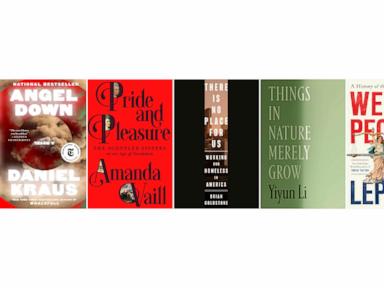
The Pulitzer Prize board just reminded us why we still care about these awards. While some critics argue that the arts have become too safe or too obsessed with digital trends, the 2026 winners prove that raw, uncomfortable storytelling still carries the most weight. Daniel Kraus’ Angel Down and Bess Wohl’s Liberation aren't just technical triumphs. They’re gut punches. They represent a shift away from "safe" prestige and toward a gritty, unapologetic look at the human condition.
If you’re looking for a common thread among this year's winners, it’s the refusal to look away. Whether it’s the terrifyingly beautiful prose in Kraus’ novel or the sharp, claustrophobic tension in Wohl’s play, these creators are forcing us to confront things we’d usually rather ignore. It’s about time.
Why Daniel Kraus’ Angel Down Is a Masterclass in Modern Horror
Daniel Kraus has been a force in the genre for years, but Angel Down feels like the culmination of everything he’s been building toward. Winning the Pulitzer for Fiction with a book that leans so heavily into the visceral and the macabre is no small feat. Usually, the board favors sprawling historical epics or quiet domestic dramas. Kraus broke that mold.
The novel follows a descent—both literal and metaphorical. I’ve seen plenty of writers try to balance high-concept horror with literary depth, but Kraus actually pulls it off without feeling pretentious. The prose is jagged. It’s dense where it needs to be and terrifyingly sparse when the tension hits its peak.
Critics who dismissed horror as "low-brow" are eating their words today. Angel Down tackles grief and systemic rot through a lens that feels incredibly grounded, despite its more fantastical elements. It’s a book that stays with you long after you’ve shut the light off. That’s the hallmark of great fiction. Kraus didn't just write a scary story. He wrote a mirror.
The Evolution of the Pulitzer Fiction Category
We've seen a real change in what the Pulitzer board considers "distinguished fiction." A decade ago, a book like Angel Down might have been relegated to the Bram Stoker Awards and ignored by the "serious" literary establishment. Not anymore. The board is finally acknowledging that genre isn't a cage.
By awarding Kraus, they’re signaling that the craft matters more than the category. It’s a win for horror fans, but it’s a bigger win for literature as a whole. It opens the door for other writers who play with shadows to be taken seriously.
Bess Wohl and the Power of Uncomfortable Theater
In the Drama category, Bess Wohl’s Liberation took the top prize, and it honestly wasn't a surprise to anyone who saw it on stage. Wohl has a gift for taking a simple premise and twisting the knife. Liberation is a play about the messy, often painful process of self-discovery, but it avoids every single cliché associated with that trope.
It’s sharp. It’s funny in a way that makes you feel guilty for laughing. Wohl doesn't give you easy answers. In a world where we’re constantly looking for "relatable" content, Wohl gives us characters who are often deeply unlikeable. And that’s why it works.
You don't go to a Bess Wohl play to feel good about yourself. You go to see the parts of yourself you try to hide. Liberation deals with the fallout of a radical life change, and it does so with a technical precision that makes the dialogue feel like a live-wire. The Pulitzer board recognized that Wohl isn't just writing scripts; she's capturing the static of modern life.
Breaking Down the Theatrical Impact of Liberation
The play’s structure is fascinating. It’s tight. There isn’t a wasted word. In theater, where there’s often a temptation to over-explain or lean on heavy-handed symbolism, Wohl stays lean. She trusts the audience to keep up.
I’ve talked to directors who describe her work as a "puzzle for actors." It’s demanding. It requires a level of vulnerability that most playwrights are too scared to ask for. Liberation deserved this win because it’s a play that could only exist now, yet it feels like it’s been true forever.
The Broader Landscape of the 2026 Arts Prizes
The Pulitzer isn't just about books and plays. This year's winners across Music, Poetry, and Biography show a consistent theme of deconstruction. We’re seeing a lot of artists taking apart established structures and looking at the pieces.
In the Music category, the win for Static Fields—a composition that incorporates environmental sounds with traditional orchestral arrangements—shows that the definition of "composition" is expanding. It’s not just about melody anymore. It’s about texture. It’s about how we inhabit space.
- Poetry: The winner here took risks with form that felt genuinely new, moving away from the confessional style that has dominated for the last few years.
- Biography: We saw a deep dive into a figure many thought we already understood, proving that there’s always more to the story if you’re willing to dig.
These awards matter because they set the bar for the next year of creative output. They tell us what’s worth paying attention to.
What This Means for Readers and Creators
If you’re a writer or an artist, the 2026 Pulitzers should be an ENORMOUS wake-up call. Stop trying to fit into the box of what you think "award-winning" work looks like. The board is clearly looking for voices that are distinct, even if those voices are loud, messy, or dark.
Kraus and Wohl didn't win by playing it safe. They won by being undeniable. They focused on the work first and the prestige second. There's a lesson in that for everyone. Don't worry about whether your work is "literary" enough. Just make it honest. Make it sharp. Make it something people can't ignore.
Go buy Angel Down. Find a way to read or see Liberation. Don't just look at the headlines and move on. These works are winning because they have something vital to say about how we live right now. If you want to understand the direction of American culture in 2026, start here.
Check your local independent bookstore for the fiction winners and keep an eye on regional theater schedules for Liberation’s next run. Supporting these creators directly ensures that this kind of bold, risky art keeps getting funded and recognized. Don't just follow the trend—engage with the work that actually challenges you. You won't regret it.