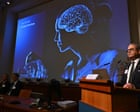
For decades, neuroscientists operated with a blunt instrument kit. They used electrodes to zap brain tissue or chemicals to alter moods, essentially trying to fix a complex computer with a sledgehammer. That changed fundamentally when the Nobel Assembly at Karolinska Institutet awarded the 2026 Nobel Prize in Physiology or Medicine to Karl Deisseroth, Peter Hegemann, and Georg Nagel. Their crime against conventional neuroscience? Stealing a trick from green algae to control individual brain cells using light.
The breakthrough, known as optogenetics, solves a problem that baffled researchers for generations: how to turn specific neurons on and off with millisecond precision without harming surrounding tissue.
From Single-Celled Algae to Living Brains
The story doesn't start in a sterile neurology lab. It starts with pond scum. Peter Hegemann and Georg Nagel spent years studying Chlamydomonas, a tiny green alga that swims toward sunlight using an eyespot containing a light-capturing molecule called retinal. They discovered channelrhodopsins—specialized proteins that act as light-gated ion channels. When illuminated by blue light, these channels open instantly, allowing charged ions to flood the cell and trigger an electrical impulse.
Scientists had dreamed about controlling cellular electrical activity for ages, but nobody knew how to make it work in mammalian tissue. Enter Karl Deisseroth. A psychiatrist and bioengineer at Stanford, Deisseroth realized clinical treatments for psychiatric and neurological disorders were often blunt because doctors lacked foundational tools.
In 2005, Deisseroth took the gene encoding channelrhodopsin-2 from algae and inserted it into rat neurons cultured in a petri dish. When he flashed blue light on them, the neurons fired. By 2007, his team successfully adapted this light-controlled switch for the brains of living mice. You could literally flash a light into a mouse's brain via a tiny fiber-optic cable and watch its behavior change in real-time.
Why Optogenetics Matters Right Now
Most discussions about neuroscience get bogged down in vague generalities about pathways and neurotransmitters. Let's be direct. Traditional methods recorded electrical noise from thousands of cells at once, like trying to understand a symphony by holding a microphone outside the concert hall. Optogenetics lets you isolate a single violin player.
Researchers can now map how specific neural circuits encode memories, trigger fear responses, or drive compulsive behaviors. If you want to know which exact cluster of 50 neurons out of 90 billion makes you anxious, optogenetics gives you the tools to find out.
The clinical applications stretch far beyond basic research. Teams across the globe are already using optogenetic principles to restore sight in patients blinded by degenerative retinal diseases like retinitis pigmentosa. By introducing light-sensitive proteins into surviving retinal cells, researchers can bypass damaged photoreceptors and send visual signals straight to the optic nerve. Similar experimental pathways are being explored for hearing impairments and motor control disorders.
What Comes Next for Neurological Treatment
The 2026 Nobel win cements optogenetics as a cornerstone of modern medicine, but real challenges remain. Moving these therapies safely into human clinical trials requires overcoming immune responses to viral vectors and engineering safer delivery systems for light delivery devices.
Yet the momentum is unstoppable. We are witnessing the transition from observing brain disorders to actively rewriting faulty neural circuits. The mysteries of the human mind aren't impenetrable anymore; they are just waiting for the right frequency of light.
Nobel prize in medicine 2026: unlocking the mysteries of the brain
This video provides an overview of the 2026 Nobel Prize announcement and breaks down how the laureate
Why the 2026 Nobel Prize in Medicine Changes How We Think About the Brain
health
Every October, the scientific world waits for the Nobel Committee to make its choice. This year, the prize in physiology or medicine went straight to the heart of our most stubborn biological puzzle. Researchers unlocked mechanisms governing how neural circuits code memory and process sensory reality, and honestly, the implications stretch far beyond academic journals.
If you thought we already had the brain figured out, you haven't been paying attention. For decades, neuroscience has chased shadows. We knew neurons fired electricity and chemicals crossed synapses, but tracking complex cognitive maps felt like trying to map the internet by watching single copper wires. The 2026 laureates didn't just look closer; they changed the entire observational framework.
The Problem with Old Neuroscience Models
For years, labs relied on reductionist views. Scientists studied single neurons in isolation, assuming you could understand a symphony by recording a single violin string. It doesn't work that way. The brain operates as a massive, distributed network where context matters more than isolated inputs.
Think about how you remember your childhood home. You don't pull up a single digital file. Your brain reconstructs the smell of old wood, the creak of the floorboards, and the quality of afternoon light simultaneously across distinct anatomical regions.
The breakthrough recognized by the Nobel committee centers on high-resolution tracking of these assemblies in living subjects. Instead of guessing how millions of cells coordinate, researchers can now watch functional modules coordinate in real time.
Why This Matters Right Now
We face a wave of neurodegenerative disorders that our current medical toolkit can barely touch. Alzheimer's and Parkinson's aren't simple mechanical failures. They are network collapses.
When you lose short-term memory, it's rarely because a single memory cell died. It's because the routing protocol between regions broke down. By mapping the exact syntax of these neural circuits, this prize-winning work gives pharmacologists a blueprint. We aren't just throwing random chemical compounds at the brain anymore and hoping for a side effect that helps. We have targets.
What the Headlines Missed About the Discovery
Mainstream outlets love a simple narrative. They want to tell you scientists found the "memory switch" or cured dementia overnight. That's garbage, and you know it.
The real breakthrough lies in the plasticity mechanics—specifically, how neural pathways dynamically reroute when faced with structural damage or novel learning tasks. The laureates proved that local micro-circuits possess far more autonomy than previously believed. Local networks can negotiate processing tasks without waiting for clearance from the central command centers in the prefrontal cortex.
This decentralized processing model explains why people who suffer localized strokes can sometimes recover lost motor functions. The neighboring tissue simply rewires its internal rules and takes over the job.
Practical Takeaways for Everyday Cognition
You can't buy a supplement that leverages this new research tomorrow, but you can change how you approach learning.
- Stop multitasking. Every time you jump between tabs, you force neural networks to tear down and rebuild short-term working state maps. That fragmentation exhausts metabolic resources.
- Prioritize deep sleep. The cleaning cycles and memory consolidation phases depend entirely on the slow-wave synchronization patterns these researchers mapped out. Skip sleep, and your neural architecture degrades.
- Embrace structural novelty. Memorizing trivia doesn't build robust circuits. Learning physical skills or complex multi-step systems forces the brain to forge entirely new structural pathways.
Neuroscience is moving fast. The 2026 Nobel Prize marks the end of an era where we treated the brain like a black box. We are finally reading the source code.


