Most people hear "Troy" and immediately picture bronze shields, wooden horses, and the bloody pages of Homer's Iliad. We obsess over the wars. We forget that real people lived there, worked there, and apparently spent their evenings playing music.
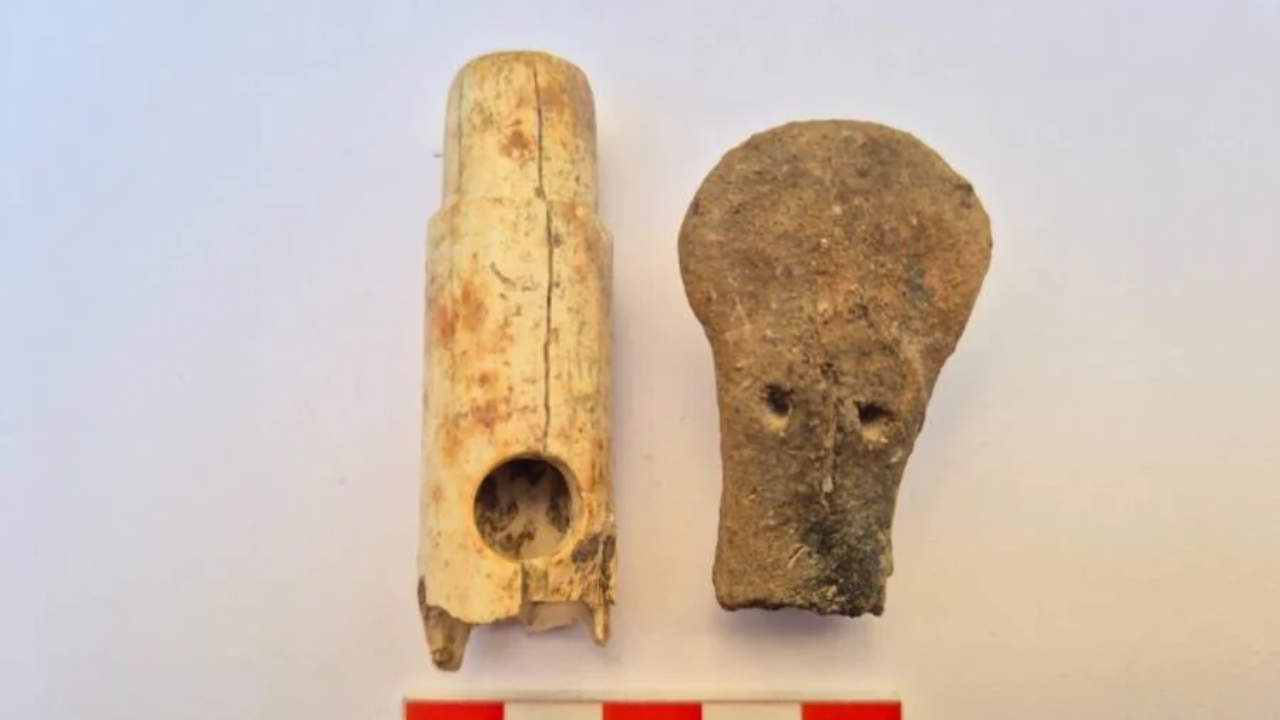
That changed when archaeologists working at the ancient site of Hisarlik in northwestern Turkey pulled a 2,800-year-old bone flute out of the dirt. For a different perspective, consider: this related article.
It took 160 years of continuous digging to find it. Since Heinrich Schliemann first started tearing into the mound back in the 1870s, teams have uncovered gold jewelry, massive stone walls, and thousands of ceramic shards. Yet an intact wind instrument from the Iron Age remained completely hidden until recently.
Honestly, this single piece of carved animal bone does more to humanize the ancient city than a dozen piles of bronze arrowheads ever could. Further coverage on this matter has been published by USA Today.
Why It Took 160 Years to Find a Flute at Troy
You might wonder how generations of well-funded archaeologists missed something this significant. The answer comes down to how messy archaeology actually is.
Troy isn't one single city. It's a massive archaeological layer cake consisting of at least nine distinct settlements built directly on top of one another over thousands of years. When early excavators like Schliemann dug into the site, they weren't careful. They hacked straight through the upper Iron Age and Hellenistic layers because they were obsessed with finding the Bronze Age city of King Priam.
They literally threw away history to get to a myth.
Modern excavations, led by Turkish archaeologists like Rüstem Aslan of Çanakkale Onsekiz Mart University, work completely differently. Today's teams sift through soil with painstaking precision, cataloging tiny organic remains that 19th-century treasure hunters would have tossed onto the spoil heap without a second glance.
Organic materials also hate surviving the elements. Metal rusts slowly, and fired clay lasts nearly forever, but bone breaks down in acidic soil unless the conditions are just right. Finding a fragile, hollowed-out bone tube that survived nearly three millennia underground is basically winning the archaeological lottery.
Inside the 2,800-Year-Old Discovery
Let's look at the actual object. The flute dates back to roughly 800 BCE, placing it squarely in the Iron Age—specifically the period known to archaeologists as Troy VIII.
By 800 BCE, the famous Trojan War (if it happened as a historical conflict around the late Bronze Age) was already centuries in the past. The city had been destroyed, abandoned, and resettled by Greek-speaking Aeolian colonists. This was the era when Homer was likely composing the epic poems that made the city immortal, even as real people were rebuilding homes atop the old ruins.
The instrument itself is carved from animal bone and features carefully drilled finger holes. While researchers continue to analyze the exact species of animal the bone came from, ancient wind instruments across Anatolia and the Aegean typically relied on the long, hollow leg bones of sheep, goats, or large birds like cranes and vultures.
Here is what makes the craftsmanship stand out:
- Deliberate tuning: The spacing between the finger holes isn't random. Whoever carved this understood basic acoustics and interval spacing.
- Smooth wear patterns: High-magnification analysis of ancient bone flutes almost always reveals microscopic polish around the finger holes and mouthpiece, proving the object wasn't just a burial trinket—someone played it regularly.
- Surviving structure: Unlike fragments that require guesswork to reconstruct, this piece preserves enough of its bore and perforations to tell experts how it was held and blown.
Music in Iron Age Anatolia Wasn't Just Background Noise
If you look at ancient history through a modern lens, it's easy to treat music as mere entertainment. In 800 BCE Anatolia, music was closer to infrastructure.
People used bone flutes—often precursors or variants of the Greek aulos or simple pastoral pipes—to mark every major transition in human life. Shepherds used them to pass long, isolating hours in the hills surrounding the Trojan plain. Priests used them during animal sacrifices and libations at local sanctuaries to drown out ill-omened noises and keep ritual chants in rhythm.
Think about the setting. During Troy VIII, the city was transforming into a major religious pilgrimage site. Visitors traveled from across the Mediterranean to pay respects to Athena Ilias and visit the supposed tombs of Homeric heroes like Achilles and Ajax.
A bone flute excavated from this period puts you right in the middle of that world. You can almost hear the sharp, reedy notes echoing off the limestone walls during a festival or a late-night gathering around a courtyard fire.
How Ancient Artisans Turned Bone Into Sound
Making a functional musical instrument without modern metal drill bits takes serious skill. You can't just poke holes in a bone and hope it plays in tune.
First, the maker had to select the right raw material. A sheep's tibia or a bird's ulna offered a naturally hollow core, saving hours of boring out dense marrow. After cleaning and boiling the bone to remove grease and tissue, the artisan would scrape the exterior smooth using flint blades or abrasive sandstone.
Next came the hardest part. Drilling the finger holes required a bow drill tipped with flint or bronze. One slip meant cracking the thin bone wall and starting completely over.
Even more impressive is the acoustic math involved. Ancient instrument makers worked entirely by ear and physical proportion—using finger widths to measure the distance between holes. If the holes sat too close together, the notes blurred; too far apart, and human fingers couldn't reach them. The fact that this 2,800-year-old flute survived with clean, intentional perforations shows that local craftspeople in Troy had mastered the physics of sound long before anyone wrote down music theory.
What Other Ancient Flutes Tell Us About This Find
This discovery at Troy doesn't exist in a vacuum. It connects directly to a much older tradition of wind instruments across Europe and the Near East.
For perspective, the oldest confirmed musical instruments on Earth are bone and mammoth-ivory flutes found in the Swabian Jura caves of Germany, dating back over 40,000 years. Closer to Troy, archaeologists have uncovered Neolithic bone flutes at sites across Turkey and the Balkans dating to 6000 BCE.
What sets the Troy flute apart isn't that it's the oldest. It's the context.
Most prehistoric flutes come from caves or isolated graves, leaving scholars guessing about the society that produced them. Troy, by contrast, is one of the most thoroughly documented literary and archaeological landscapes in human history. We know who lived there, what gods they worshiped, what pottery they imported, and what stories they told. Dropping a musical instrument into that rich historical picture bridges the gap between cold artifacts and living culture.
Why We Keep Getting Ancient History Wrong
We have a bad habit of flattening the past into timelines of kings, battles, and collapsed empires. Museums fill their front halls with marble statues of emperors and cases of pristine weaponry because those things look impressive under spotlights.
A stained, 2,800-year-old animal bone with a few holes in it doesn't scream "glory." You could walk right past it in a display case if you weren't paying attention.
Yet that unassuming piece of bone answers questions that weapons never can. Swords tell us how people died; flutes tell us how they celebrated, mourned, and passed the time when nobody was fighting. After 160 years of digging at Troy, the biggest revelation isn't another fortification wall—it's proof that the people living in Homer's shadow cared deeply about making music.
If you want to understand ancient Troy beyond the myths, start looking closely at the collections housed at the Troy Museum in Tevfikiye, Turkey. Check out the ongoing excavation reports published by the Turkish Ministry of Culture and Tourism, and pay attention to the everyday objects—the looms, the cooking pots, and now this bone flute—that show how ordinary people actually lived.