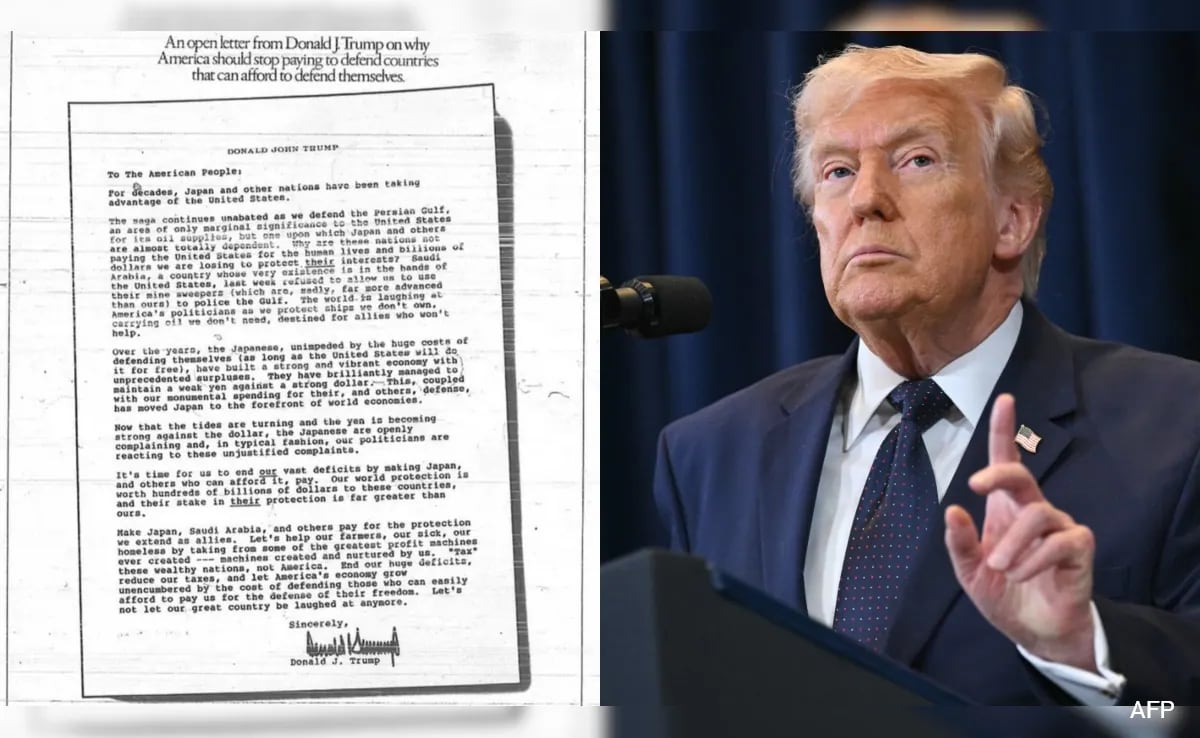
On September 2, 1987, readers of the New York Times, Washington Post, and Boston Globe opened their papers to find an unusual sight. It wasn't a product launch or a movie promotion. Instead, a full-page open letter addressed to the American people laid out a blistering critique of U.S. foreign policy. Paid for at a cost of nearly $100,000—a staggering sum for a private political advertisement at the time—it was signed by a real estate developer named Donald J. Trump. While most of the political establishment dismissed it as a vanity project, that 1987 manifesto contained the DNA of a geopolitical shift that would take three decades to reach its zenith.
The core of the message was simple. The United States was being "taxed" by its allies and humiliated by its enemies while paying to protect the oil interests of nations that refused to help themselves. Specifically, Trump pointed to the Persian Gulf, where the U.S. Navy was escorting oil tankers during the Iran-Iraq War. He argued that if Japan and Saudi Arabia needed the oil, they should pay for the protection. This wasn't just about money. It was an early declaration of "America First," a philosophy that viewed global security as a bad business deal rather than a moral or strategic necessity.
The Persian Gulf Powder Keg
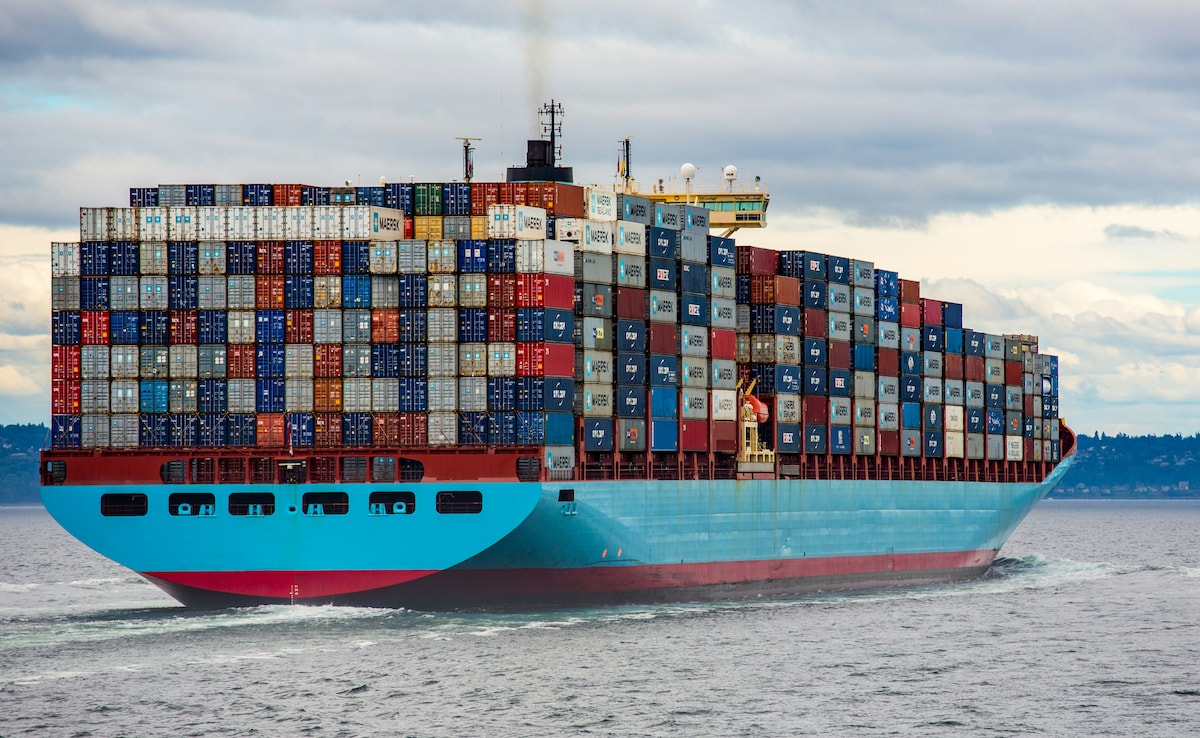
To understand why this advertisement resonated with some and infuriated others, one has to look at the state of the world in 1987. The "Tanker War" was at its peak. Iran and Iraq were locked in a brutal stalemate, and both sides had begun targeting commercial shipping to choke off each other’s economy. The Reagan administration responded with Operation Earnest Will, the largest naval convoy operation since World War II.
American sailors were dying to ensure the flow of oil to a world market that benefitted America’s economic competitors as much as, if not more than, the U.S. itself. The 1987 advertisement tapped into a growing resentment among the American working class. They saw their factories closing while their government spent billions defending the shipping lanes of the very countries outcompeting them in the automotive and electronics sectors.
A Masterclass in Narrative Framing
Trump’s 1987 letter didn't use the nuanced language of a diplomat. It used the blunt force of a tabloid headline. He wrote that the world was "laughing at America’s politicians" for their "blindness." This was the birth of the "winner vs. loser" dichotomy that would eventually redefine the Republican Party.
By framing foreign policy as a series of botched real estate negotiations, he stripped away the ideological layers of the Cold War. He wasn't talking about containing Communism or spreading democracy. He was talking about the bottom line. This transactional view of the world ignored the intangible benefits of global leadership—the diplomatic leverage, the intelligence sharing, and the stability that a superpower provided. Yet, it also spoke to a segment of the public that felt their own interests had been sacrificed for a globalist dream that didn't include them.
The 1987 Letter vs. 2016 Reality
Many analysts at the time dismissed the advertisement as a vanity project for a man with a big ego and a small grasp of international relations. But a closer look at that 1987 text reveals a startling consistency. The criticisms he leveled against Japan, Germany, and Saudi Arabia in the Reagan era were identical to the criticisms he leveled against NATO and the same nations during his 2016 campaign.
The 1980s was an era when Japan was seen as a rising economic threat to the U.S. industrial base. Trump’s ad didn't just target the Soviet Union. It targeted our allies. It was a warning that the U.S. was "funding the world" and "protecting the world" while the world "ripped us off." This wasn't a sudden shift in 2016. It was a slow-burn strategy that had been fermenting for almost thirty years.
The Iran Connection and the Persian Gulf
The advertisement specifically called out the "humiliating" situation in the Persian Gulf. In 1987, the U.S. was in a state of high tension with Iran after the 1979 revolution and the subsequent hostage crisis. The U.S. was supporting Saddam Hussein’s Iraq as a bulwark against the Iranian Islamic Republic.
Trump’s letter didn't necessarily advocate for war with Iran. Rather, it advocated for a withdrawal from the region unless the U.S. was compensated. He suggested that if the U.S. were to "protect" the oil tankers, the nations receiving that oil should pay a "tax" or a fee for the service. This was a radical departure from the prevailing post-WWII consensus that American security was intertwined with global stability. It was the first public iteration of the "protection racket" model of foreign policy.
An Industrial Analyst’s Perspective
From an industry standpoint, the 1987 ad was a calculated risk. Trump was a real estate developer whose brand was built on luxury and power. To associate that brand with a populist, anti-establishment political message was a gamble. But it worked. It established him not just as a businessman, but as a "truth-teller" who was willing to challenge the status quo.
The ad also highlighted a significant shift in the American economy. By 1987, the U.S. was no longer the sole industrial superpower. The rise of East Asian economies was putting pressure on American manufacturing. By focusing on the cost of foreign entanglements, Trump tapped into the growing anxiety of an American public that felt the country was in decline. This sentiment would only grow in the decades that followed, culminating in the populist wave that reshaped American politics.
The Overlooked Warning
What many missed in the 1987 letter was the underlying threat. Trump wasn't just complaining about the cost of the Persian Gulf operations. He was warning that if the U.S. didn't change its approach, it would face economic ruin. He painted a picture of a nation that was being bled dry by its own "generosity."
This theme of national humiliation—of being "laughed at" by the rest of the world—would become a central tenet of his political identity. It was a narrative of victimhood that resonated with millions of Americans who felt the same way. The 1987 ad was the first time that narrative was laid out in such a public and aggressive way.
The Long Game of Political Branding
To call the 1987 ad a "prophecy" might be an overstatement, but to call it a blueprint is entirely accurate. It showed a keen understanding of how to use the media to bypass the traditional gatekeepers of political discourse. Trump didn't need a political party to get his message out. He just needed a checkbook and a platform.
The 1987 advertisement was a signal that the old order was vulnerable. It was a reminder that the consensus on American foreign policy was not as strong as it appeared. While the "experts" in Washington and New York scoffed at the "ego" of a real estate developer, they failed to see the underlying frustration that he was tapping into.
Geopolitical Consequences of the Transactional Model
The transactional model of foreign policy presented in 1987 has profound implications for global stability. If every alliance is viewed through the lens of a balance sheet, then no alliance is permanent. This uncertainty can lead to a more dangerous world where allies feel they can’t count on the U.S., and adversaries feel emboldened to test American resolve.
In the Persian Gulf, this approach would mean that the U.S. would only intervene if there was a clear and immediate economic benefit. This ignores the fact that a stable oil market is a global public good that benefits everyone, including the U.S., even if we don't use the specific oil being shipped through the Strait of Hormuz. The 1987 letter was a rejection of the idea of "global public goods."
The Cost of Withdrawal
The 1987 ad argued for a more isolationist or at least a more mercenary approach to foreign policy. But what would have happened if the U.S. had followed that advice in 1987? A withdrawal from the Persian Gulf would have likely led to an Iranian victory in the Iran-Iraq War, a surge in oil prices, and a massive blow to the global economy.
The costs of American leadership are often visible and easy to quantify—the lives lost, the billions spent. The benefits are often invisible—the wars that don't happen, the trade that isn't disrupted, the stability that is maintained. The 1987 letter focused entirely on the costs and ignored the benefits. This was a powerful rhetorical strategy, but a poor foundation for a comprehensive foreign policy.
The Evolution of the "America First" Doctrine
The 1987 advertisement was just the beginning. Over the next thirty years, this "America First" sentiment would evolve and grow. It was fueled by the perceived failures of the Iraq War, the 2008 financial crisis, and the steady decline of American manufacturing. By the time 2016 arrived, the message that Trump had first articulated in 1987 was no longer a fringe idea. It was the central theme of a winning presidential campaign.
The 1987 letter was a warning that the American people were tired of being the "world’s policeman." It was a warning that the political establishment had ignored at its peril. Whether one agrees with the message or not, it's impossible to deny its impact. It changed the way we talk about foreign policy, and it changed the course of American history.
Investigating the 1987 Motivation
Why did a real estate developer spend $100,000 on a foreign policy ad in 1987? Some say it was a trial balloon for a presidential run that never materialized that year. Others say it was a response to a specific business deal that had been frustrated by foreign competition. But the most likely explanation is that it was a way to build a brand that was larger than just buildings.
It was an exercise in "outrage marketing" before the term even existed. By taking a controversial stand on a high-stakes issue, Trump ensured that his name would be on the front page of every major newspaper in the country. He wasn't just a builder anymore. He was a "thinker," a "patriot," and a "critic" of the system.
A Strategy of Disruption
The 1987 ad was a classic example of disruption. It challenged the fundamental assumptions of both the Democratic and Republican parties. It ignored the cold war rivalry and focused instead on the economic cost of empire. This was a message that didn't fit neatly into the political boxes of the time, which is exactly why it was so effective.
It was a reminder that in politics, as in business, the person who controls the narrative controls the outcome. By framing the debate as "America vs. The World," Trump was able to build a loyal following that would stay with him for decades. The 1987 letter wasn't a one-off event. It was the first shot in a long-term war against the political establishment.
The Legacy of the 1987 Manifesto
The 1987 advertisement remains one of the most significant documents in modern American political history. It is a time capsule of a moment when the post-WWII consensus began to crack. It is a reminder that the seeds of the populist revolution of 2016 were sown decades earlier in the pages of the nation’s leading newspapers.
The 1987 prophecy was not about a specific war or a specific enemy. It was about a fundamental shift in how America sees itself and its role in the world. It was a call to abandon the "burden of leadership" and embrace the "logic of the deal." That shift is still being felt today, from the halls of Congress to the boardrooms of global corporations.
The 1987 letter remains a stark reminder that the biggest changes in history often start with a single, well-placed message that most people choose to ignore until it's too late. To understand the current state of American foreign policy, one must go back to that September day in 1987 and read between the lines of a full-page ad that everyone saw but few truly understood. The "Art of the Deal" was never just about real estate. It was about the soul of a nation's global identity, and the bill for that 1987 advertisement is still being paid by the international order today.