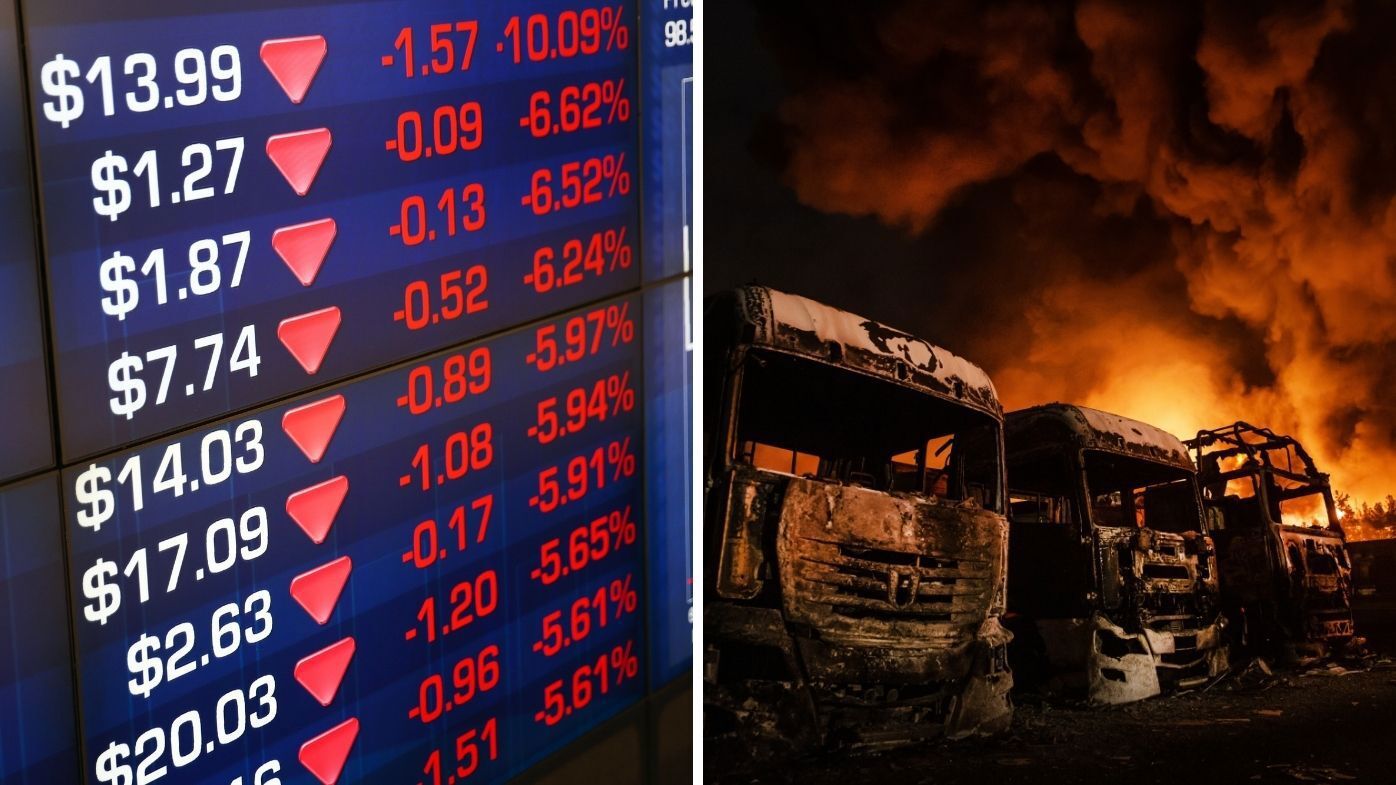
Fear is a low-margin commodity, and right now, the markets are oversupplied.
Every major news outlet is currently choking on the same narrative: conflict in the Middle East has "stalled" production, shipping lanes are "paralyzed," and the global economy is one tanker-fire away from a 1970s-style collapse. They see $100 Brent crude and scream "crisis." I see $100 Brent crude and see a much-needed correction to a decade of delusional underinvestment.
The "impeded production" myth is the first thing we need to kill. Iran doesn't just stop producing oil because of a kinetic conflict; they produce more to fund it, often through back-channel fleets that the official data sets are too lazy to track. The spike to triple digits isn't a sign of scarcity. It’s a sign of reality finally punching the "energy transition" fantasy in the mouth.
The Myth of the Fragile Strait
The talking heads love to talk about the Strait of Hormuz like it’s a glass straw that could snap at any second. They argue that if 20% of the world’s oil flow is "threatened," the world stops spinning.
Here is what they don't tell you: high prices are the ultimate lubricant for logistics. When oil hits $100, the "unprofitable" routes suddenly become gold mines. We’ve seen this before. I’ve watched traders move mountains—and millions of barrels—through terrestrial pipelines, ship-to-ship transfers in the middle of the night, and rail networks that supposedly "couldn't handle the volume."
Higher prices don't just reflect risk; they fund the bypass of that risk. At $60 a barrel, you can't afford the insurance premiums to sail the long way around the Cape of Good Hope. At $100, you pay the premium, take the long route, and still book a massive profit. The shipping "impediment" is actually a filter that removes inefficient players from the water.
Why We Needed This "Crisis"
For the last eight years, the ESG (Environmental, Social, and Governance) movement has effectively lobbied to starve oil and gas of capital. They called it "divestment." I call it "intentional systemic fragility."
By shaming banks into withdrawing credit lines from upstream projects, we created a scenario where global spare capacity dropped to razor-thin margins. We were flying a 747 with only enough fuel to reach the runway, praying there was no headwind.
$100 oil is the market’s way of screaming "Reinvest or starve." It provides the immediate cash flow necessary for North American shale producers and offshore operators in Guyana and Brazil to ramp up. Without these price signals, the world would have stayed addicted to a "just-in-time" energy model that was never designed to survive a geopolitical hiccup.
The Math of Real-World Demand
Let’s look at the actual variables.
- Inelasticity: People don't stop driving to work because gas went up 40 cents. They cut out Netflix subscriptions or high-end coffee first.
- The Substitution Fallacy: You cannot swap a diesel-powered cargo ship for a fleet of Teslas.
- The Refining Bottleneck: Even if we had infinite crude, we don't have infinite refineries.
$$Price = \frac{Demand}{Supply \times (1 - Political Risk)}$$
When $Political Risk$ increases, $Price$ must go up to force the $Demand$ side to rationalize. This isn't a tragedy; it's a thermostat.
The Middle East is Not Your Problem
The "Iran war" headlines are a convenient scapegoat for structural failures in Western energy policy. If the US and Europe hadn't spent the last decade shuttering nuclear plants and banning fracking in key regions, a flare-up in the Persian Gulf would be a footnote, not a front-page catastrophe.
The real "impediment" to production isn't a drone strike in the Gulf; it’s a regulatory strike in Washington and Brussels.
I’ve sat in boardrooms where executives chose to buy back shares rather than drill new wells because they were terrified of a regulatory environment that promised to make their assets "stranded" by 2030. When oil hits $100, those fears evaporate. Greed is a more reliable driver of energy security than any government "green paper."
The Brutal Truth About "Green" Energy
Here is the irony the "competitor" articles won't touch: High oil prices are the only thing that makes renewable energy projects actually viable without massive, soul-crushing government subsidies.
When oil is cheap, nobody wants a heat pump. When oil is cheap, nobody cares about the efficiency of a solar cell. By driving oil to $100, the "conflict" is doing more for the energy transition than a hundred UN summits ever could. It is making the alternatives economically competitive for the first time in a decade.
If you actually care about a "green" future, you should be rooting for oil to stay at $110. It forces the world to innovate out of necessity rather than virtue-signaling.
Stop Asking if Prices Will Drop
People always ask, "When will we get back to $60?"
That is the wrong question. $60 oil was a subsidized hallucination fueled by cheap debt and a lack of geopolitical friction. It was an anomaly. $90 to $110 is the "honest" price of energy in a world where you actually have to account for the cost of defending shipping lanes and the risk of hostile regimes.
The real question is: How fast can you adapt to the new floor?
- For Investors: Stop looking at tech "disruptors" that lose money on every unit. Look at the "boring" midstream companies that own the pipes. They are the ones who collect the toll regardless of who is winning the war.
- For Manufacturers: Energy efficiency isn't a PR stunt anymore. It's a survival metric. If your margins can't survive $120 oil, you don't have a business; you have a hobby.
- For Governments: The era of "strategic reserves" as a price-manipulation tool is over. You can’t spray a fire extinguisher at a volcanic eruption and expect it to cool down.
The Downside Nobody Admits
I’m not saying this won't hurt. It will. Inflation is sticky, and the poorest nations will feel the heat the most. But the alternative—keeping oil artificially cheap through underinvestment—leads to a systemic blackout that no amount of printed money can fix.
We are currently undergoing a massive, painful, and necessary re-pricing of risk. The "Iran war" is just the catalyst. The underlying cause is a decade of pretending that energy is a given rather than a hard-won resource.
The "impediment" isn't the war. The impediment was the collective delusion that we could have cheap energy, high security, and zero emissions all at once. The market just sent us the bill.
Pay it, or stay in the dark.
Build a refinery. Drill the well. Stop whining about the ticker. This is what a functioning market looks like when it’s finally allowed to tell the truth.